
Reviewed · WINDHOEK
7 Day Taste of Namibia Lodging Safari
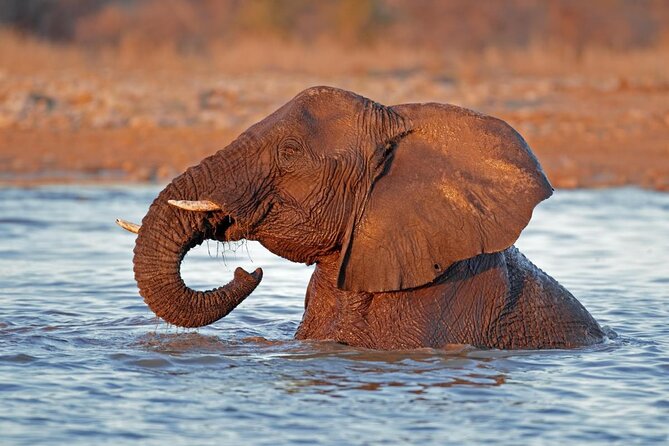
Namibia packs an astonishing amount into one week: rescued carnivores, desert elephants and big cats in Etosha, pink granite hills, the Atlantic coast, and sunrise over the giant dunes of Sossusvlei. This seven-day accommodated safari is built for seeing the country’s major sights without planning a complicated route yourself.
I like the small maximum group of 10, which keeps the minivan more manageable, and I like that the price includes six lodge nights, park fees, meals, game drives, airport transfers, and the Sossusvlei 4×4 shuttle. The main drawback is the pace: you will spend long hours on the road and rise early most mornings.
Key points to know
- N/a’an ku se wildlife work: Begin with a conservation visit and carnivore feeding activity near Windhoek.
- Etosha water-hole game viewing: Spend two days searching for predators and prey in one of southern Africa’s best-known parks.
- Damaraland by gravel road: Cross open country with pink granite formations and a huge, empty sky.
- Sunrise at Sossusvlei: Take the 4×4 shuttle into the dunes, where early light gives the sand its strongest color.
- Solitaire cheetahs and apple pie: Finish with a conservation visit and the small settlement’s famous baked treat.
- Guide-led small-group travel: Guides such as Kennedy, Gideon, Gregg, Greg, Chilo, and Tulimo have been praised for careful driving, cooking, organization, humor, and personal attention.
What the seven days really cover
This is not a slow safari based in one lodge. It is a fast-moving circuit through central and western Namibia, with a new setting almost every day.
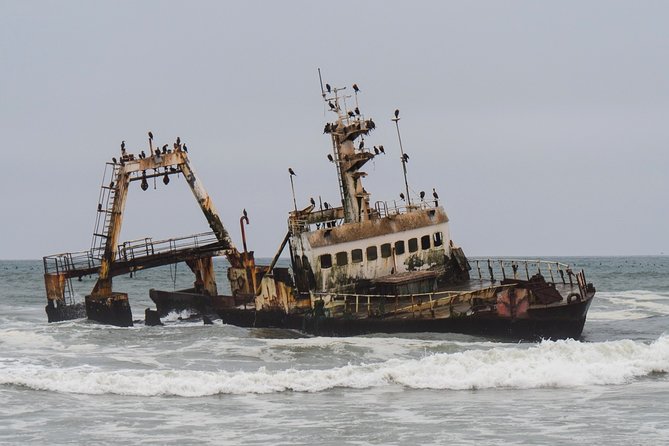
You start near Windhoek and head east, then north to Etosha. From there, the route swings west through Damaraland toward the Atlantic coast, before turning inland to the Namib Desert and Sossusvlei. The final day returns toward Windhoek through Solitaire.
That route works well if you want a first look at Namibia and have only one week. You see wildlife, desert, mountains, coastline, conservation projects, and local communities in one trip. The trade-off is simple: this is a sampler, not an in-depth stay in any one region.
The tour costs $2,543.82 per person. That is a serious price, but the value improves when you count what is covered: six nights in twin-share en-suite rooms, six breakfasts, four lunches, three dinners, national park fees, scheduled activities, transport, a professional English-speaking guide, and return airport transfers.
You should still budget for water, snacks, tips, travel insurance, and optional activities. The included meals are not every meal, so check the daily plan and carry extra snacks for long drives.
A few more Windhoek trips worth a look
- 6-Day Dunes and Wildlife Accommodated Safari from Windhoek
★ 5.0 · 123 reviews - 12 Day Classic Namibia Camping Safari
★ 5.0 · 77 reviews - 3 Day Sossusvlei Budget Camping Safari
★ 5.0 · 62 reviews
Day one at N/a’an ku se Wildlife Sanctuary
The first stop is about 50 kilometers east of Windhoek at N/a’an ku se Wildlife Sanctuary. The center takes in sick, injured, and orphaned animals, with the goal of returning them to the wild when that is possible.
That last point matters. This is not simply a place to see animals at close range. Some residents cannot survive independently, so the sanctuary gives them permanent care rather than releasing them into danger. You get a useful look at the difficult choices involved in wildlife rehabilitation.
The included carnivore feeding activity gives the visit its focus. The published stop itself is listed as only five minutes, which is likely a timing label rather than a full description of the sanctuary experience, so I would confirm the exact schedule before booking if this visit is especially important to you.
This opening stop also gives you a gentle start before the long driving days. It is a good fit if you want conservation included in your safari, not only animal sightings.
Day two: the long road to Etosha
The second day begins early. The stated plan calls for collection from accommodation within Windhoek city limits at 7:00 am, followed by a short pre-departure meeting at Chameleon Safaris headquarters.
You head north and stop in Otjiwarongo for last-minute supplies. A light packed lunch is eaten on the move, then you enter Etosha National Park and continue with game viewing on the way to Halali Camp.
Allow about eight hours for this day. The driving is part of the experience, but it can be tiring. Namibia is vast, and reaching Etosha from Windhoek takes time even on a well-planned route. You will want comfortable clothes, water, sun protection, and a small bag within easy reach.
Etosha is famous for its broad salt pan and dry country, but the animals gather around water. That makes the park’s water holes especially important. Your guide’s skill in reading the timing, terrain, and animal behavior can make a real difference to what you see.
You may spot nothing dramatic at one stop and then find several species gathered at the next. That uncertainty is part of a real safari, so it is best to enjoy the search rather than expect a guaranteed list of animals.
Day three among Etosha’s water holes
Day three gives you a full day in Etosha. The gates open at sunrise, and the plan is to leave as the sun appears.
That early departure is worth the alarm. The cooler morning hours can be productive for wildlife, and the schedule is designed to catch big cats returning from a night hunt. After the first game drive, you return to Halali for breakfast, load the vehicle, and go back into the park.
The day includes about seven hours of exploring. Etosha’s dry setting makes every water source important, so your guide will likely focus attention on places where animals come to drink. The mix may include predators and prey, but sightings are never promised.
The park’s scale is hard to grasp from a vehicle. The Great White Space, the mineral pan that gives Etosha its name, covers about 22,000 square kilometers and is so large it can be seen from space. You may not spend the whole day beside the pan itself, but its size helps explain why the park feels so open and spare.
Halali Camp gives you a fixed base for the night rather than another long transfer. Even so, this remains an active day, and you should expect dust, sun, early starts, and plenty of time seated in the safari vehicle.
Same country, a completely different kind of day:
- Windhoek: City and Township Tour
★ 4.8 · 430 reviews - Half-Day Windhoek City and Township Cultural Tour
★ 4.5 · 187 reviews - Windhoek: Bushman Walk with the San
★ 4.9 · 145 reviews - Windhoek City Tour
★ 5.0 · 113 reviews
Day four through Damaraland
After breakfast, you aim to leave around 7:30 am for the scenic route toward the Skeleton Coast. The road first passes Outjo, then turns west toward Damaraland.
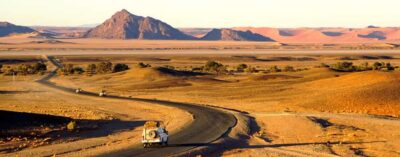
This is one of the most visually distinctive parts of the trip. The route uses gravel roads and crosses broad open country, with pink granite koppies rising above the horizon. The combination of stone, distance, and sky gives Damaraland its special character.
The drive takes about eight hours. This is not a short sightseeing transfer with frequent stops. You should expect rougher road surfaces and long stretches between settlements, but the changing terrain keeps the journey interesting.
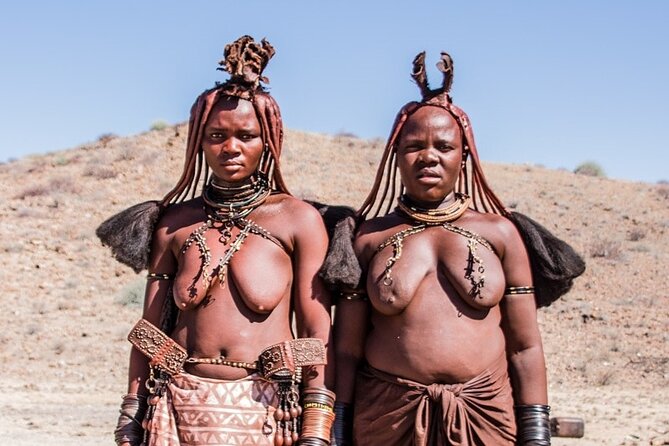
The route also brings you into contact with Himba, Herero, and Damara communities. Roadside stalls under the shadow of Brandberg, Namibia’s highest mountain, provide a chance to meet local people and see traditional clothing and handmade goods.
Approach these stops respectfully. Ask before taking photographs, and remember that a roadside stall is also someone’s workplace, not a staged exhibit. If you want to buy something, carry some Namibian cash, though the tour information does not specify payment arrangements.
The Atlantic side near Swakopmund
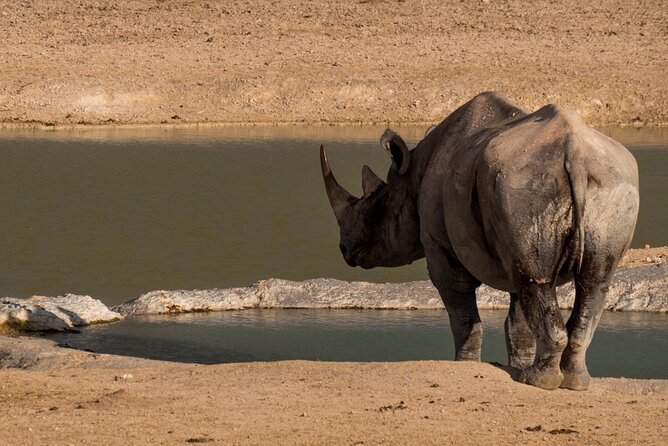
The supplied schedule places you in the Swakopmund area before the desert journey on day five. It describes leaving Swakopmund in mid-morning and crossing the Namib gravel plains toward the interior.
The route passes large flat areas broken by mountain inselbergs. You also cross Kuiseb Pass and follow the road down toward the Kuiseb River canyon, which eventually reaches the ocean near Walvis Bay.
This portion gives you a welcome change from Etosha’s animal focus. The desert is not empty in the ordinary sense. Its beauty comes from texture, stone, distance, and the way the road cuts through country that looks almost untouched.
One practical point deserves attention: the itinerary wording mentions the Skeleton Coast, Swakopmund, Walvis Bay, and the Tropic of Capricorn, but it does not clearly list every overnight town or stop in the day-by-day section. Ask Chameleon Safaris for the current lodge list and exact route before paying, especially if you are choosing the trip for a specific coastal stop.
Day five toward the Tropic of Capricorn
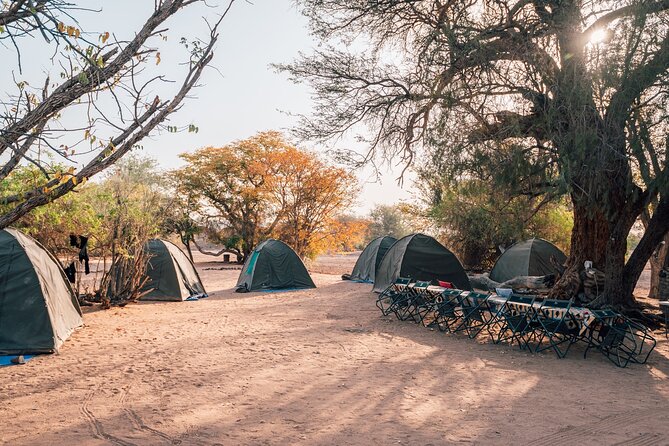
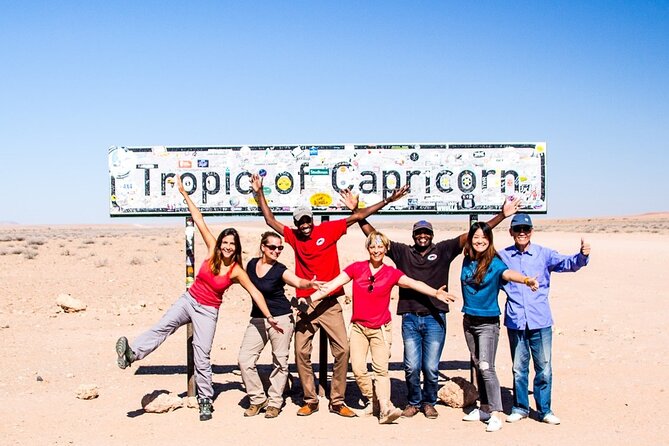
The listed Tropic of Capricorn stop takes about two hours. It is not the main event of the trip, but it gives you a memorable marker in the desert and a natural break during a long transfer.
The more valuable part of this day is the journey itself. From Swakopmund, you cross the gravel plains, then tackle the Kuiseb Pass and descend toward the canyon. The road reveals how the Namib changes from coastal country to the interior.
You should not expect a packed schedule of formal attractions. This is a scenic driving day, and the reward is the scale of Namibia rather than a long list of activities. Keep your camera ready, but also give yourself permission to stop photographing every turn and simply watch the country pass by.
Day six at Sesriem and Sossusvlei
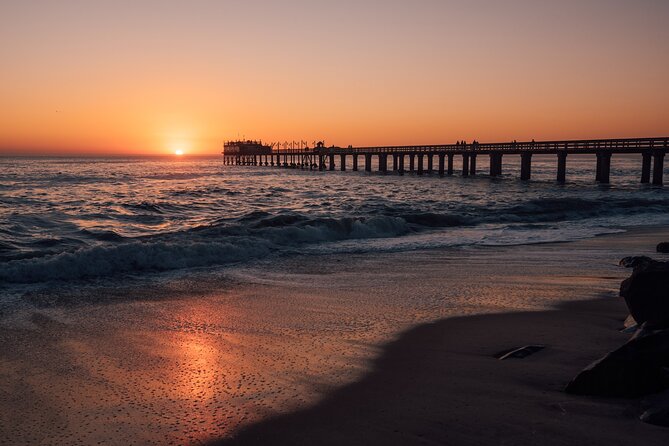
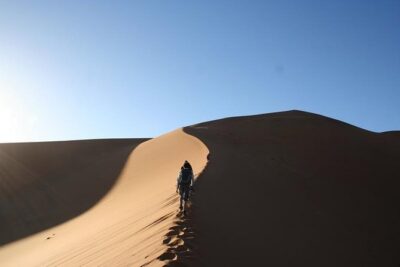
Day six begins before dawn. The goal is to reach the dunes around sunrise, when one side of each ridge can glow orange or apricot while the other remains in shadow.
That light is the reason for the punishing start. Dunes are at their most dramatic early and late in the day, and the low sun gives the sand far more shape than midday light.
The Sossusvlei excursion includes a 4×4 shuttle, so you do not need to handle the final sandy section yourself. The day is listed at about five hours, leaving some time afterward for the lodge and the desert surroundings, though the early start will make a rest appealing.
The route includes Sesriem, the gateway area for the dunes. Physical demands should be taken seriously. The tour asks for a moderate fitness level, and walking on soft sand can be tiring. You do not need to turn the morning into a race, but sturdy footwear, a hat, sunscreen, and water are sensible.
Sossusvlei is one of the trip’s strongest photo opportunities, but it is also one of its busiest-feeling moments if many vehicles arrive at the same time. The early departure helps you make better use of the light and the cooler temperatures.
Day seven at Solitaire’s cheetah project
The last day heads back toward Solitaire. There, you join an open vehicle to visit a local cheetah conservation project.
The cheetahs at the project cannot be released into the wild for different reasons. The activity explains their situation and the conservation work being done, while giving you a chance to photograph the world’s fastest land mammal.
This is a fitting final stop because it returns to the theme introduced at N/a’an ku se: what happens when an animal cannot safely return to its natural home. The two visits are not identical, but together they show that conservation includes rehabilitation, protection, education, and difficult decisions.
Then comes the apple pie associated with Solitaire. It is a small pleasure after a week of early starts and rough roads, and it gives the final day a bit of local personality.
The activity lasts about two hours. The tour ends back at the Chameleon Safaris meeting point, but confirm your onward transfer plans before departure if you have a flight that day.
Guides, vehicles, and group size
You travel in an air-conditioned Chameleon Safaris vehicle with a professional English-speaking guide. Game drives are conducted in the Chameleon vehicle, and the open vehicle is used for the cheetah activity at Solitaire.
The maximum group is 10 people. That is small enough to keep the experience social without making the vehicle feel like a large coach. A group of nine has worked well on this route, but group chemistry always affects a trip like this.
Guide quality is a major part of the value. Kennedy has been praised for staying attentive and making sure people were comfortable. Gideon is described as calm, practical, and able to solve problems, with a fun side as well. Gregg and Greg are associated with clear organization, humor, and strong care for the group, while Chilo is noted for being especially kind and accommodating.
Tulimo has been praised for handling rough roads, cooking and grilling, and answering questions. Those details matter because the guide may do much more than point out wildlife. On a small safari, your guide is also the person managing timing, meals, safety, road conditions, and the mood of the group.
Lodges, meals, and daily comfort
You receive six nights in twin-share rooms with en-suite bathrooms. The specific lodge names are not provided, but the accommodation is described as a mix of good lodges, with pools at most properties.
That is a useful level of comfort after days in a vehicle. A pool is not essential, but it can make a hot afternoon in Namibia far more pleasant. If you are a solo booker, confirm the room-sharing arrangement and any supplement before booking.
Included meals are six breakfasts, four lunches, and three dinners. Some lunches are packed or eaten on the move, so do not expect every meal to be a long sit-down break. Carry snacks between meals, since snacks, water, and tips are excluded.
Food has been a strong point for this trip, including meals prepared by guides. Still, the food plan may vary by lodge and day. Tell the operator about dietary needs before departure rather than assuming every preference can be handled on the road.
Is the price fair for a one-week safari?
At $2,543.82 per person, this is not a budget bus tour. But arranging the same route independently would require booking transport, park entries, lodge rooms, game drives, a Sossusvlei shuttle, airport transfers, and conservation activities across a very large country.
The package also protects you from the practical burden of driving long gravel routes and coordinating several remote stops. For a first visit to Namibia, that convenience has real value.
The price makes less sense if you want complete freedom, private game drives, luxury lodges, or several quiet nights in one place. It makes more sense if you want a carefully connected introduction and prefer to let a guide handle the roads and schedule.
A 4.8 rating from 13 listed reviews, with 92 percent recommending the experience, supports the tour’s strong reputation. The most consistent praise centers on organization, accommodation, food, small groups, and guides who take care of the details. One less glowing experience included a bitter aftertaste, so you should still go in knowing that guide style and group dynamics can shape the week.
Who should book this safari?
I would choose this trip if you have seven days, want Namibia’s major sights, and do not want to drive yourself. It suits solo visitors who like meeting people, couples seeking a structured first safari, and families with older children who can manage long drives.
Children under 18 must be accompanied by an adult. A moderate fitness level is required, mainly because of early starts, uneven roads, and walking in sand.
I would not choose it if you need a leisurely holiday or dislike changing hotels and spending many hours in a vehicle. A longer trip would give Etosha, Damaraland, the coast, and Sossusvlei more breathing room.
The listed meeting point is Chameleon Safaris on Ferry Street in Windhoek. Pickup is offered, including return airport transfers, but the schedule contains both a 7:00 am Windhoek collection and a 1:30 pm listed start time. Confirm the exact pickup time and first-day arrangements before you go.
Should you book the 7 Day Taste of Namibia Safari?
Book it if you want a well-organized first taste of Namibia and accept that the country’s great distances require early mornings and long drives. The best parts are the range of scenery, the two Etosha wildlife days, the conservation visits, and the dawn light at Sossusvlei.
Skip it if you want slow travel, private guiding, or guaranteed animal sightings. For everyone else, the package offers a practical way to connect Namibia’s far-flung highlights in one week, with enough comfort and support to make the demanding schedule worthwhile.
FAQ
How long is the Taste of Namibia safari?
The experience lasts approximately seven days and includes six nights of accommodation.
Where does the safari start and end?
The listed meeting point is Chameleon Safaris on Ferry Street in Windhoek, Namibia. The activity ends back at the meeting point.
What is included in the price?
The price includes an air-conditioned vehicle, a professional English-speaking guide, six nights in twin-share en-suite rooms, listed meals, Etosha and Sossusvlei park fees, Etosha game drives, the N/a’an ku se carnivore feeding activity, the Sossusvlei 4×4 shuttle, the Solitaire cheetah activity, and return airport transfers.
Are meals included?
Six breakfasts, four lunches, and three dinners are included. Snacks between meals, water, and tips are not included.
How large is the group?
The maximum group size is 10 people.
Can children join the safari?
Yes. Children under 18 must be accompanied by an adult, and participants should have a moderate level of physical fitness.
More Week-Long Trips from Windhoek
- 7 Day Southern Namibia and Sossusvlei Camping Safari
★ 5.0 · 26 reviews - 7 Day Northern Namibia and Skeleton Coast Camping Safari
★ 5.0 · 19 reviews - 7 Day – Kalahari TOP attractions
★ 5.0 · 10 reviews
Just added around Windhoek
- From Windhoek: 3-Day Sossusvlei Shared Shuttle Tour★ 3.8 · 3 reviews
- Windhoek: Katutura Township Tour with Local Guide★ 3.5 · 3 reviews
- 3 day Sossusvlei Camping★ 5.0 · 3 reviews
- Knight Vibes: Bars, Shebeen, Clubs Crawl Windhoek★ 5.0 · 3 reviews
- 10 DAYS BEAUTY OF NAMIBIA | Guided Lodge★ 5.0 · 3 reviews
- Windhoek: City & Township tour. Vehicle, guide, kapana★ 4.2 · 4 reviews
- Predator Encounter: Half-Day Carnivore Feeding Windhoek★ 4.0 · 5 reviews
- Airport Transfers★ 5.0 · 5 reviews
Windhoek Tours, compared.

Half-Day Windhoek City and Township Cultural Tour
Read our review →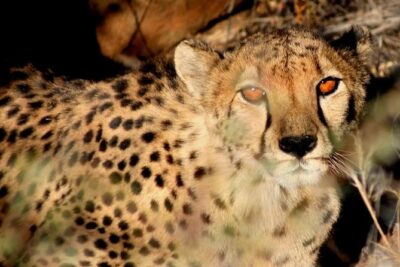
6-Day Dunes and Wildlife Accommodated Safari from Windhoek
Read our review →10-Day Namibia Highlights Guided Tour from Windhoek
Read our review →
Namibia Self-Driving Audio Guide (in English & German)
Read our review →
Traditional Cooking Class – Mahangu pap for beginners
Read our review →Browse the lists this tour appears in