
Reviewed · WINDHOEK
Windhoek City Tour
Windhoek is easiest to understand when you see both sides of it: the central monuments built during German rule and the residential districts shaped by Namibia’s difficult past and hopeful present. This three-hour tour links those pieces, then adds street food in Katutura and a visit to Penduka, a women-focused craft project.
I like the small maximum group of seven, which gives you a better chance to ask questions and hear personal stories. I also like the mix of sights: Christuskirche and Alte Feste explain the city’s past, while Katutura and Penduka bring you into present-day Namibian life.
The main consideration is that some central sights may be viewed from outside. The church, fort, and Parliament Gardens have not always reopened since the COVID period, so this tour is strongest for guided context, driving through the city, local encounters, and the Katutura market rather than formal museum visits.
Key points to know before booking
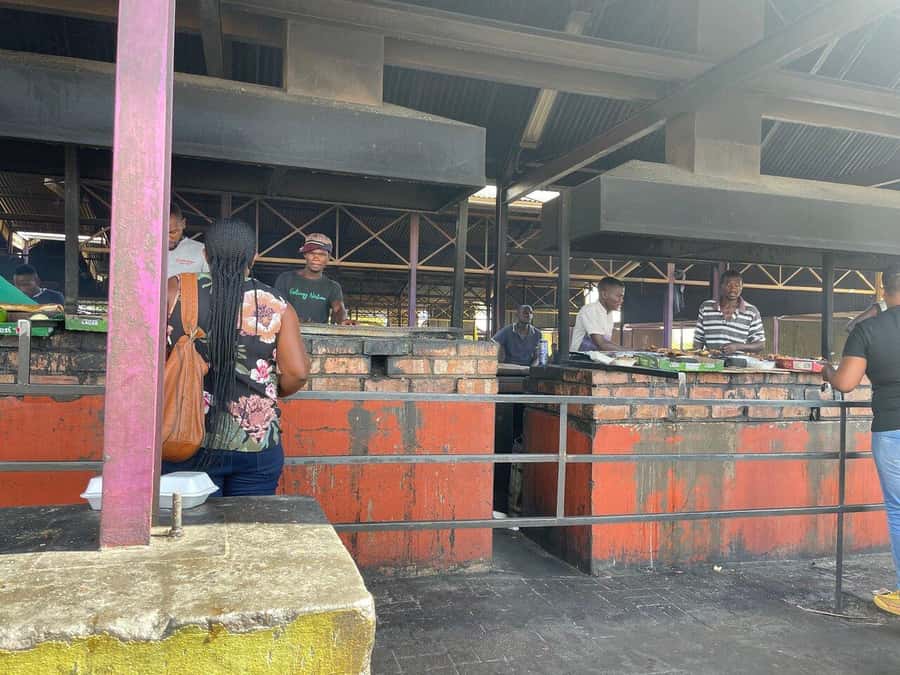
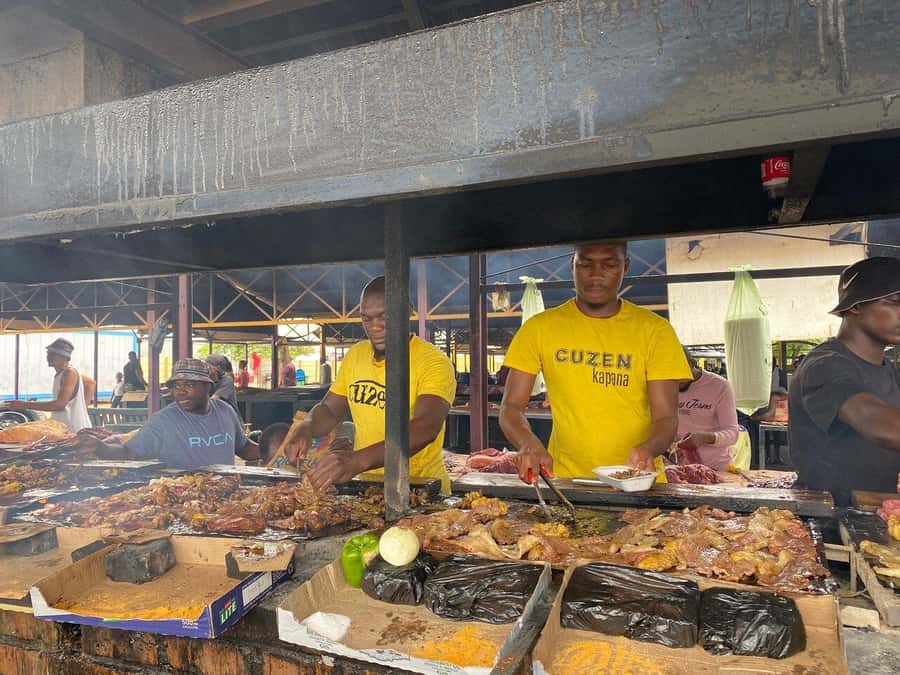
- Katutura is the heart of the experience: You visit a township market, meet local people, and try Namibian delicacies such as kapana.
- Local guides make the difference: Petrus has led many tours, while Esther and Emmanuel have also guided visitors through Windhoek and Katutura.
- The route joins old and new Windhoek: Expect colonial-era buildings, independence-era monuments, residential districts, a community project, and modern city views.
- Penduka adds a useful final stop: You can learn about women’s economic independence and shop for locally made crafts.
- Three hours is enough for an introduction: The pace is brisk, but the tour fits well into a first morning or a free half-day.
- Hotel pickup is optional: Choose the pickup and drop-off option if you want door-to-door convenience in Windhoek.
Why this tour helps you understand Windhoek
Windhoek can feel spread out and hard to read during a short stay. The city centre has clear German colonial references, modern government buildings, shops, and traffic, while the outlying residential areas tell a different story. Seeing only the centre gives you an incomplete picture.
This tour gives you a useful framework. You hear about the city’s early development, Namibia’s period under German rule, the road to independence, and the way present-day political and social life continues to shape Windhoek.
I especially like that the tour does not stop with architecture. You go into Katutura, visit a local market, taste food, and finish at Penduka. That shift from monuments to daily life is what gives the morning more weight than a simple drive past city sights.
The guides are an important part of the experience. Petrus is repeatedly praised for his clear explanations, patience, and personal connection to Windhoek. Guests have also been guided by Esther and Emmanuel. The strongest part of the guiding seems to be the willingness to answer questions and explain Namibia’s past in a way that connects with life today.
More Windhoek city tours:
- Windhoek: City and Township Tour
★ 4.8 · 430 reviews - Half-Day Windhoek City and Township Cultural Tour
★ 4.5 · 187 reviews - Windhoek: Bushman Walk with the San
★ 4.9 · 145 reviews
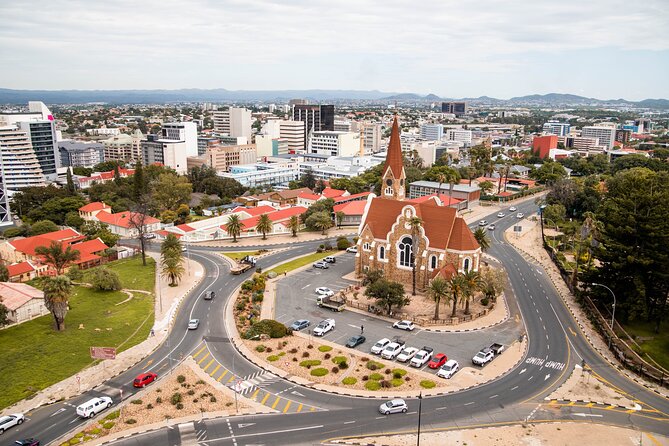
Christuskirche and the German chapter of the city
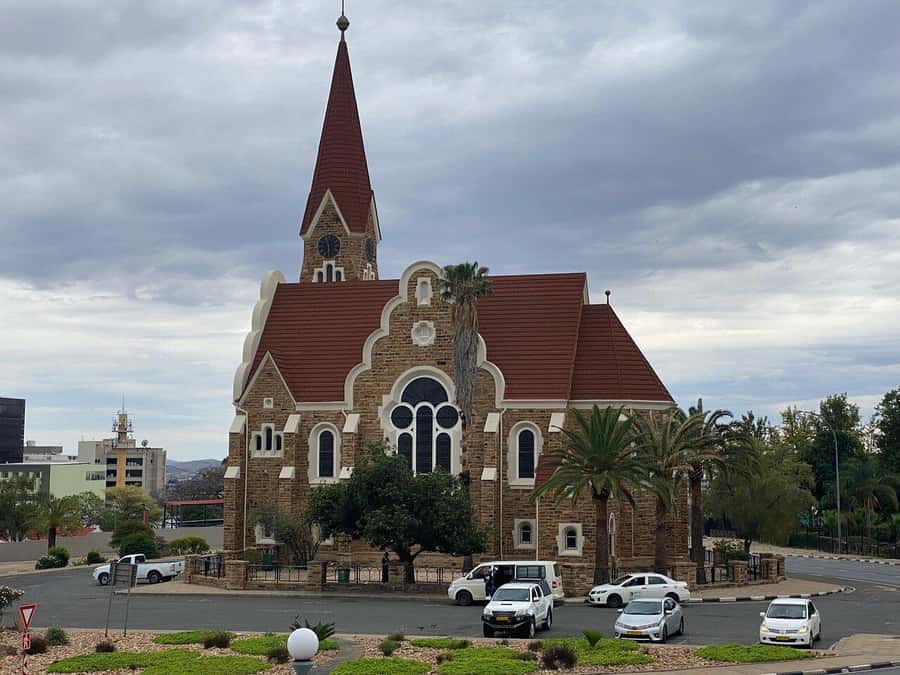
Your first stop is Christuskirche, the Lutheran church in central Windhoek. Its distinctive appearance has made it one of the city’s best-known landmarks, and it offers an immediate introduction to Windhoek’s German colonial period.
You have about 15 minutes here. Your guide explains the church’s background and, if access allows, you may look inside. Since opening arrangements can change, you should think of this primarily as a guided historical stop rather than a guaranteed interior visit.
The short stop works well at the beginning. You get a landmark, a sense of place, and some context before moving on. It is not a long church tour, so anyone hoping for detailed architectural study may find it brief.
Still, the value comes from the explanation around the building. A guide can place Christuskirche within the wider story of Windhoek rather than treating it as a photo stop. That matters in Namibia, where colonial buildings cannot be separated from the political events and unequal systems connected to them.
Parliament Gardens and Namibia’s road to independence
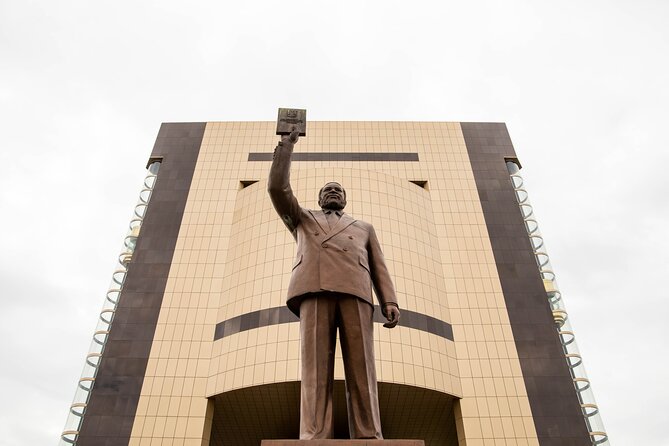
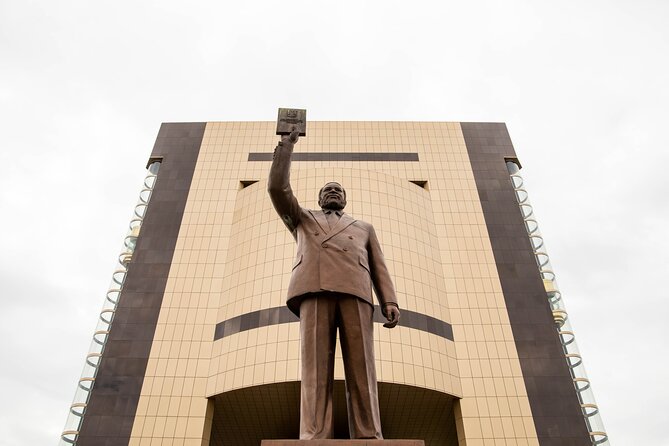
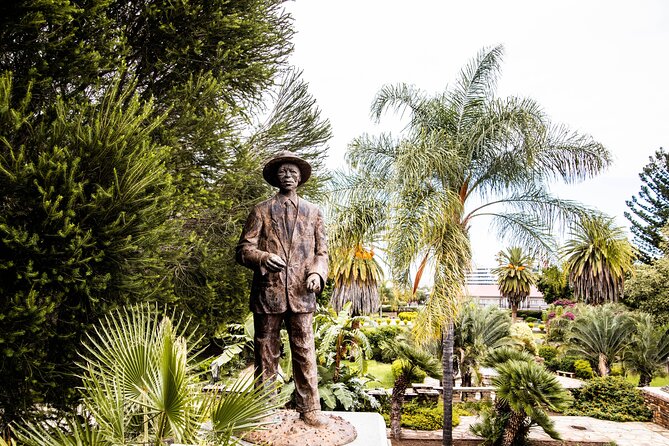
From Christuskirche, the tour continues to Parliament Gardens at the base of the Tintenpalast, Namibia’s Parliament Building. The gardens are a calm green space in the centre, with three statues honoring figures linked to the country’s independence.
You spend about 20 minutes here. The guide explains who these people were and gives you a basic picture of how Namibia’s political system works today.
This is a useful counterpoint to the German-built sights. Christuskirche and Alte Feste point toward the colonial past, while the statues and Parliament Gardens help you consider the country after independence. I like this stop because it gives the tour a clear political thread without turning the morning into a lecture.
Access and visibility may vary. You might not enter the Parliament Building, and the gardens have not always been fully available since the pandemic. If the stop is limited to viewing the area and hearing the explanation, the guide’s storytelling becomes the main reason to stay.
Bring questions. This is one of the better places to ask about independence, current political processes, and how the past still affects modern Namibia. The group size should make that easier than on a large coach tour.
The National Museum and Alte Feste
The National Museum of Namibia is another point of interest on the city route. It contains artifacts from colonial times through modern Namibia, giving you a broader look at the country than the German landmarks alone can provide.
The supplied schedule does not give a fixed visiting time for the museum, so treat it as part of the city sightseeing rather than a guaranteed extended museum visit. If you want a long indoor museum session, confirm the current arrangement before booking.
Alte Feste, or Old Fort, receives a dedicated stop of about 10 minutes. It is described as Windhoek’s first building and was used by the German army to defend its control of the city. It later served as a museum, but it now may be empty.
That can sound like a weak stop, but the fort still matters. The building helps you see how military power shaped the early city, and your guide can explain what happened there and why it remains part of Windhoek’s story.
Do not expect a polished attraction with displays at every turn. The appeal is the setting and the explanation. If you enjoy ruins, old forts, and political history, you will appreciate it. If you need every stop to offer an open museum, this part may feel thin.
A few more Windhoek trips worth a look
- 6-Day Dunes and Wildlife Accommodated Safari from Windhoek
★ 5.0 · 123 reviews - 10-Day Namibia Highlights Guided Tour from Windhoek
★ 5.0 · 78 reviews - 12 Day Classic Namibia Camping Safari
★ 5.0 · 77 reviews - 3 Day Sossusvlei Budget Camping Safari
★ 5.0 · 62 reviews
Katutura: the most revealing hour
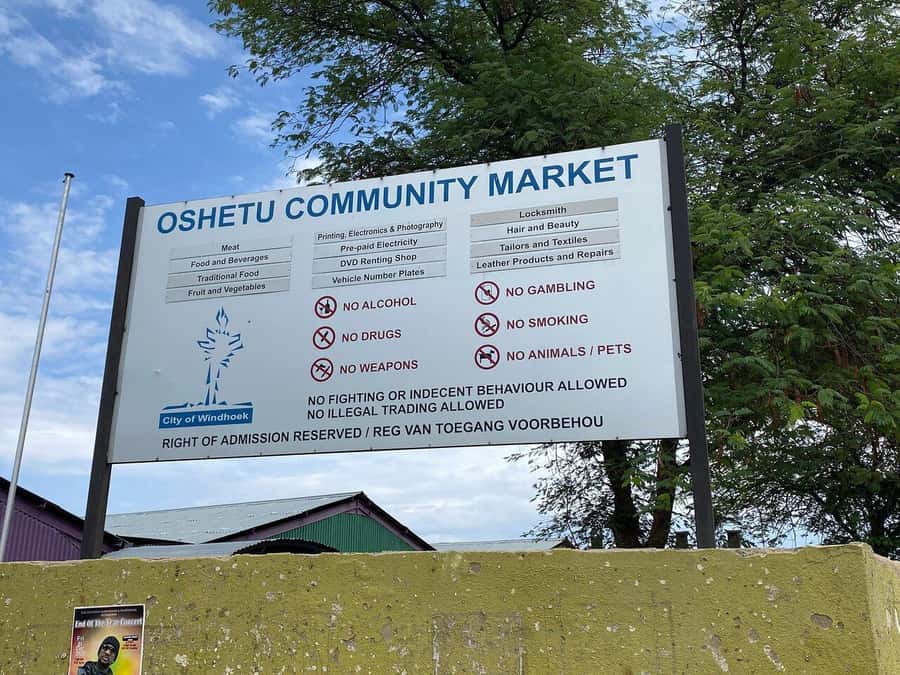
Katutura is where the tour changes pace. You spend about an hour exploring the township, visiting a local market, meeting people, and trying Namibian street food.
For many people, this is the most meaningful section of the morning. You are not simply looking at a historic building. You are seeing a residential district, local commerce, and food traditions as part of daily life.
The market visit gives you a direct, practical way to connect with the area. Kapana, a popular grilled meat dish, is specifically mentioned as a tasting highlight. Snacks are included, so you can try local delicacies without having to arrange a separate food stop.
I would approach Katutura with respect and curiosity. This is not a staged attraction, and the purpose is not to treat the township as a spectacle. Listen to your guide, ask before taking photographs, and let the local setting guide the experience.
The tour description says you meet local people, and one account also describes a house visit. Because that detail is not listed as a standard scheduled stop, you should not assume it will happen on every departure. Ask the operator if it is important to you.
The guide’s role matters especially here. Emmanuel has been praised for making a visit to Katutura feel personal, while Petrus has been credited with explaining the township and its residents clearly. A local guide can provide context that you would not get by driving through on your own.
You should also allow for emotional complexity. Namibia’s past includes painful chapters, and the township section connects those events with present-day life. The tour aims to show both hardship and community, rather than presenting a one-note picture.
Penduka Village and shopping with a purpose
The final stop is Penduka Village, a craft project focused on helping local women support themselves and their families. You spend around 30 minutes here.
This is more than a standard souvenir shop. The visit introduces you to a social enterprise and gives you a practical way to support its work. You can look at locally made crafts and buy gifts before returning to your hotel or meeting point.
I like the timing. After the heavy subjects of colonial rule, forced separation, and inequality, Penduka offers a constructive way to think about local action and economic independence. It does not erase the problems discussed earlier, but it shows people building opportunities within their communities.
The stop is also useful if Windhoek is the beginning of a longer Namibia trip. You may want small gifts, and buying directly from a craft project can feel more connected to the place than picking up generic airport merchandise.
Thirty minutes is enough for a look and a purchase, though not enough for a long workshop or detailed craft lesson. If you dislike shopping stops, you can still use the time to understand the project and see how it fits into the wider social story of the tour.
What the three-hour schedule feels like
The tour lasts about three hours, although one account describes completing the route in roughly three and a half hours. That difference is normal for a city tour with questions, traffic, food, and several stops.
The schedule is fairly full:
- Christuskirche: about 15 minutes
- Parliament Gardens: about 20 minutes
- Alte Feste: about 10 minutes
- Katutura: about one hour
- Penduka Village: about 30 minutes
The remaining time is used for driving, explanations, and city views. You will see more of Windhoek than the stop list suggests because the route passes through central areas and residential districts.
I would book this early in your stay. It gives you useful orientation and may help you decide where to return later. A morning departure also leaves the rest of the day open for other plans.
The pace will suit you if you want a clear introduction in a short window. It may not suit you if you prefer to spend an hour at each monument or stop for long photographs. The tour is about range and context, not lingering at one site.
Guides, vehicles, and group size
The maximum group size is seven people. That is a major advantage for a tour that includes discussion and a township visit. You are more likely to hear the guide, ask follow-up questions, and keep the group moving without the delays of a large coach.
Petrus is the guide most often associated with this experience. He is described as friendly, patient, attentive, and well informed about Windhoek and Namibian history. He has also been praised for sharing personal experience of living in the city and for handling questions from a mixed group.
Esther and Emmanuel have also guided the route. The exact guide is not guaranteed, but the repeated strength of the guiding suggests that the operator places real value on local interpretation.
The vehicle has been described as clean and comfortable. Pickup and drop-off are available if you select that option, and the service applies in Windhoek. If you do not choose pickup, check the meeting instructions on your confirmation.
Most people can participate, and the tour is near public transportation. Children must be accompanied by an adult, and the child rate applies only when sharing with two paying adults.
Is $37.38 a fair price?
At $37.38 per person, this is a good value if you want more than a central-city drive. You are paying for roughly three hours with a guide, transport during the tour, a market visit, Namibian snacks, and a stop at Penduka.
The price makes more sense when you consider the range of the route. A short walk around central Windhoek would cover Christuskirche, Parliament, and nearby historic buildings, but it would not easily take you to Katutura or Penduka. The tour combines those areas in one morning.
Hotel pickup costs extra if you choose the upgraded option. I see that as worthwhile if you are unfamiliar with Windhoek, staying outside the centre, or simply want an easy start. If you are already near the meeting point and comfortable using public transport, the basic option may be enough.
The value is less clear if you want formal admissions or long museum visits. The listed stops are free, and some buildings may not be open. You are mainly paying for transport, local guidance, organization, food, and access to parts of the city that are harder to understand independently.
Who should book this Windhoek tour?
I would recommend it to first-time visitors with one or two days in Windhoek. It gives you a broad introduction without taking a full day, and it covers both the postcard landmarks and the places that explain how people live now.
It is also a strong choice if you want local food and conversation rather than only architecture. The kapana tasting and Katutura market give the tour a more direct connection to everyday Namibia.
History-minded visitors will appreciate the route through Christuskirche, Parliament Gardens, and Alte Feste. The political background is not an optional extra here. It is part of understanding why Windhoek looks and feels the way it does.
I would be more cautious if you want guaranteed indoor access at every stop, a slow photography tour, or a specialist architectural guide. The church, fort, and gardens may have limited access, and the schedule moves quickly.
The experience requires good weather. If poor weather causes cancellation, you are offered another date or a full refund. You can cancel for a full refund up to 24 hours before the start time, but changes or cancellations inside that window are not refunded.
Should you book it?
Book this tour if you want to understand Windhoek beyond the centre and have only a morning or afternoon available. Its strongest features are the small group, the local guides, the Katutura market, the food tasting, and the way Penduka adds a practical social focus.
The main limitation is the condition or access status of some central sights. You may see more from outside than inside. Even so, the route earns its price through the guide’s explanations and the move from colonial monuments to local neighborhoods.
For a first introduction to Windhoek, I would choose the hotel pickup option if convenience matters and ask questions during the Katutura section. That is where this tour gives you something a basic city drive cannot.
FAQ
How long does the Windhoek City Tour last?
The tour lasts approximately three hours. One account describes completing the route in about three and a half hours, depending on timing and questions.
How much does the tour cost?
The listed price is $37.38 per person. Hotel pickup and drop-off are included only when you select that option.
Is hotel pickup available?
Yes. Pickup and drop-off are offered in Windhoek when you choose the relevant option.
What places does the tour visit?
The route includes Christuskirche, Parliament Gardens, the National Museum area, Alte Feste, Katutura, and Penduka Village.
Is food included?
Yes. Snacks and local delicacies are included. The Katutura section includes a chance to try Namibian street food such as kapana.
How large is the group?
The tour has a maximum of seven travelers.
Can children join the tour?
Yes. Children must be accompanied by an adult, and the child rate applies only when sharing with two paying adults.
What is the cancellation policy?
You can cancel at least 24 hours before the start time for a full refund. Cancellations or changes made less than 24 hours before the start time are not refunded. Poor-weather cancellations offer a different date or a full refund.
Just added around Windhoek
- From Windhoek: 3-Day Sossusvlei Shared Shuttle Tour★ 3.8 · 3 reviews
- Windhoek: Katutura Township Tour with Local Guide★ 3.5 · 3 reviews
- 3 day Sossusvlei Camping★ 5.0 · 3 reviews
- Knight Vibes: Bars, Shebeen, Clubs Crawl Windhoek★ 5.0 · 3 reviews
- 10 DAYS BEAUTY OF NAMIBIA | Guided Lodge★ 5.0 · 3 reviews
- Windhoek: City & Township tour. Vehicle, guide, kapana★ 4.2 · 4 reviews
- Predator Encounter: Half-Day Carnivore Feeding Windhoek★ 4.0 · 5 reviews
- Airport Transfers★ 5.0 · 5 reviews
Windhoek City Tours, compared.
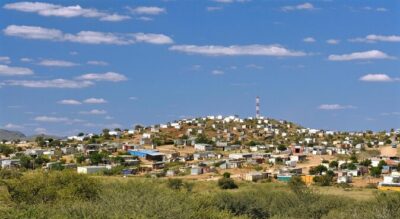
Half-Day Windhoek City and Township Cultural Tour
Read our review →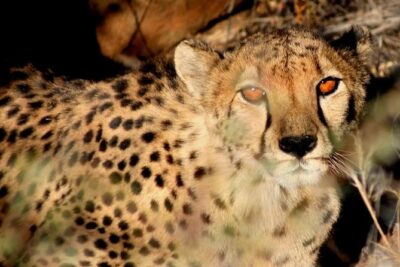
6-Day Dunes and Wildlife Accommodated Safari from Windhoek
Read our review →10-Day Namibia Highlights Guided Tour from Windhoek
Read our review →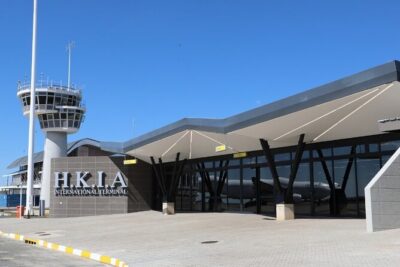
Private Transfers between Windhoek and Hosea Kutako Int. Airport
Read our review →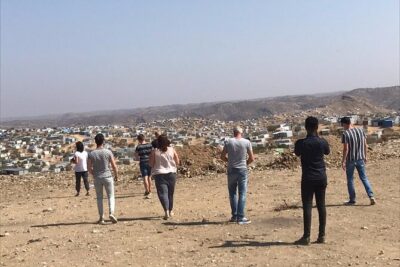
4-Day Swakopmund And Sossusvlei Accommodated Adventure from Windhoek
Read our review →
Private Guided Walking Tour with the San in Windhoek
Read our review →Browse the lists this tour appears in