
Reviewed · WINDHOEK
Predator Encounter: Half-Day Carnivore Feeding Windhoek
A cheetah, leopard, lion, wild dog, caracal, or baboon feeding is not something you see from an ordinary city tour. At Naankuse Wildlife Sanctuary, you watch experienced guides feed these ambassador animals at close range, then head out on a reserve drive for a chance to spot other wildlife.
I like two things here. First, the tour connects the animals with Namibia’s conservation work rather than treating them as simple photo props. Second, the small maximum of 10 people and included air-conditioned transport make a five-hour outing from Windhoek fairly easy to manage. The main drawback is important: this is a sanctuary feeding experience, not a free-ranging safari, and some people may find the controlled setting sad or less natural than expected.
Key points to know before you book
- Six predator species may be included: Cheetahs, leopards, lions, caracals, wild dogs, and baboons are listed among the ambassador animals at Naankuse.
- The animals cannot return to the wild: They are cared for because different circumstances prevent their release.
- The feeding is guided and controlled: You watch trained guides provide food while explaining animal behavior and conservation.
- A reserve drive follows the feeding: The second part gives you a chance to spot additional wildlife across the sanctuary.
- Transport begins at Zoo Park: Pickup starts at Park Street in Windhoek at 8:00 am, with return to the same meeting point.
- The group is capped at 10 people: That is useful for photographs and for hearing the educational talks without a large crowd.
What the Naankuse carnivore experience really is
This half-day outing gives you a close look at animals that live in a protected, semi-wild setting. The word ambassador matters here. These are not simply wild predators waiting beside a tourist road. They are animals that cannot be released for different reasons, so the sanctuary provides care while using them to teach people about Namibia’s wildlife.
That makes the experience different from a classic safari. You are not spending hours searching a huge reserve for a distant lion or leopard. Instead, you are likely to see several species during a more structured feeding session, with guides nearby and conservation information built into the visit.
I think this format works well if you want to understand predator behavior without committing to a multiday safari. You may see agility, strength, feeding habits, and social behavior at close range. You also get a clearer explanation of why carnivores matter and why protecting them can be difficult when livestock, farms, and wild animals share the same area.
It is also fair to arrive with realistic expectations. The animals are in controlled habitats, and the feeding follows a set routine. If your ideal wildlife day means sitting quietly for hours until a completely wild leopard appears on its own, this will not replace that experience.
More Windhoek city tours:
- Windhoek: City and Township Tour
★ 4.8 · 430 reviews - Half-Day Windhoek City and Township Cultural Tour
★ 4.5 · 187 reviews - Windhoek: Bushman Walk with the San
★ 4.9 · 145 reviews
Leaving Windhoek at 8:00 am
The day begins at Zoo Park on Park Street in Windhoek. Pickup is offered, and the tour ends back at the same meeting point, which keeps the morning simple if you are staying in the city and have other plans later.
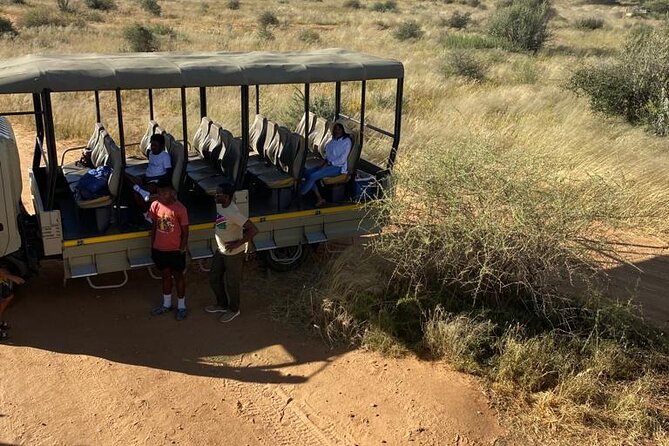
The drive is made in an air-conditioned vehicle. That small detail matters in Namibia, where a comfortable ride can make the difference between enjoying the outing and spending the morning thinking about heat and dust. The total experience lasts about five hours, so you should have enough time for the sanctuary visit and reserve drive without giving up a full day in Windhoek.
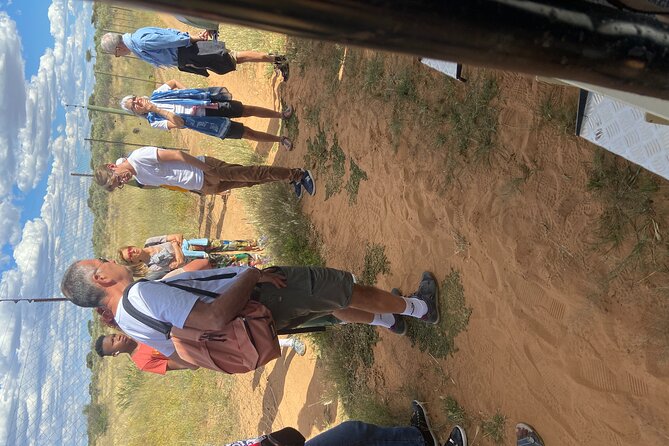
The group limit is 10 people. A smaller group is useful here because the point is not only to see the animals. You will want to hear the guide, find a clear photography angle, and ask questions about conservation. A large coach group would make those simple pleasures harder.
You should be ready for moderate physical activity. The exact amount is not specified, but this is more than sitting in a city vehicle from start to finish. Wear practical clothes and shoes that are comfortable for moving around the sanctuary.
Meeting Naankuse’s ambassador animals
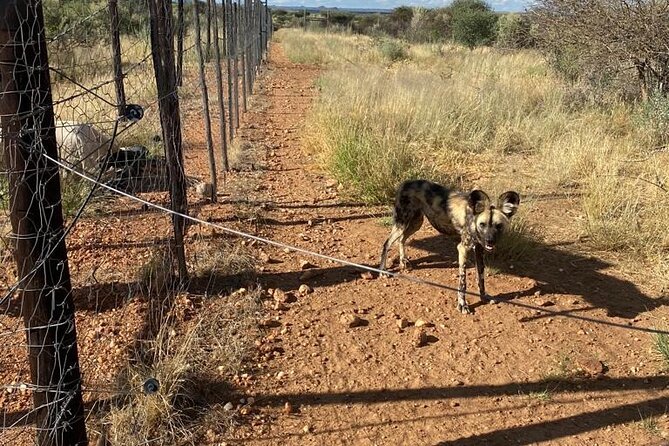
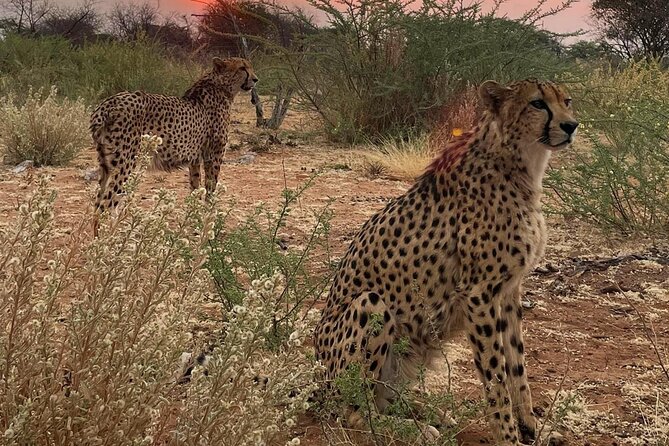
The animal list is one of the strongest reasons to consider this tour. The sanctuary visit may include baboons, caracals, lions, cheetahs, wild dogs, and leopards. Seeing this many carnivore species in one morning is a useful introduction to Namibia’s predators, especially if you have limited time in the country.
Each animal brings a different lesson. A cheetah gives the guide a chance to discuss speed, body shape, and hunting behavior. A leopard can prompt questions about solitary habits and strength. Lions allow you to think about social behavior, while wild dogs show how cooperation can shape the life of a predator.
Caracals are particularly appealing because many people know less about them than lions or cheetahs. Their smaller size does not make them less interesting. Baboons add another layer to the visit, showing that the sanctuary’s animal care extends beyond the biggest cats.
The animals are known as ambassador animals because they cannot be returned to the wild. That point is central to the visit, not a footnote. You are seeing animals whose lives have taken a different path, and their presence helps the sanctuary explain the need for protection, responsible care, and less conflict between people and wildlife.
The exact order and number of animals may vary. The tour description says the opportunity includes these species, but it does not promise that every animal will be visible at every feeding. Animal behavior still has the final say, even in a scheduled sanctuary setting.
Watching the feeding from a safe position
The feeding is carried out by experienced guides in a controlled environment. You watch as food is provided and the animals respond. This can reveal natural behaviors that are hard to spot from a distance, including alertness, physical power, movement, and feeding patterns.
The close setting is also the main photo opportunity. You can photograph the animals at a scale that is rarely possible on a normal game drive. Bring a camera or phone with enough storage and battery, but remember that the best image is not always the closest image. Listen to the guide and keep the animals’ welfare ahead of the perfect shot.
The controlled arrangement should reassure you, but it should not be mistaken for a hands-on petting session. The animals are predators, and the feeding is managed by trained staff. You are there to observe, learn, and photograph, not to interact freely with the cats or wild dogs.
This is where the tour can divide opinion. Some people will find the close access thrilling and memorable. Others may feel uncomfortable seeing carnivores in a managed setting, especially if they were expecting an open safari. I would make that distinction clear before booking: you are visiting a wildlife sanctuary with feeding demonstrations, not entering a cage-free predator encounter.
A few more Windhoek trips worth a look
- Walvis Bay: Sandwich Harbour Half-Day 4×4 Scenic Excursion
★ 5.0 · 426 reviews - Pelican Point Kayaking Half-Day Tour
★ 5.0 · 349 reviews - Etosha National Park: Full or Half-Day Game Drive
★ 4.6 · 175 reviews - Sandwich Harbour Half-Day 4×4 Tour (5 hours) from Walvis Bay
★ 5.0 · 169 reviews
Conservation lessons beyond the photo stop
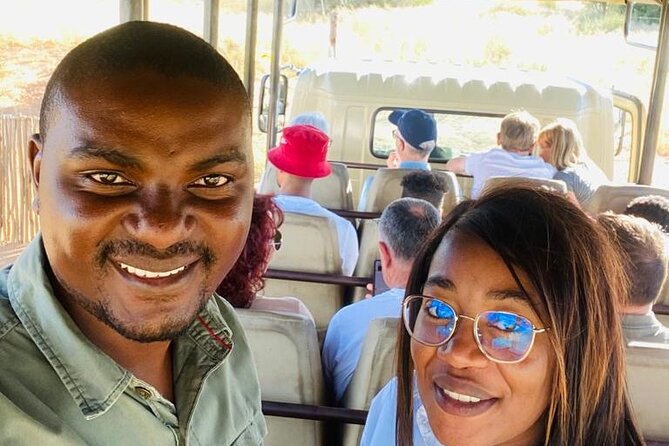
The educational talks give the outing its purpose. Guides discuss the biology and habitat of Namibia’s carnivores, along with the problems involved in protecting them. You also learn about human-wildlife conflict and community-based conservation initiatives.
That context is valuable because predators are not just dramatic animals for photographs. They are part of the wider ecological balance. When carnivores disappear, the relationship between prey species, vegetation, and human communities can change. The tour helps you see why conservation involves more than fencing off animals and hoping for the best.
Community-based conservation is especially worth your attention. Protecting predators often requires local people to have a reason to support wildlife, particularly in places where livestock and wild animals compete for space. The talks are designed to show how these projects try to reduce conflict and give conservation a practical role in nearby communities.
The quality of the experience depends heavily on the guide leading your group. The available information does not provide guide names, so you should not expect a named wildlife expert in advance. What is clear is that the feeding is handled by experienced guides and that the talks are part of the planned visit.
The reserve drive after feeding
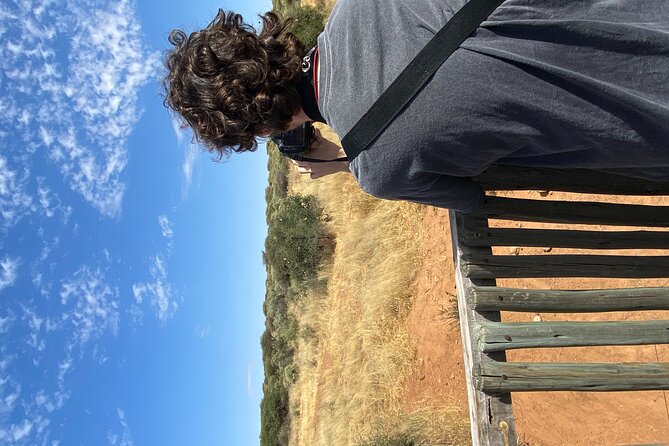
After the feeding session, you take a scenic drive through the reserve. This changes the rhythm of the morning. Instead of watching animals at a managed feeding point, you move through a larger area with a chance of spotting other wildlife.
The drive is not presented as a guaranteed big-game safari. It is a chance to look for animals across the reserve after the scheduled sanctuary visit. That distinction matters for your expectations. You may see something memorable, but the tour does not promise a particular species or a long list of sightings.
I like this second part because it gives the morning some variety. The feeding session offers reliable access to ambassador animals, while the drive adds a little uncertainty and the possibility of a more natural sighting. You get both the educational structure of the sanctuary and the anticipation of scanning the reserve.
Keep your eyes open and listen to the guide during the drive. The most useful approach is to treat it as an extra wildlife opportunity, not as the sole reason to book. If you want the highest chance of seeing the named predators, the feeding visit is the main event.
Is $170.92 a fair price?
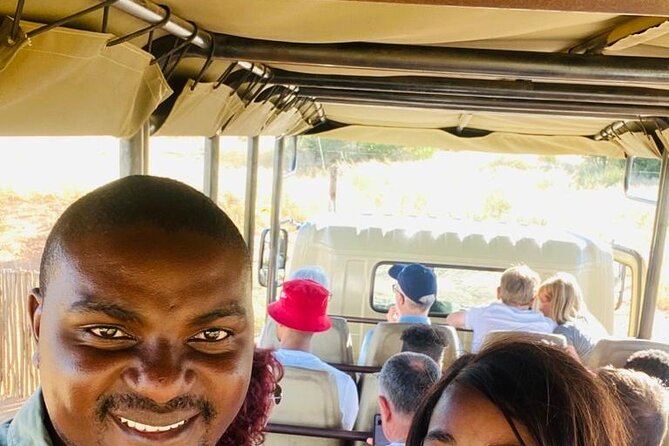
At $170.92 per person, this is not a cheap morning activity. The price needs to be judged against what is included: about five hours, return transport from Windhoek, an air-conditioned vehicle, access to Naankuse, the guided feeding, conservation talks, and the reserve drive.
For someone with only a short stay in Windhoek, the value is reasonably clear. You can see several predator species without arranging a longer safari, and transport is already handled. The small group limit also adds practical value, particularly if photography and guide access matter to you.
The price is harder to justify if you are already planning a multiday safari with extensive game drives. In that case, you may prefer to spend the money on more time in a fully wild setting. The sanctuary visit offers a different kind of access, not a replacement for hours spent tracking free-ranging wildlife.
The cost also reflects the care and educational role of a sanctuary. You are paying for more than a drive past animals. The visit supports a setting where animals unable to return to the wild are cared for, while the talks explain the larger conservation problem. Still, you should decide if that controlled setting fits your values before paying.
This experience is booked an average of 32 days ahead, so it is sensible to reserve early if the date matters to you. The maximum group size is 10, and limited departures can fill quickly.
Who should book this half-day tour?
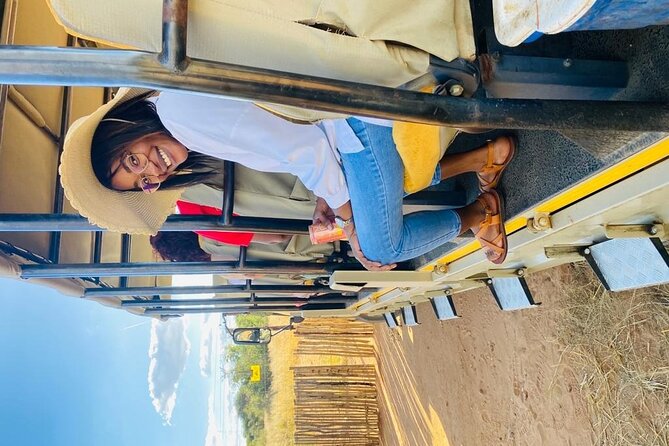
I would recommend it to you if you are based in Windhoek, want a focused wildlife morning, and would like to see several predator species without spending a full day or several nights on safari. It also suits photographers who value a closer, more predictable subject than a distant animal seen briefly from a vehicle.
Families and first-time visitors to Namibia may also appreciate the simple format, though the moderate fitness requirement means you should be comfortable with some movement around the sanctuary. Anyone interested in conservation will get more from the visit than someone looking only for dramatic photographs.
You should think twice if you want an entirely wild encounter. The animals are ambassador animals in managed habitats, and the feeding is controlled. That does not make the visit worthless, but it does make it a different product from a traditional game drive.
Weather can affect the outing. If poor weather forces cancellation, you are offered another date or a full refund. You can also cancel for a full refund up to 24 hours before the start time, but changes or cancellations inside that window are not refunded.
Should you book the Naankuse predator feeding tour?
Book this tour if you want close views of cheetahs, leopards, lions, wild dogs, caracals, and baboons, plus a clear explanation of why some animals cannot return to the wild. The included transport, five-hour schedule, and 10-person maximum make it a practical addition to a Windhoek stay.
Do not book it expecting an open safari or a completely unstructured wildlife encounter. The best reason to go is the combination of close observation, conservation education, and a short reserve drive. If that sounds like the wildlife experience you want, the price can make sense. If you are seeking only free-ranging animals, save your money for a longer safari instead.
FAQ
Where does the tour start?
The tour starts at Zoo Park, C3MP+432, Park Street, Windhoek, Namibia.
What time does the tour begin?
The scheduled start time is 8:00 am.
How long does the experience last?
The experience lasts approximately five hours.
Which animals might I see?
The sanctuary visit includes the opportunity to see baboons, caracals, lions, cheetahs, wild dogs, and leopards. These are ambassador animals that cannot be released back into the wild for different reasons.
Is transportation included?
Yes. Pickup is offered, and transport is provided in an air-conditioned vehicle. The tour ends back at the meeting point.
Can I cancel for a full refund?
Yes. You can cancel at least 24 hours before the experience start time for a full refund. Cancellations or changes made less than 24 hours before the start time are not refunded. If poor weather causes the tour to be canceled, you are offered another date or a full refund.
Just added around Windhoek
- From Windhoek: 3-Day Sossusvlei Shared Shuttle Tour★ 3.8 · 3 reviews
- Windhoek: Katutura Township Tour with Local Guide★ 3.5 · 3 reviews
- Knight Vibes: Bars, Shebeen, Clubs Crawl Windhoek★ 5.0 · 3 reviews
- 3 day Sossusvlei Camping★ 5.0 · 3 reviews
- 10 DAYS BEAUTY OF NAMIBIA | Guided Lodge★ 5.0 · 3 reviews
- Windhoek: City & Township tour. Vehicle, guide, kapana★ 4.2 · 4 reviews
- Airport Transfers★ 5.0 · 5 reviews
- 3 Day Camping tour at Etosha National Park★ 5.0 · 5 reviews
Windhoek City Tours, compared.
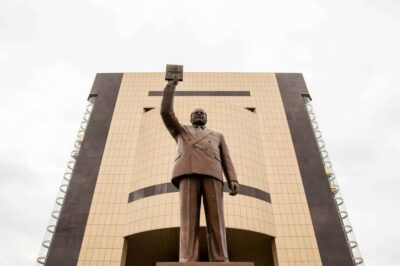
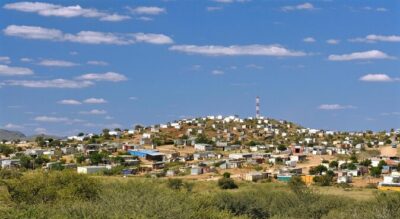
Half-Day Windhoek City and Township Cultural Tour
Read our review →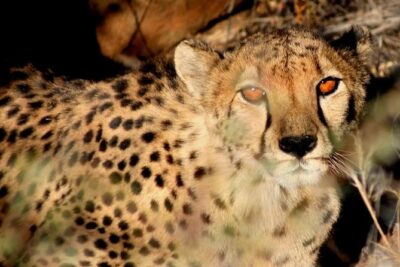
6-Day Dunes and Wildlife Accommodated Safari from Windhoek
Read our review →10-Day Namibia Highlights Guided Tour from Windhoek
Read our review →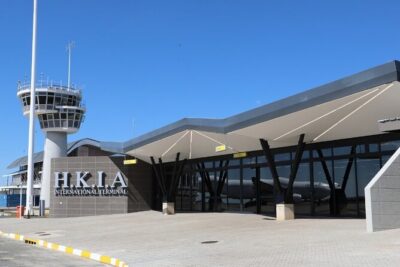
Private Transfers between Windhoek and Hosea Kutako Int. Airport
Read our review →
4-Day Swakopmund And Sossusvlei Accommodated Adventure from Windhoek
Read our review →
Browse the lists this tour appears in