
Reviewed · WINDHOEK
7 Day – Kalahari TOP attractions
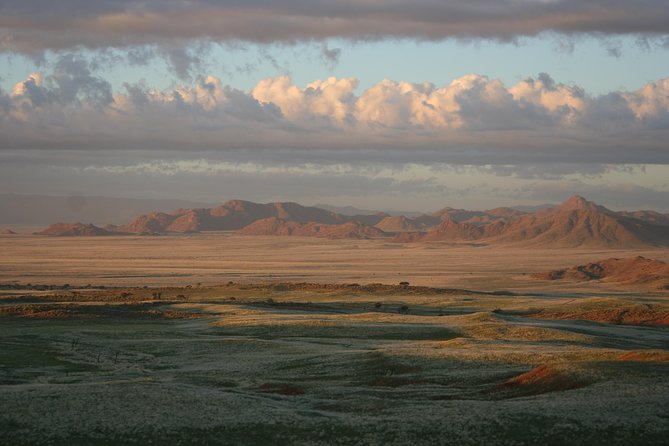
The great draw here is the sheer variety packed into seven days. You move from the towering dunes of Sossusvlei to the Atlantic coast, a ghost town, one of Africa’s great canyons, and the red Kalahari. It is a big road journey, but the scenery keeps changing.
I like the small group size, capped at 10 people, and the chance to travel with a professional guide rather than worry about navigation across a huge, unfamiliar country. I also like the strong photography focus, especially sunrise at Dune 45 and sunset at Fish River Canyon.
The catch is simple: there is a lot of time in the vehicle. This is not a relaxed lodge stay or a classic wildlife safari. You cover long distances to reach Namibia’s best southern sights, so you should enjoy road travel, early starts, and wide-open country.
Key points about this seven-day Namibia route
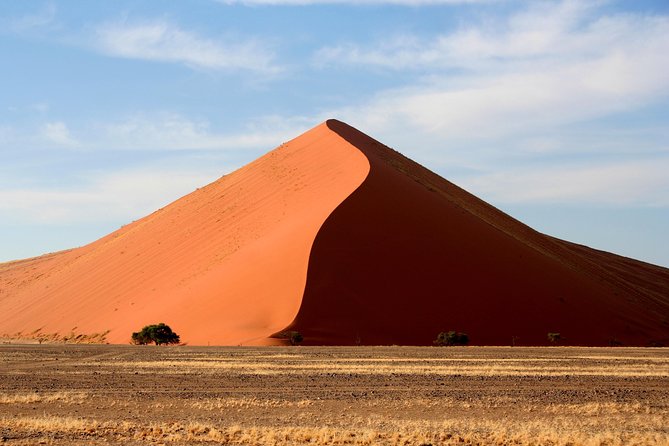
- Dune 45 at sunrise: Climb one of Namibia’s best-known dunes while the early light changes the color of the sand.
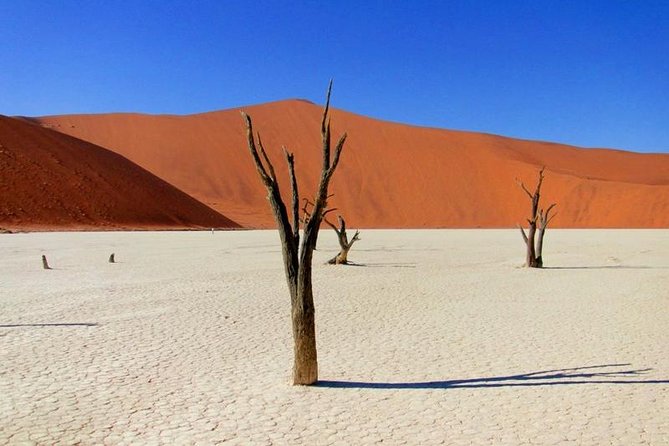
- Deadvlei and Sossusvlei: Walk among stark white clay, dead camel thorn trees, and towering red dunes.
- Luderitz and Kolmanskoop: See a remote coastal town, Diaz Cross, and a desert ghost town shaped by diamond mining.
- Fish River Canyon at sunset: Enjoy a dramatic canyon viewpoint and excellent late-day photo light.
- Kalahari geology and wildlife: Visit the Quiver Tree Forest, Giant Playground, and Mesosaurus Fossil site, with chances to see oryx, ostrich, zebra, baboons, jackals, and klipspringer.
- Practical guided travel: Your price covers lodging, meals, park fees, fuel surcharge, bottled water, guide service, and pickup and drop-off.
Why this route works for a short Namibia trip
Namibia is a country of distance. The best sights are not lined up around one central base, and a seven-day route can only cover so much. This tour makes a clear choice: it concentrates on the south, where desert scenery, coastal history, unusual geology, and canyon views create a strong set of contrasts.
You start and finish in Windhoek, which keeps the trip easy to connect with before or after other plans. At the end, your guide drops you at the hotel or lodge of your choice in Windhoek. That is useful if you are adding time in the capital or connecting to another part of Namibia.
The group limit of 10 matters. A small vehicle makes a long trip more manageable, and it gives you a better chance to ask questions, adjust short stops, and get help with photo opportunities. Previous guide teams have included Michael, Jephta Kapuenene, Rolencia, and KK, all named in connection with this company’s Namibia tours. Your assigned guide may differ, so do not book based on a promise of one particular person unless the operator confirms it.
A few more Windhoek trips worth a look
- 7 Day Southern Namibia and Sossusvlei Camping Safari
★ 5.0 · 26 reviews - 7 Day Northern Namibia and Skeleton Coast Camping Safari
★ 5.0 · 19 reviews - 7 Day Taste of Namibia Lodging Safari
★ 5.0 · 13 reviews
Windhoek to the Namib Desert
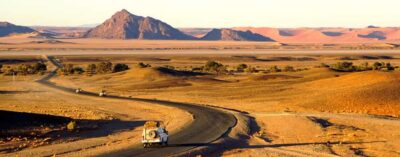
The tour begins with pickup in Windhoek at about 8:00 a.m. From there, the road leads toward the Namib Desert through broad, dry country. The appeal starts before the famous stops. You are watching the land open up, with long views, changing colors, and very little development.
The route includes Spreetshoete Pass, where you can stop for wide views across the Namib. This is the sort of place where a short break earns its keep. You can stretch your legs, take panoramic photos, and get a first sense of how large southern Namibia feels.
Wildlife sightings are possible along the way. The list includes oryx, ostrich, zebra, klipspringer, baboons, jackals, and other animals. Keep your expectations sensible. This section is not presented as a dedicated game drive, and sightings depend on luck, timing, and the animals’ movements. Still, seeing an oryx move across an empty desert setting can be one of the trip’s most memorable moments.
The drive itself is part of the experience, but it can also be tiring. Ask your guide how the day is paced, and use stops to walk, drink water, and reset your eyes after long hours of looking through the vehicle windows.
Sossusvlei, Dune 45, and Deadvlei
The Sossusvlei area is the tour’s visual centerpiece. The dunes here are among the highest on Earth, and their curves look different every hour as the sun moves. If you enjoy photography, this is the part of the trip to plan around.
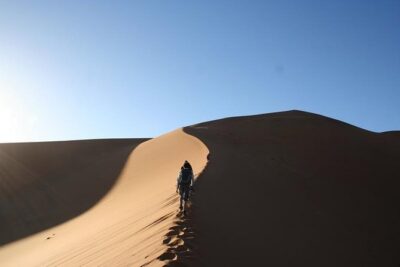
The schedule calls for climbing Dune 45 at sunrise. The early start is worth it for the light, but the climb requires effort. Sand shifts under your feet, and even a moderate-looking ridge can take time. You do not need to rush. Walk at your own pace, stop for water, and let the guide explain the best approach.
At the top, the reward is a broad view over rippled sand and sharp ridgelines. Sunrise brings cooler air and softer color, while later light creates stronger orange and red tones. If you carry camera equipment, protect it from sand and keep only what you need close at hand.
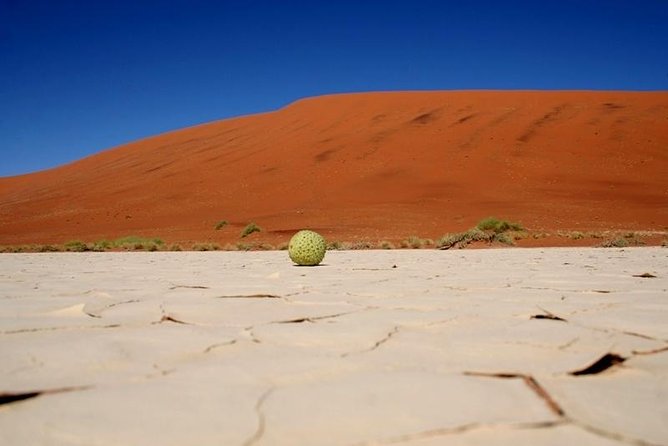
The walk to Deadvlei gives you a different kind of desert scene. The white clay floor, dark dead trees, and red dunes create a stark contrast that is easy to remember and hard to photograph badly. I like this stop because it is not just a scenic lookout. You walk into the setting and spend time among the trees and clay pan.
The area can be physically demanding because of sand, sun, and walking. Comfortable shoes, a hat, sunscreen, and drinking water are practical basics. The tour includes bottled water, but you should still drink regularly rather than wait until you feel thirsty.
The Spreetshoete Pass and desert photo stops
The pass deserves more than a quick mention because it helps frame the whole route. At Sossusvlei, your attention goes to the dunes. At Spreetshoete, you get a broader view of the desert’s scale.
This is also where a guide adds real value. A driver can get you from one stop to another, but a guide can point out animals, choose a safe place for a photo stop, and help you understand why the terrain changes. The company’s guides have been praised for being organized, professional, and attentive, but the practical benefit is more important than the label: you do not have to manage every turn, fuel concern, or park fee yourself.
Same country, a completely different kind of day:
- Windhoek: City and Township Tour
★ 4.8 · 430 reviews - Half-Day Windhoek City and Township Cultural Tour
★ 4.5 · 187 reviews - Windhoek: Bushman Walk with the San
★ 4.9 · 145 reviews - 6-Day Dunes and Wildlife Accommodated Safari from Windhoek
★ 5.0 · 123 reviews
Luderitz, Diaz Cross, and the Atlantic edge
After the dune country, the route turns toward Luderitz. This creates one of the tour’s best contrasts. You leave the warm colors of the interior and reach a coastal town with a different mood and setting.
The day includes a visit to the feral horses of the Namib Desert, followed by Diaz Cross and a short tour of Luderitz. The horses are not guaranteed wildlife, so treat this as an opportunity rather than a promise. Their presence in such a dry region is one of the route’s unusual stories, and your guide can help explain what you are seeing.
Diaz Cross adds a historical stop to a trip otherwise dominated by nature. The visit is relatively short, but it breaks up the driving and gives you another reason to look closely at Namibia’s coast.
Luderitz itself is not presented as a long city stay. You get an overview rather than a full cultural tour. That is a limitation if you want several hours to explore independently, but it fits the larger plan. The tour is built around broad coverage, not extended time in each town.
Kolmanskoop, where the desert takes over
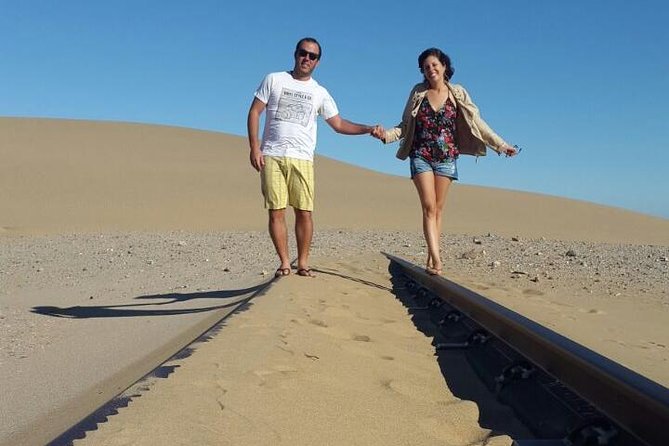
Kolmanskoop is one of the most distinctive stops on the route. This former settlement is known as a ghost town, with abandoned buildings being reclaimed by desert sand. The contrast between human construction and the surrounding emptiness makes it a natural stop for photographers.
Go slowly here. Doorways, rooms, window frames, and sand-filled interiors offer more than one obvious picture. The light can change the feel of a building from ordinary to eerie within minutes.
You should also remember that this is a short tour with many major stops. Your time at Kolmanskoop may not feel long enough if you want to photograph every structure. Decide in advance whether you care more about a broad set of images or a careful study of one or two buildings.
Fish River Canyon at sunset
The route then reaches Fish River Canyon, described as the second biggest canyon in the world. The scale is impressive, but the timing matters just as much as the viewpoint. Sunset brings softer light, longer shadows, and changing color across the rock walls.
I especially like the way this stop gives the trip a different visual language. Sossusvlei is about smooth sand and clean lines. Fish River Canyon is about rock, depth, and broken edges. You are not seeing the same desert repeated; you are seeing how dry country can take several forms.
Sunset is also a good time to slow down. Much of the tour asks you to pack, drive, stop, and move again. At the canyon, you can simply look outward for a while. Bring a warm layer if you have one, since evening conditions can feel cooler than the daytime heat.
Quiver Tree Forest and the Giant Playground
The Kalahari section adds geology and unusual plant life to the route. The Quiver Tree Forest is a natural collection of distinctive trees with thick trunks and branching crowns. It is a strong stop for photos, especially when the low sun creates long shadows.
The Giant Playground gives you another change of scenery, this time with large rock formations piled and balanced across the dry country. The name tells you how to read the place: the rocks are the attraction, and the fun comes from looking at their shapes and scale.
These stops are valuable because they prevent the tour from becoming only a dunes-and-canyon itinerary. You get sand, coast, abandoned buildings, trees, rocks, and wildlife possibilities in one week. That variety helps justify the long drives.
The Mesosaurus Fossil site adds a further layer, with evidence of ancient life in a region that now looks extremely dry. You do not need to be a geology specialist to enjoy it. The point is to see that the country’s story reaches far beyond what the present-day scenery suggests.
Accommodation, meals, and what the price covers
The listed price is $2,185.90 per person. That is a serious amount of money, but it includes the main costs that can make a self-drive trip hard to predict: accommodation, meals as scheduled, bottled water, national park fees, local taxes, fuel surcharge, and guide service.
Breakfast, lunch, and dinner are included according to the itinerary. Drinks are not included, and alcoholic drinks can be bought separately. You should also budget for personal travel and medical insurance, plus insurance for cameras, laptops, or other equipment.
The value depends on how you use the trip. If you want an independent road journey with full control over every stop, this will feel expensive and restrictive. If you want someone else to handle the route, driving, park costs, meals, and accommodation while you focus on the scenery, the package is easier to defend.
The food has been a strong part of the experience for some people, and the accommodation has been described as good to excellent. Still, the exact properties and room arrangements are not provided here, so ask for the current accommodation list before paying if lodging style matters to you.
The road time, vehicle, and group experience
A comfortable, air-conditioned 4WD vehicle has been used for this journey. That is important in southern Namibia, where long road sections connect the major sights. Air conditioning will make the hot stretches easier, while four-wheel drive suits the desert setting.
Even with a comfortable vehicle, seven days is a compact schedule. You will spend a lot of time on the road, and several days involve a major transfer followed by a sightseeing stop. I would not choose this route if you dislike early mornings or sitting in a vehicle for long periods.
The group maximum is 10 people. That is small enough to feel personal, though the experience can still depend on how full the vehicle is. A group of five has worked well on this type of trip, and a small party gives you more room to ask for photo pauses than a large coach tour would.
The guided format also helps if you are nervous about driving in an unfamiliar country. A professional guide handles the route and gives you a local point of contact throughout the journey. Guides such as Michael and Jephta have been singled out for professional, safe, and well-organized service, but personal chemistry will always vary.
Who should book this Kalahari and Namib Desert tour
I would choose this tour if you have one week and want southern Namibia’s main visual highlights in a single organized trip. It suits photographers, first-time visitors who prefer not to drive, couples, small families, and anyone who values scenery more than nightlife or long stays in towns.
It is also a good fit if you want more than wildlife. The route offers possible animal sightings, but its main strengths are dunes, canyon views, desert plants, rock formations, historic sites, and open country. If your top goal is repeated game viewing at water holes, you should look at a dedicated wildlife itinerary instead.
Families should note that the child rate applies only when a child shares with two paying adults. Most people can participate, but you should be ready for walking at Deadvlei, climbing Dune 45, and long vehicle days.
Tell the operator about dietary needs when you book. Vegetarian meals are available if requested in advance.
Practical details before you commit
Pickup is offered, and the tour begins at about 8:00 a.m. You need a current valid passport on the day of travel, and passport name, number, expiry date, and country are required for every participant at booking.
Booking confirmation is sent within 48 hours, subject to availability. The cancellation terms are strict: the experience is non-refundable and cannot be changed for any reason. I would only book once your dates, passport details, insurance, and onward plans are settled.
Wear practical walking shoes for the dunes and Deadvlei. Keep sun protection and water close, and make room for camera batteries, memory cards, and dust protection if photography is central to your trip.
Should you book it?
Book this tour if you want a tightly packed introduction to Namibia’s southern deserts, coast, canyon country, and Kalahari sights, and you would rather have a guide drive than manage the journey yourself. The mix of Sossusvlei, Kolmanskoop, Fish River Canyon, and the Quiver Tree Forest gives you a memorable range of scenery for one week.
Skip it if you want a slow holiday, long time in Luderitz, or a classic safari built around daily animal sightings. At $2,185.90, the value is strongest when you count the included lodging, meals, park fees, transport, and guide service. Go in ready for long drives and early starts, and the route can deliver a remarkable desert getaway.
FAQ
Where does the tour start and finish?
The tour starts in Windhoek and ends back in Windhoek. The guide will drop you at the lodge or hotel of your choice.
How long does the tour last?
The experience lasts approximately seven days.
What time does the tour start?
The stated start time is 8:00 a.m.
Is hotel pickup available?
Yes. Hotel pickup and drop-off are included.
How many people can join the tour?
The group has a maximum of 10 travelers.
Is a passport required?
Yes. A current valid passport is required on the day of travel, and passport details for all participants are needed when booking.
Are meals included?
Yes. Meals are included according to the itinerary, with breakfast, lunch, and dinner provided.
Are drinks included?
No. Drinks are not included. Alcoholic drinks are available to purchase.
Is a vegetarian meal available?
Yes. A vegetarian option is available, but you need to request it when booking. You should also provide any other dietary requirements at that time.
What is not covered in the tour price?
Personal travel and medical insurance, and insurance for personal equipment such as photographic gear or laptops, are not included. The cancellation terms are also strict: the experience is non-refundable and cannot be changed for any reason.
Just added around Windhoek
- From Windhoek: 3-Day Sossusvlei Shared Shuttle Tour★ 3.8 · 3 reviews
- Windhoek: Katutura Township Tour with Local Guide★ 3.5 · 3 reviews
- Knight Vibes: Bars, Shebeen, Clubs Crawl Windhoek★ 5.0 · 3 reviews
- 3 day Sossusvlei Camping★ 5.0 · 3 reviews
- 10 DAYS BEAUTY OF NAMIBIA | Guided Lodge★ 5.0 · 3 reviews
- Windhoek: City & Township tour. Vehicle, guide, kapana★ 4.2 · 4 reviews
- Predator Encounter: Half-Day Carnivore Feeding Windhoek★ 4.0 · 5 reviews
- Airport Transfers★ 5.0 · 5 reviews
Windhoek Tours, compared.
Half-Day Windhoek City and Township Cultural Tour
Read our review →
6-Day Dunes and Wildlife Accommodated Safari from Windhoek
Read our review →10-Day Namibia Highlights Guided Tour from Windhoek
Read our review →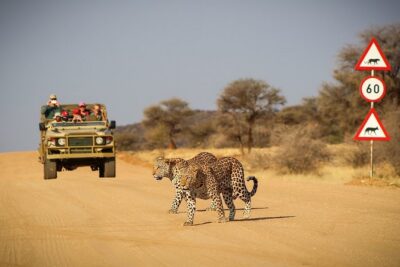
Namibia Self-Driving Audio Guide (in English & German)
Read our review →
Traditional Cooking Class – Mahangu pap for beginners
Read our review →Browse the lists this tour appears in