
Reviewed · WINDHOEK
Windhoek City Tour
Windhoek’s story comes into focus when you move from the neat city center to Katutura township, where Namibia’s apartheid past still shapes daily life. This tour links churches, government buildings, a German fort, local food, crafts, and township life in one compact morning.
I like the mix of major landmarks and ordinary neighborhoods, and I like that Penduka gives you a practical way to support local women through handmade goods. The small-group format can make conversation easier, though vehicle problems, late pickup, or even a missed pickup have affected some bookings.
Key points to know before booking
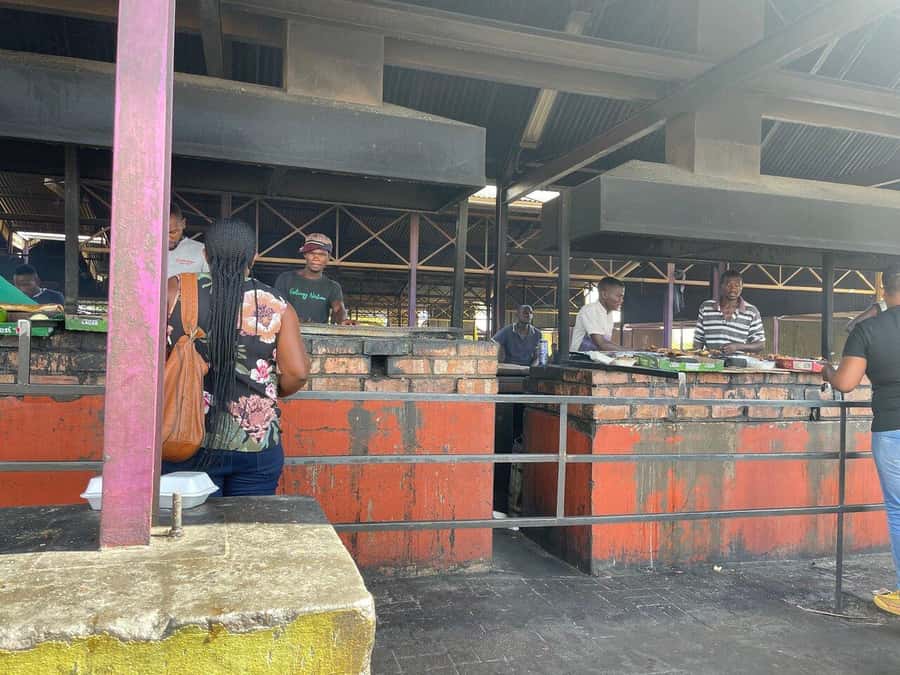
- Katutura is the heart of the tour, with a local market and a look at neighborhoods shaped by apartheid.
- Christuskirche, Parliament Gardens, and Alte Feste give you three different windows into Windhoek’s religious, political, and military past.
- Penduka craft project is both a shopping stop and a social enterprise supporting local women.
- Street food may be part of the experience, with guidance on where to find good local bites.
- Small groups are advertised at about seven people, but the maximum is 13, and a larger group once required a substitute vehicle.
- The tour costs $48 per person and lasts about 2 to 3 hours, making it useful for a short stay or first morning in town.
Why this short tour can explain Windhoek well
Windhoek is easy to underestimate. The central streets are orderly and relatively compact, but the city’s story is not simple. German colonial rule, indigenous traditions, Namibia’s independence movement, and apartheid-era forced removals all shaped the capital you see today.
This outing works best as an introduction rather than a full historical study. You move quickly between several places, so you will not have long at every stop. In return, you get a broad picture without spending an entire day in a vehicle.
I especially like the route’s change of pace. A church and parliamentary garden can feel formal and polished. Katutura is more personal and social. Penduka finishes the morning with handmade products and a chance to spend money in a useful way rather than simply browsing a standard souvenir shop.
The advertised group size is around seven, with a maximum of 13. That is small enough for questions and a more direct exchange with your guide, although the actual vehicle and group arrangement may vary. The tour begins at 8:00 am, a sensible time for fitting in several stops before the day gets too hot.
More Windhoek city tours:
- Windhoek: City and Township Tour
★ 4.8 · 430 reviews - Half-Day Windhoek City and Township Cultural Tour
★ 4.5 · 187 reviews - Windhoek: Bushman Walk with the San
★ 4.9 · 145 reviews
Christuskirche, Windhoek’s familiar city-center landmark
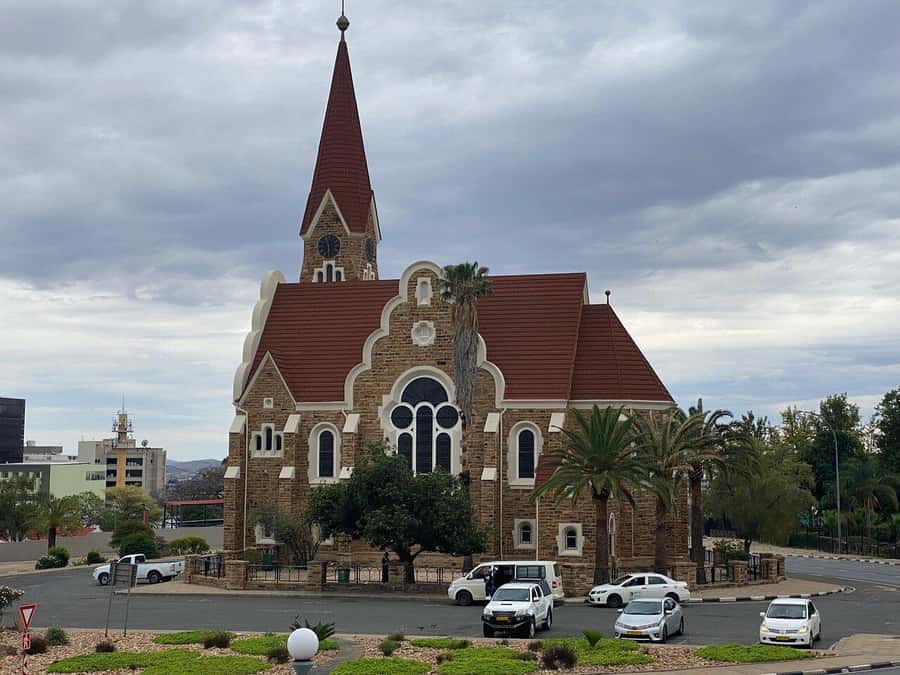
Your first stop is Christuskirche, the Lutheran church at the center of Windhoek. Its distinctive appearance has made it one of the city’s best-known buildings, and it offers a clear starting point for understanding the German influence on Windhoek.
You have about 15 minutes here. Your guide explains the church’s place in the city’s past, and, if timing allows, you may look inside. That last point matters. Interior access is not guaranteed, so you should think of this primarily as a short orientation stop rather than a long church visit.
The church also introduces one of the tour’s important tensions. German colonial architecture is visible and well preserved in parts of central Windhoek, but the story behind it includes military control and the subordination of local communities. A good guide can help you see both the attractive building and the harder facts connected to its era.
Because this is the first stop, it is also where any confusion about the morning’s schedule may get cleared up. Allow yourself a little patience at the beginning. The tour has several moving parts, and the first stop is a useful moment to confirm what comes next.
Parliament Gardens and the people behind independence
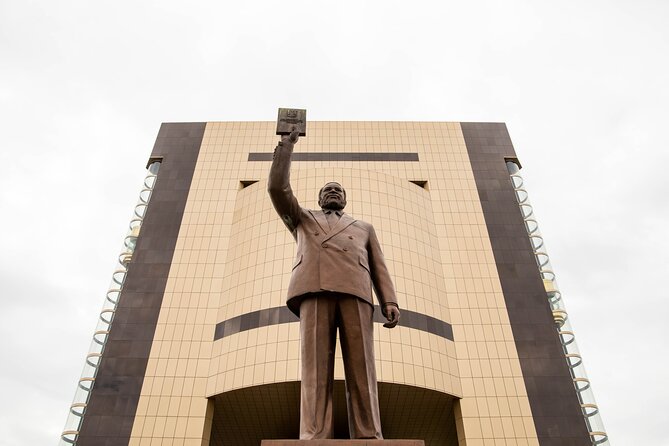
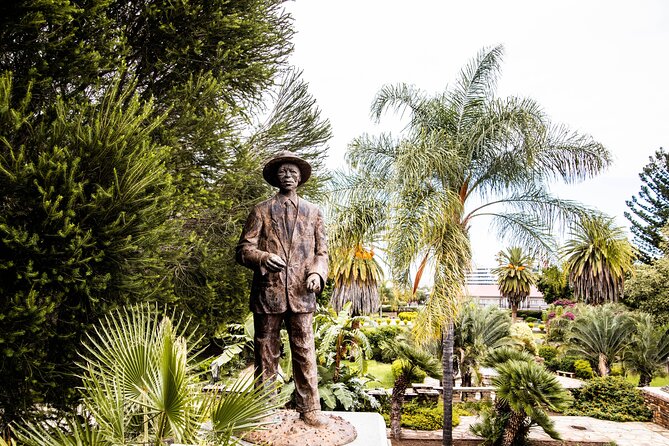
Parliament Gardens sits below the Tintenpalast, Namibia’s Parliament Building. The garden is one of central Windhoek’s greener public spaces, and you spend about 20 minutes learning about three statues honoring figures linked to Namibia’s independence.
This stop adds political context to the architecture. Instead of treating the parliament as just another grand building, you get a chance to connect it with the country’s modern government and the process that shaped independent Namibia.
I find this kind of stop valuable because it balances the German colonial material elsewhere on the route. Windhoek is not only a former colonial capital. It is also the political center of an independent country, and the statues give that transition a visible place in the city.
The visit is outdoors, so the morning start helps. You will not have a formal admission charge here, and the time is short enough that the gardens do not slow the tour. If political history interests you, use this stop to ask about the independence movement and current political processes. The supplied details promise explanation, but they do not specify a formal museum presentation or extended access inside Parliament.
Alte Feste and the colonial military story
Alte Feste is described as Windhoek’s oldest building and was used by the German army to defend its control of the city. You spend about 10 minutes here, making it the briefest historical stop on the route.
Do not expect a fully operating museum. The building once served as a museum but now stands empty. Its importance comes from the site itself and the story your guide provides, not from exhibits or an indoor collection.
That limitation is worth knowing before you book. If you want a long museum visit, this will feel thin. If you want a quick explanation of how military power helped establish German control in Windhoek, the stop earns its place.
Together, Christuskirche and Alte Feste show two sides of the colonial period. One is a religious landmark with an inviting appearance. The other points directly to the armed force used to hold power. The tour’s value depends heavily on the guide connecting those pieces rather than simply naming the buildings.
A few more Windhoek trips worth a look
- 6-Day Dunes and Wildlife Accommodated Safari from Windhoek
★ 5.0 · 123 reviews - Windhoek City Tour
★ 5.0 · 113 reviews - 10-Day Namibia Highlights Guided Tour from Windhoek
★ 5.0 · 78 reviews - 12 Day Classic Namibia Camping Safari
★ 5.0 · 77 reviews
Katutura, where Windhoek’s history becomes personal
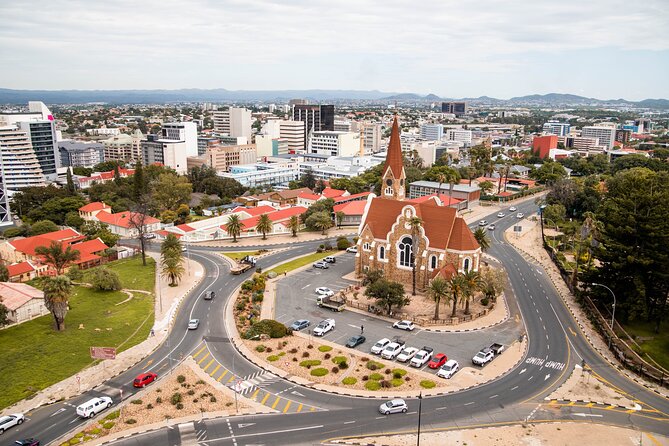
The longest stop is at Katutura, with about one hour set aside for a cultural township tour. This is the part of the morning that gives the experience its strongest sense of place.
Katutura is home to more than half of Windhoek’s population, according to the tour information, and it includes a wide range of living conditions. You may see large modern homes alongside more basic dwellings, reflecting the area’s varied communities and economic levels.
The township’s past is tied to apartheid. Forced separation shaped where people could live, and that policy continues to influence the city’s neighborhoods. Your guide explains how apartheid affected Katutura, while the visit also shows the area as a living community rather than only a historical subject.
That distinction is important. You should approach this stop with respect. It is not a backdrop for casual sightseeing. You are entering a part of Windhoek where people live, work, shop, and raise families. Listen carefully, avoid treating poverty as a spectacle, and follow your guide’s instructions about photography and personal interaction.
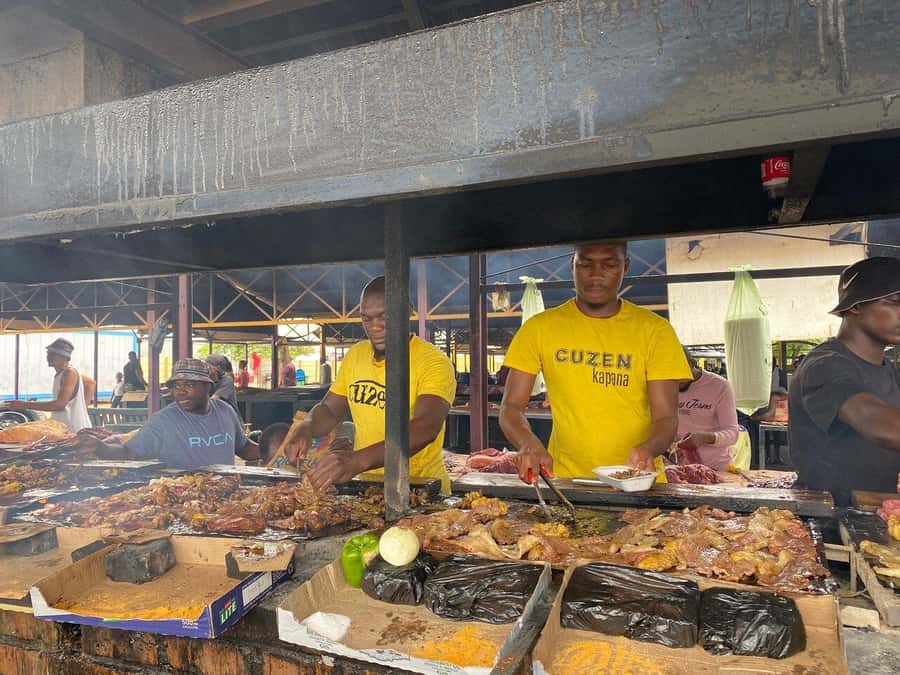
The local market adds a more everyday layer. You can see where residents shop and may have the chance to try local street food. The exact food is not specified, so keep an open mind rather than expecting one particular dish. The useful part is the setting and the explanation of where local food is found.
I like that Katutura receives a full hour instead of a quick drive-by. Still, the experience will vary with the guide and the group. One friendly, well-informed guide and driver were specifically praised, while another booking involved a late pickup and an unsatisfactory start. That makes communication and timing especially important on this stop.
Penduka crafts and a practical final purchase
The tour ends at Penduka, a craft project created to help local women support themselves and their families. You have about 30 minutes here, enough time to see the work and choose souvenirs or gifts.
This is a better final stop than a generic store because your purchase has a clear local purpose. Handmade crafts can also help you remember the city in a way that a mass-produced item cannot. The tour does not specify which products are available, so you should treat the stop as an opportunity to browse rather than arrive with a particular item in mind.
Penduka also gives the morning a constructive finish. Katutura has difficult historical and economic context, while this project points toward skill, income, and self-reliance. It does not erase the problems discussed earlier, but it gives you one example of local women building practical support for their families.
You may also find this a good place to buy gifts before returning home. Since the stop lasts 30 minutes, you should have time to look without feeling rushed, though the total morning schedule can change if transportation runs late.
What $48 buys you
At $48 per person, this is not the cheapest way to ride around Windhoek, but it offers more than simple transportation. You are paying for a guide, a planned route, a township visit, historical explanation, and a small-group setting. For a first morning in the capital, that can be fair value.
The value is strongest if you want context. A taxi can take you to Christuskirche, Parliament Gardens, Alte Feste, or Penduka, but it will not necessarily connect German colonization, indigenous traditions, apartheid, independence, food, and crafts into one story.
The value is weaker if you prefer long visits at each attraction or want a polished museum-style tour. The itinerary gives you only 10 minutes at Alte Feste and 15 minutes at Christuskirche. Some city sights may also be closed or have limited access during your visit, so you should not book this expecting every building to offer an interior tour.
The price also needs to be considered alongside reliability. One booking was missed without notice, and another had a delayed pickup. The operator apologized for these problems and described steps to prevent repeats, but you should still confirm your pickup details and keep some flexibility in your morning plans.
Transport, timing, and group size
The tour lasts about 2 to 3 hours and begins at 8:00 am. Pickup is offered, and hotel drop-off is included if you select that option. The information does not specify every pickup location, so check the booking details carefully rather than assuming all hotels are covered in the same way.
The small-group promise is appealing. About seven people may take part, while the maximum is 13. Smaller numbers usually make it easier to ask about local customs, history, or food, and they can make the township visit feel less intrusive.
There is one practical warning. A larger group once led the operator to arrange an alternative vehicle rather than split the group. The replacement van had an air-conditioning problem, and some windows did not open. The group managed by opening the windows that worked, but this is a reminder that comfort can depend on the vehicle assigned that day.
Most people can participate, and children must be accompanied by an adult. A child rate is available only when the child shares with two paying adults. The supplied details do not give a specific accessibility assessment, so if you have mobility needs, ask the operator before booking.
Who should book this Windhoek introduction
I would choose this tour if you have limited time in Windhoek and want the city explained rather than simply photographed. It suits first-time visitors, people interested in colonial and independence history, and anyone who wants to see more than the central streets.
It is also a good fit if you want a township visit with a guide, a market stop, and a chance to try local street food. The route gives you several subjects in one morning, and Penduka adds a meaningful shopping stop.
You may want another option if your priority is guaranteed indoor access, museum exhibits, or a highly polished operation. The short stop at Alte Feste, possible church access limits, vehicle complaint, late pickup, and one missed pickup all matter. The overall rating of 3.3 from seven published ratings reflects a mixed experience, not a clear endorsement.
I would also think carefully about your expectations for Katutura. If you want a respectful introduction to the area and its past, the hour can be valuable. If you are looking for entertainment without difficult social history, this is not the right outing.
My booking advice
Book this Windhoek City Tour when you want a compact overview with real social and historical weight. The best parts are the Katutura visit, the guide’s explanations, the mix of central landmarks, and the Penduka craft project.
Before paying, confirm pickup details and the hotel drop-off option. Keep your morning flexible in case the vehicle or schedule changes. Free cancellation is available until 24 hours before the 8:00 am start time. Poor weather or failure to meet the minimum group size can also lead to a rescheduled tour or a full refund.
For $48, I see this as a useful orientation tour, not a flawless sightseeing product. Book it for breadth, local context, and the township experience. Skip it if you need guaranteed punctuality, air-conditioned comfort, or long, formal visits inside historic buildings.
FAQ
How long does the Windhoek City Tour last?
The tour lasts approximately 2 to 3 hours.
What time does the tour begin?
The stated start time is 8:00 am.
Is hotel pickup available?
Pickup is offered. Hotel drop-off is included if you select that option.
What is the maximum group size?
The activity has a maximum of 13 participants. The usual group is described as being around seven people.
Are admission tickets included?
The listed stops have no admission charge. The tour information does not list any separate paid admissions as included.
Can children join the tour?
Yes. Children must be accompanied by an adult. The child rate applies only when sharing with two paying adults.
What is the cancellation policy?
You can cancel at least 24 hours before the start time for a full refund. Changes or cancellations made less than 24 hours before the start are not accepted for a refund. If poor weather or an insufficient number of participants cancels the activity, you will be offered another date or experience, or a full refund.
Just added around Windhoek
- From Windhoek: 3-Day Sossusvlei Shared Shuttle Tour★ 3.8 · 3 reviews
- Windhoek: Katutura Township Tour with Local Guide★ 3.5 · 3 reviews
- 3 day Sossusvlei Camping★ 5.0 · 3 reviews
- Knight Vibes: Bars, Shebeen, Clubs Crawl Windhoek★ 5.0 · 3 reviews
- 10 DAYS BEAUTY OF NAMIBIA | Guided Lodge★ 5.0 · 3 reviews
- Windhoek: City & Township tour. Vehicle, guide, kapana★ 4.2 · 4 reviews
- Predator Encounter: Half-Day Carnivore Feeding Windhoek★ 4.0 · 5 reviews
- Airport Transfers★ 5.0 · 5 reviews
Windhoek City Tours, compared.

Half-Day Windhoek City and Township Cultural Tour
Read our review →
6-Day Dunes and Wildlife Accommodated Safari from Windhoek
Read our review →10-Day Namibia Highlights Guided Tour from Windhoek
Read our review →
Private Transfers between Windhoek and Hosea Kutako Int. Airport
Read our review →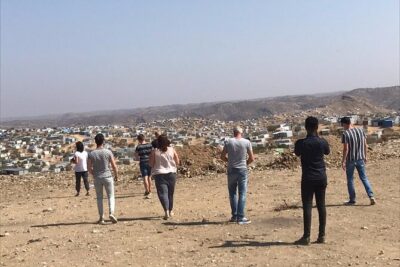
4-Day Swakopmund And Sossusvlei Accommodated Adventure from Windhoek
Read our review →
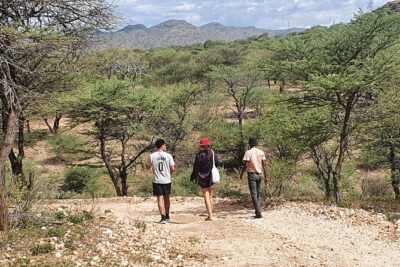
Private Guided Walking Tour with the San in Windhoek
Read our review →Browse the lists this tour appears in