
Reviewed · WINDHOEK
Best City Tour of Windhoek
Windhoek comes into focus quickly on this private half-day outing. You move from Namibia’s national story and colonial-era buildings to railway heritage, a central wildlife statue, and local township life, giving you far more than a drive past the capital’s sights. The mix of museums and community culture is the main reason to consider it.
I like the personal format, since your guide can shape the explanation around your questions rather than deliver a fixed speech to a large group. I also like the practical extras: museum admissions, bottled water, and kapana meat are included. The main caution is guide quality. One guest praised Merron warmly, while another found the guide unable to answer basic questions about Windhoek and its past.
Key points to know before booking
- A private Windhoek overview: Your group has the guide’s attention, with no strangers joining the activity.
- Five varied stops: Expect museums, a church, a railway collection, a township visit, and the Kudu Statue.
- A useful first-day tour: The 9:00 a.m. start and 3 to 4 hour length leave much of the day free.
- Local food included: Bottled water and kapana meat come with the tour.
- Guide quality matters: Merron received especially warm praise, but the available feedback also points to uneven historical explanation.
- Flexible cancellation: You can cancel for a full refund up to 24 hours before the start time, subject to weather and minimum-group conditions.
Why this tour helps you read Windhoek
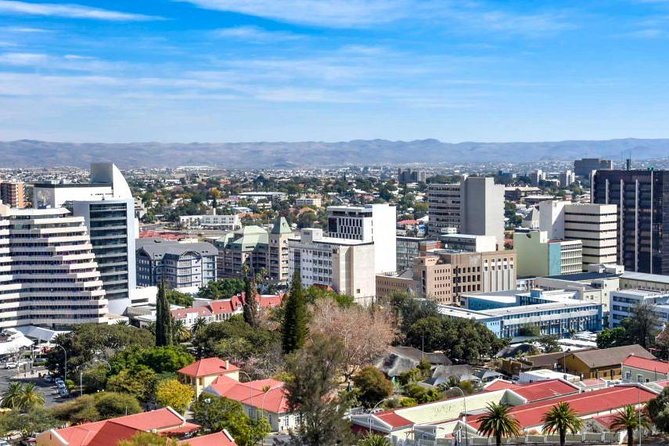
Windhoek can feel spread out when you first arrive. Its landmarks do not tell one single story. German colonial buildings, Namibian independence, rail transport, national identity, wildlife, and present-day community life all sit within the city’s orbit.
That makes a guided overview useful, especially if you have only a short stay. Rather than spending half a day working out what each building represents, you can ask your guide to connect the stops. I would use this tour early in a Namibia trip, then return later to the places that deserve more time.
The private setup is important here. With only your own group participating, you can ask for more detail at the National Museum, move on when a display does not interest you, or request extra explanation about Namibia’s political past. The experience is not simply a vehicle transfer between photo stops. Its value depends on the guide turning separate sights into a clear story.
At $55.75 per person, the price is reasonable if you make full use of that personal attention and the included admissions. It is less compelling if you mainly want a quick city drive or expect a specialist historian. The mixed feedback makes one point clear: ask questions early and see how well your guide responds.
More Windhoek city tours:
- Windhoek: City and Township Tour
★ 4.8 · 430 reviews - Half-Day Windhoek City and Township Cultural Tour
★ 4.5 · 187 reviews - Windhoek: Bushman Walk with the San
★ 4.9 · 145 reviews
Starting at the National Museum of Namibia
The National Museum gives you the broadest look at the country. Allow about an hour here, with admission included.
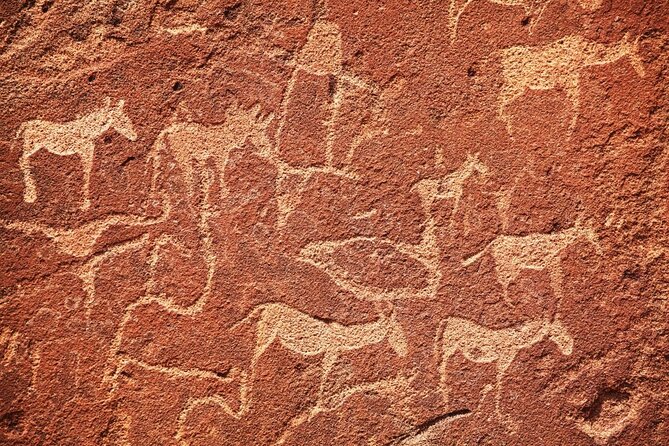
The exhibits cover Namibia from prehistoric times to the modern era. You can expect material on indigenous cultures, early archaeology, fossils, minerals, wildlife, the colonial period, and the road to independence. Displays connected with the San people include art and tools, while ethnographic and archaeological objects show how people lived and worked across different periods.
This is the stop where a good guide can make the greatest difference. Museum labels can provide facts, but your guide should help you understand how the objects fit into Namibia’s larger story. Ask about the San displays, the colonial era, and the independence exhibits rather than simply walking from case to case.
The natural-history material adds welcome variety. Geological specimens, rare minerals, and fossils give you a sense of Namibia’s ancient ground, not only its modern politics and culture. If you like museums, this may be the strongest stop on the route. If museums are not your thing, the one-hour allocation may feel long, though the range of subjects gives you several ways into the visit.
Christuskirche and Windhoek’s German-era center
Christuskirche is one of Windhoek’s most recognizable buildings. The tour allows about an hour here, with admission included.
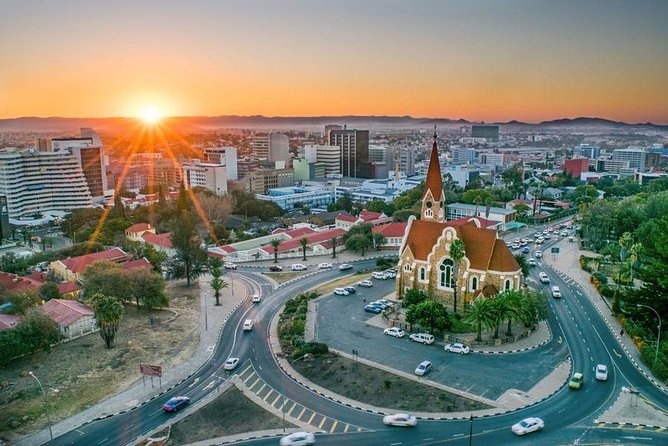
The church dates from the late nineteenth century and combines neo-Gothic and Romanesque Revival features. Its pointed forms, stained glass, stone details, organ, and quiet interior make a sharp contrast with the museum’s displays. It is both a photographic landmark and a place to pause.
Your guide’s explanation matters at this stop because the building needs context. Ask how the church fits into Windhoek’s German colonial period and how the city’s identity changed after independence. The supplied information describes Christuskirche as being in Windhoek, despite a separate description that incorrectly places it in Wiesbaden, Germany. For this experience, you are visiting the church in Namibia’s capital.
An hour is generous for a church visit, depending on access and how much explanation you receive. If you prefer architecture and city history, that time can work well. If the interior is closed or the visit is brief, this part may feel less substantial than the museums.
The Trans-Namib Railroad Museum
The Trans-Namib Railroad Museum shifts the focus from religion and national culture to transport. The scheduled visit lasts about an hour and admission is included.
The collection traces the development of Namibia’s railway system from the late nineteenth century, when German colonial authorities began building rail lines. Locomotives, carriages, railway equipment, and other objects represent German, British, and South African periods.
Railways were not just a way to get from one town to another. They helped move minerals and agricultural goods, connected remote regions, and shaped the country’s infrastructure and economy. That makes this museum useful even if you are not especially interested in trains. It shows how outside powers organized territory and trade, and how those systems affected Namibia’s later development.
Look for the practical details: the machinery, carriages, and working objects often say more than a broad political outline. Ask your guide how rail transport served different eras. The quality of the visit will depend on whether you receive that connecting explanation or simply walk around the collection.
The one-hour timing keeps the stop manageable. It also gives the tour a welcome change of pace after the National Museum and Christuskirche.
A few more Windhoek trips worth a look
- 6-Day Dunes and Wildlife Accommodated Safari from Windhoek
★ 5.0 · 123 reviews - Windhoek City Tour
★ 5.0 · 113 reviews - 10-Day Namibia Highlights Guided Tour from Windhoek
★ 5.0 · 78 reviews - 12 Day Classic Namibia Camping Safari
★ 5.0 · 77 reviews
Township culture with Nande Explorer
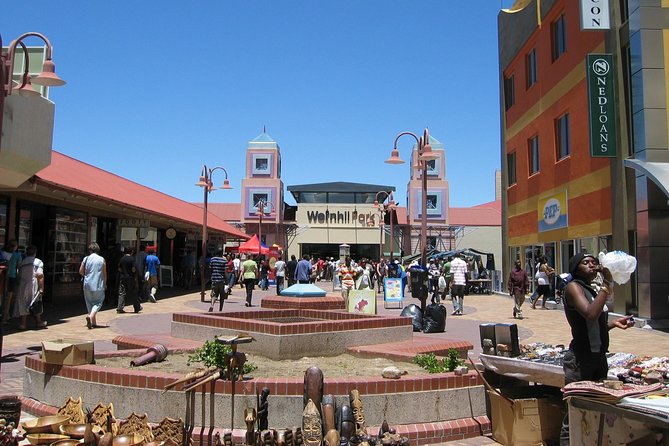
The Nande Explorer Cultural Township Tours stop is intended to bring you closer to present-day local life. It is listed as a one-hour visit and admission is included.
The focus is on community heritage, daily life, art, food, music, and storytelling. Depending on the visit, you might see craft markets, meet local artisans or performers, sample traditional dishes, or hear about the township’s past. The information provided does not promise a specific performance or meal beyond the included kapana meat, so you should treat those elements as possible parts of the visit rather than guaranteed features.
This is the most distinctive part of the outing. Museums explain Namibia through objects and buildings. A township visit gives you a chance to understand how culture is practiced and shared now. It also directs spending toward local people and small community activities, which gives the stop a practical benefit beyond sightseeing.
Approach this part with respect and curiosity. Listen to the guide, ask before taking photographs, and remember that a township is a lived-in community, not a display arranged for tourists. The visit will be most rewarding if you want conversation and local perspective rather than a quick photo opportunity.
The stop also breaks up the formal city sightseeing. After several institutional sites, a community-based visit gives the tour a more personal feel.
The Kudu Statue and central Windhoek
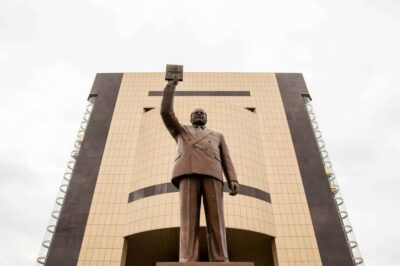
The Kudu Statue is a short landmark stop at the corner of Independence Avenue. It may not require a full hour on its own, but it adds a useful visual link to Namibia’s wildlife.
The bronze sculpture shows a kudu, a Southern African antelope known for its spiral horns. It represents the country’s wildlife and conservation concerns, while its central position connects the statue with shops, cafés, and other city sights.
Use this stop for photographs and for orientation. Ask your guide what the kudu represents to Namibia and how the statue fits into the center of Windhoek. The nearby setting may also help you understand the capital as a working city rather than a series of isolated monuments.
Because the route already includes three substantial indoor stops and a township visit, the Kudu Statue provides a quick outdoor pause. Its importance is symbolic rather than architectural. You should not book this tour expecting a long wildlife experience. For that, Namibia’s parks and open country are the proper destinations.
What the private format is really worth
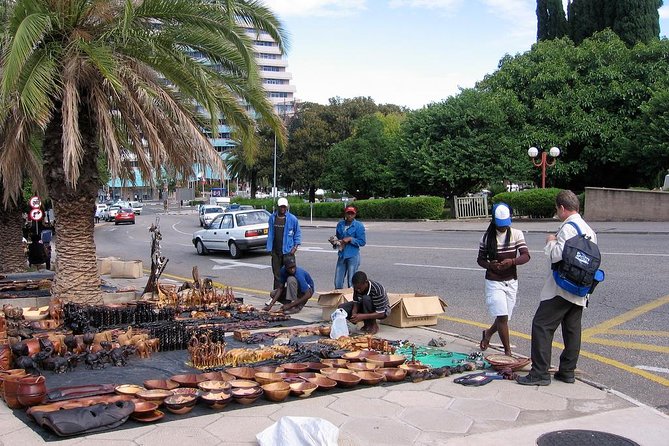
A private tour can be a very good buy when the itinerary covers several subjects. You are not paying only for transport. You are paying for someone to explain why the National Museum, Christuskirche, railway museum, township visit, and kudu statue belong in the same picture.
The benefit is strongest for couples, families, or small groups who enjoy asking questions. If you are traveling with different interests, the private format may also help. One person can focus on archaeology, another on architecture, and another on contemporary culture.
The weakness is that the experience rises or falls with the guide. Merron is specifically praised for providing an excellent tour, which suggests that the right guide can make Windhoek feel clear and welcoming. But the score is not perfect, and one detailed complaint describes a guide who could not answer questions about the city or its past. That is a serious concern for a tour built around interpretation.
You can protect yourself to some degree by asking at the beginning what your guide plans to cover. Ask about Namibia’s independence, the German colonial period, the railway system, and the township visit. Clear answers will tell you quickly whether you should request more detail during the day.
Timing, food, and practical value
The tour begins at 9:00 a.m. and lasts about 3 to 4 hours. That is a useful half-day shape. You get an early look at Windhoek, then retain time for lunch, rest, shopping, or another activity.
The listed itinerary gives one hour to each of four main stops, plus the Kudu Statue. In practice, travel time and opening conditions will affect how long you spend inside each place. The total duration is approximate, so do not schedule a tight appointment immediately afterward.
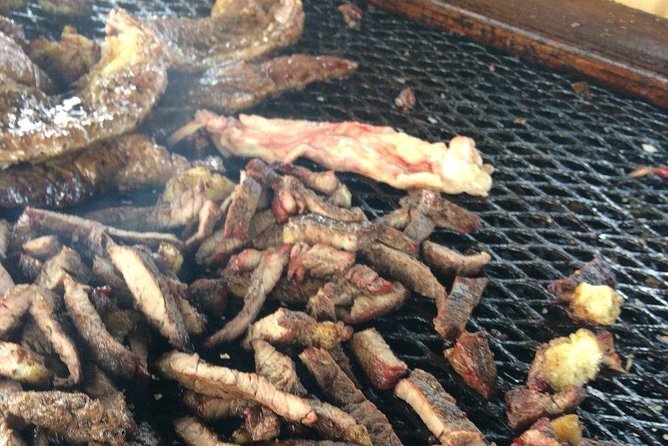
Pickup is offered, and you receive a mobile ticket. Bottled water is included, along with kapana meat. Kapana is grilled meat associated with Namibian street food, and its inclusion gives the tour a small but welcome connection to local eating. The available information does not specify the cut, serving location, or portion size, so do not treat it as a full meal replacement.
At $55.75 per person, the tour makes the most sense when admissions, transport, food, and private guiding would otherwise be separate expenses. If your main goal is only to see Christuskirche and the Kudu Statue, you may find the price harder to justify. If you want a guided introduction across several parts of Windhoek, the cost is easier to defend.
Most people book about 32 days ahead. That suggests planning early if this is important to your schedule, though the information does not promise that late bookings will fail.
Who should choose this Windhoek tour?
I would recommend it most strongly to first-time visitors who want a quick orientation before exploring Namibia on their own. It also suits anyone with limited time in the capital, since the route combines culture, architecture, transport, food, and community life in one morning.
It is a good fit for you if:
- You prefer a private guide to a large group.
- You want both established museums and a local community visit.
- You like asking questions and shaping the pace.
- You want admissions and water included.
- You would rather understand Windhoek than simply photograph it.
I would hesitate if you want a specialist art, political, or architectural tour. I would also hesitate if you dislike museums, because the National Museum and Trans-Namib Railroad Museum take up a large part of the morning. Most important, do not book it expecting the guide’s expertise to be automatic. The available feedback shows a clear difference between an engaging guide such as Merron and a guide who offers little useful explanation.
Free cancellation is available until 24 hours before the 9:00 a.m. start for a full refund. Changes or cancellations inside that window are not accepted for a refund. Poor weather or failure to reach the minimum number of participants can lead to a different date or a full refund.
Should you book the Best City Tour of Windhoek?
Book this tour if you want a private, efficient introduction to Windhoek with more substance than a simple city drive. The combination of the National Museum, Christuskirche, railway museum, township culture, and kudu landmark gives you a useful first picture of Namibia’s capital.
The deciding factor is the guide. If you receive the attentive, well-prepared service associated with Merron, $55.75 is fair for a morning of private touring with admissions and kapana meat included. If your guide gives thin explanations, the itinerary will feel like a collection of stops rather than a connected story.
For most first-time visitors with one free morning, I would book it, arrive ready with questions, and use the tour to decide which parts of Windhoek deserve a longer return visit.
FAQ
How long does the Best City Tour of Windhoek last?
The experience lasts approximately 3 to 4 hours.
What time does the tour begin?
The stated start time is 9:00 a.m.
Is this a private tour?
Yes. Only your group participates in the private activity.
Which main places are included?
The tour includes the National Museum of Namibia, Christuskirche, the Trans-Namib Railroad Museum, Nande Explorer Cultural Township Tours, and the Kudu Statue.
Is food included?
Yes. The tour includes one bottle of water and kapana meat.
Can I cancel for a full refund?
Yes, if you cancel at least 24 hours before the experience start time. Cancellations or changes made less than 24 hours in advance are not refunded. Weather and minimum-participant conditions also apply.
Just added around Windhoek
- From Windhoek: 3-Day Sossusvlei Shared Shuttle Tour★ 3.8 · 3 reviews
- Windhoek: Katutura Township Tour with Local Guide★ 3.5 · 3 reviews
- Knight Vibes: Bars, Shebeen, Clubs Crawl Windhoek★ 5.0 · 3 reviews
- 3 day Sossusvlei Camping★ 5.0 · 3 reviews
- 10 DAYS BEAUTY OF NAMIBIA | Guided Lodge★ 5.0 · 3 reviews
- Windhoek: City & Township tour. Vehicle, guide, kapana★ 4.2 · 4 reviews
- Predator Encounter: Half-Day Carnivore Feeding Windhoek★ 4.0 · 5 reviews
- Airport Transfers★ 5.0 · 5 reviews
Windhoek City Tours, compared.

Half-Day Windhoek City and Township Cultural Tour
Read our review →
6-Day Dunes and Wildlife Accommodated Safari from Windhoek
Read our review →10-Day Namibia Highlights Guided Tour from Windhoek
Read our review →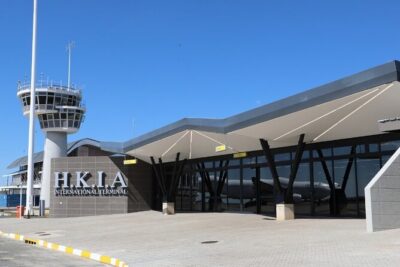
Private Transfers between Windhoek and Hosea Kutako Int. Airport
Read our review →
4-Day Swakopmund And Sossusvlei Accommodated Adventure from Windhoek
Read our review →
Browse the lists this tour appears in