
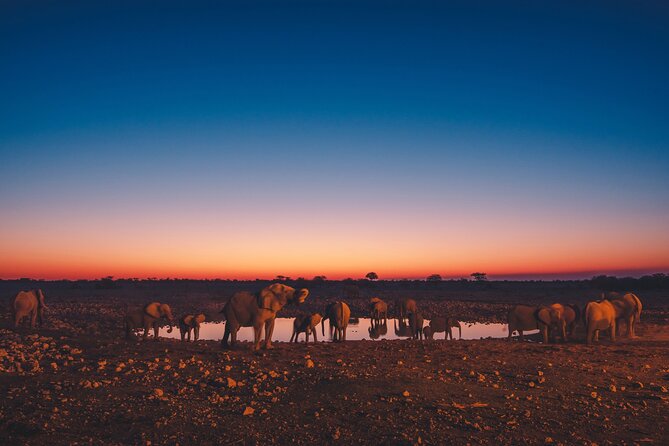
Reviewed · ETOSHA
9 Day Etosha, Skeleton Coast and Sossusvlei Camping and Lodge Safari
Namibia gives you an astonishing amount of scenery in nine days: rhinos at Mount Etjo, wildlife around Etosha’s waterholes, Himba culture, the foggy Atlantic coast, and enormous Namib Desert dunes. I especially like the smart mix of five camping nights and three nights in accommodation, plus the open-fire meals that make the trip feel more like a shared expedition than a string of hotel check-ins.
I also like the range of experiences. You get proper game drives, a seal colony, a shipwreck, time for optional adventure activities in Swakopmund, and the stark beauty of Deadvlei and Sossusvlei. The trade-off is a demanding schedule with long hours in the vehicle, early breakfasts, basic camping, and little room for a rest day.
Key points to know before booking
- Etosha is the wildlife heart of the trip: Spend two nights around the park, visit several waterholes, and return after dinner to the famous floodlit waterhole.
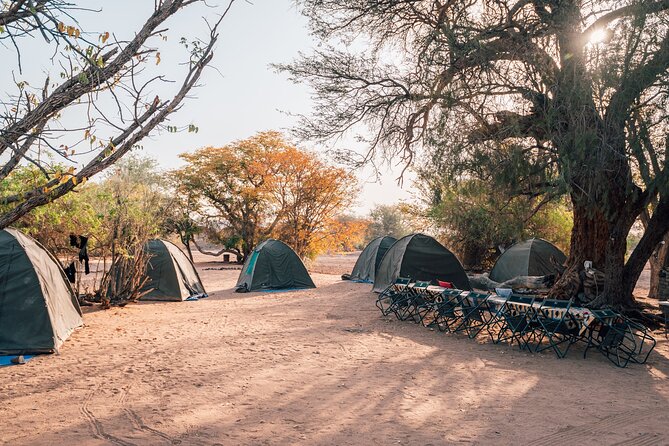
- Camping is part of the experience: Equipment and mattresses are supplied, but you must bring your own sleeping bag.
- The Himba visit adds cultural context: Otjikandero offers a guided look at traditional customs and daily life.
- The Skeleton Coast feels genuinely remote: Cape Cross, thick coastal fog, shipwrecks, and a huge fur seal colony create a very different Namibia.
- Swakopmund gives you a useful break: You can sleep in accommodation and choose activities such as quad biking, sandboarding, skydiving, or a bicycle tour.
- Sossusvlei is the grand finale: Deadvlei, Dune 45, Sossusvlei, and Sesriem Canyon fill the final full touring day.
Why this route works so well in nine days
This is a fast tour, but it is well shaped. You begin with wildlife, move north through Etosha, turn west toward the coast, then head south through the Namib Desert before returning to Windhoek. Each region feels different enough that the long road sections have a clear purpose.
The price is listed at $2,568.47 per person. That is not a cheap group holiday, but the cost covers transport, a professional English-speaking guide, camping equipment, many meals, park-related touring, airport transfers, and the mix of camping and lodging. You are paying for a lot of ground covered in a country where distances are large and independent driving requires time and planning.
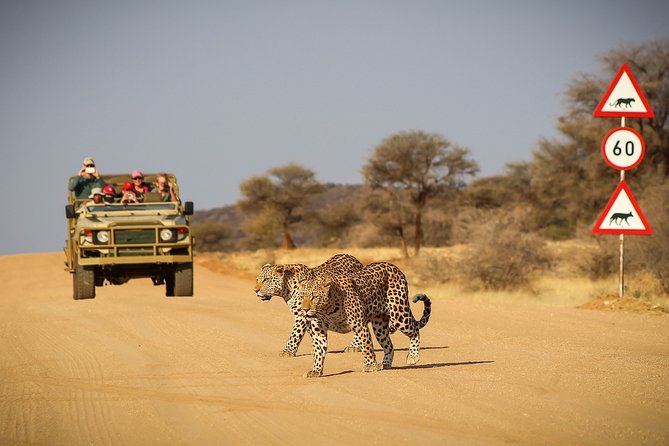
The small maximum group of 10 matters. A pop-up-roof safari vehicle gives you a better viewing position than an ordinary minibus, and a smaller group makes stops, meals, and camp setup less awkward. The exact guide varies, but Chameleon’s guiding team includes people such as Kennedy, Taimi, Gregory, Gideon, Smith-Lee, and others. The food is a real part of the operation, with guides such as Kennedy and Smithley praised for cooking meals over the fire.
More Etosha safaris:
- 6 Day Sand, Sea & Etosha Budget Camping Safari
★ 5.0 · 36 reviews - Scenic Game Drive Activity
★ 4.5 · 31 reviews - 4-Day Etosha And Swakopmund Accommodated Adventure from Windhoek
★ 4.5 · 19 reviews
Day 1: Woodcarving at Okahandja and rhinos at Mount Etjo
The trip starts at Chameleon Backpackers in Windhoek with a 7:00 am departure and a short briefing. Pickup and drop-off are available within Windhoek city limits, and return airport transfers are included, which can simplify your first and last day.
The first stop is the Okahandja Mbangura Woodcarvers Craft Market. Give yourself about an hour here. Artists from around Namibia sell carved pieces, and bargaining is expected. This is more than a routine souvenir stop if you take time to look closely and buy directly from the makers.
Mount Etjo Game Reserve is the first major wildlife stop. The reserve supports conservation work, including efforts to protect black and white rhinos. You aim to reach camp before lunch, set up, eat, and then head out for an afternoon game drive.
The day ends with a sunset in the reserve. The timing is useful because you begin seeing Namibia’s dry interior almost at once, rather than spending the whole first day simply driving. Since wildlife is never guaranteed, the value here is both the rhino conservation setting and the chance to start safari viewing before reaching Etosha.
Days 2 and 3: Etosha waterholes, open skies, and a white salt pan
After breakfast, you stop in Otjiwarongo to gather fresh supplies. Then you enter Etosha National Park, one of southern Africa’s best-known wildlife areas.
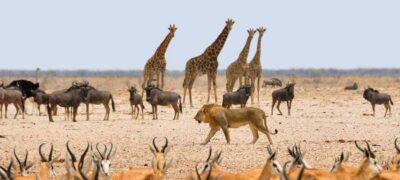
The safari style here is waterhole-based. Your guide drives between water sources, looking for predators, plains animals, birds, and possibly reptiles. The open-top viewing position is especially useful when you are scanning the scrub and broad white ground for movement.
You set up camp at Okaukuejo, eat lunch, and go out again in the afternoon. After dinner, make time for the floodlit waterhole. This is one of the best features of the park because you can watch from a fixed viewing area rather than from a moving vehicle. Rhino, elephant, giraffe, lion, and hyena are regular possibilities, though sightings remain a matter of luck and timing.
Day 3 begins at sunrise. Early starts are not optional on a safari like this, but the cool morning hours can be the most rewarding time for predators. Breakfast is taken at a fenced picnic spot, followed by a drive across the park toward Etosha Pan.
Etosha Pan covers about 4,500 square kilometres and looks like a huge saline desert. You can get out at the designated area, which gives your legs a break and lets you experience the stark scale of the place. It is not a conventional scenic viewpoint. Its appeal is the silence, the white emptiness, and the sharp contrast with the animals gathered around nearby waterholes.
The route continues to Halali, the central camp. You have time for lunch, a pool stop, and a visit to the waterhole before driving back toward Okaukuejo. You spend another night camping in Etosha, with another chance to visit the floodlit waterhole after dinner.
I would set realistic wildlife expectations. The tour is designed to search for the Big Five, but no safari can promise every animal. Etosha’s waterholes improve your odds, and the repeated drives give you more chances than a single afternoon visit.
Day 4: Leaving Etosha for an encounter with Himba culture
There is one last early game drive as you leave Etosha. Then the focus changes from animals to people at Otjikandero Himba Orphan Village.
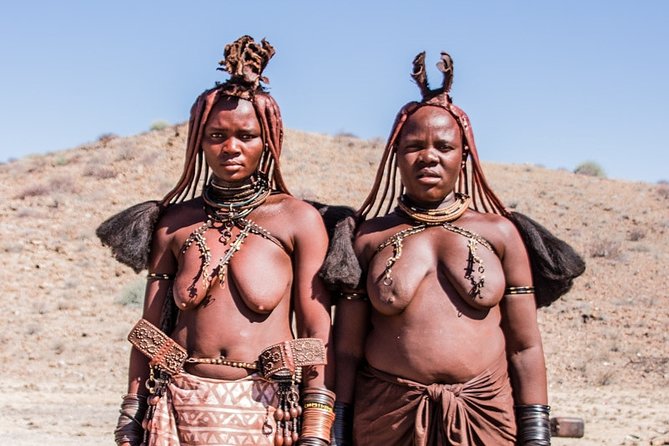
A guided two-hour visit introduces you to Himba customs and daily life. The stated aim is an exchange, not just a quick photo stop. You have the chance to learn about the community and share something of your own culture. Approach the visit with attention and respect, and listen to the local guide rather than treating the village as a backdrop.
This is one of the most important parts of the route because it keeps Namibia from being presented only as scenery and wildlife. It also breaks up the long drive west with a cultural stop that has a clear purpose.
You continue to Palmwag Campsite, where you set up camp and have time to rest. There is a possibility of spotting desert elephants, but it is best treated as a bonus rather than a promised sighting. Dinner is prepared over an open fire, as it is on several camping nights.
More Sossusvlei and Deadvlei trips:
- 3 Day Sossusvlei Budget Camping Safari
★ 5.0 · 62 reviews - 7 Day Southern Namibia and Sossusvlei Camping Safari
★ 5.0 · 26 reviews - 4-Day Swakopmund And Sossusvlei Accommodated Adventure from Windhoek
★ 4.5 · 21 reviews - 5-Day Sossusvlei & Sandwich Harbour Photography Tour
★ 5.0 · 13 reviews
Day 5: The stark road to the Skeleton Coast
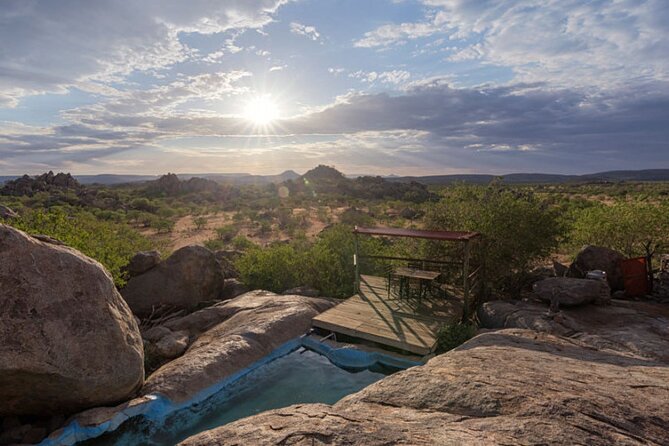
The road west to the Atlantic is a full touring day, with up to eight hours listed for the Skeleton Coast National Park. This is where you need patience. Namibia’s distances are real, and this itinerary asks you to trade comfort and spare time for a broad look at the country.
The Skeleton Coast is famous for shipwrecks, fog, rough seas, and unpredictable currents. It feels hostile in a way that the inland desert does not. The coast’s power comes from the combination of empty beaches, cold Atlantic air, and the knowledge that many ships came to grief here.
You reach Cape Cross late in the afternoon, set up camp, and watch the sun go down over the Atlantic. Coastal weather can feel very different from the warm inland parks, so pack a warm layer where you can reach it quickly. This is also one of the more basic nights, with dinner cooked by your guide over the fire.
Day 6: Cape fur seals and a night in Swakopmund
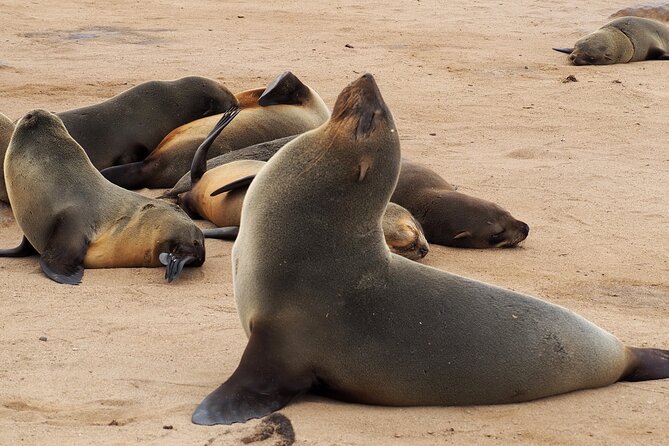
After breakfast, take the short walk to Cape Cross Seal Reserve. During the November and December breeding season, more than 200,000 Cape fur seals may be present. The sight is vast, noisy, and memorable. The smell is equally memorable, so this is not a delicate wildlife stop.
You then continue along the coast to the Zeila Shipwreck, one of the newer wrecks in the region, dating from 2007. Allow about half an hour for the stop. It gives you a direct connection to the dangers that define this stretch of shore.
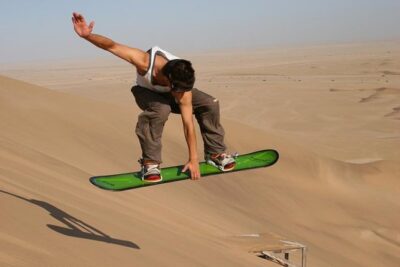
Swakopmund arrives as a welcome change. You have time to walk around town or book an optional activity. Choices listed for the tour include skydiving, quad biking, sandboarding, and cycling through the old city.
Dinner is not included that night, so budget for a restaurant meal. This is a small extra cost, but it gives you a chance to choose your own food and enjoy a proper town evening after several camp meals.
Day 7: Optional adventure before the Namib Desert
You leave Swakopmund at 11:30 am, leaving the morning open for an optional activity. This is a smart design choice. You can use the time for an adrenaline activity, a bicycle tour, or a slower walk around town rather than rushing straight into another early departure.
Optional activities cost extra, and the tour does not list their prices. Ask about availability and cost before committing. If you want to join one, confirm the return time with the operator so you are back for the group departure.
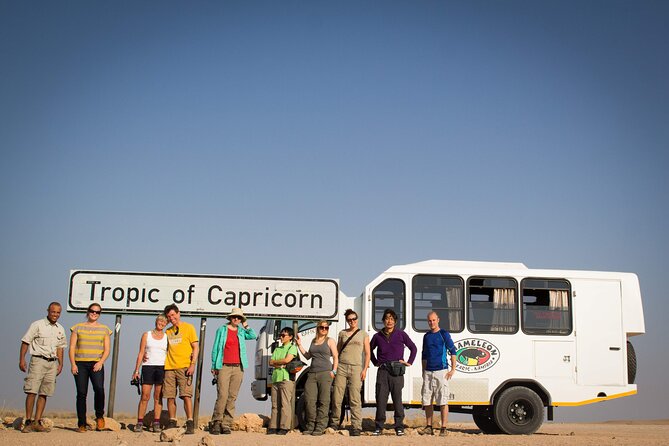
The afternoon includes quick stops at the Tropic of Capricorn sign and Solitaire. The first is mainly a photo and stretch stop. Solitaire is useful for a bathroom break, a cold drink, and a snack.
You reach Desert Camp in the late afternoon. This is one of the lodge nights, and the change from tents to a room gives you a bit of comfort before the next day’s major desert outing. You can walk nearby for sunset while your guide prepares dinner.
Day 8: Deadvlei, Sossusvlei, Dune 45, and Sesriem Canyon
This is the visual peak of the trip. You begin at the 4×4 parking area and continue to Deadvlei, where the final approach is explored on foot. Allow about three hours. The dry clay floor, dead trees, and surrounding dunes create the kind of scene that looks almost unreal, but the heat and soft sand make it a physical outing.
Wear sturdy walking shoes, carry water, and protect yourself from the sun. The itinerary includes tap water, but mineral water and other drinks are not included, so plan your own supply.
After Deadvlei, continue to Sossusvlei for brunch. You then stop at Dune 45 on the way out for photographs. The stop is short, so keep your camera ready and do not expect a long climb or extended exploration here.
Sesriem Canyon provides the final major stop, with about an hour to walk and look around. It is a small but important water source for local wildlife, and its rock walls offer a close-up contrast to the wide-open dunes.
The schedule packs four highlights into one day. That gives you excellent coverage, but it also means the day is not leisurely. If you want long, quiet time at one dune or a slow photography session, a private itinerary would suit you better.
Day 9: Cheetah conservation and the return to Windhoek
The final stop is the Solitaire Carnivore Conservation project, where you spend an hour learning about cheetahs. It is a useful final wildlife note after the park and reserve visits, and it adds a conservation angle to the return journey.
From Solitaire, the vehicle passes the Naukluft Mountains and Rehoboth before reaching Windhoek in the early afternoon. The tour ends back at the meeting point.
Do not schedule a flight for this day. Delays can happen on long road journeys, and the tour specifically advises against booking flights on the return date. If you need to fly out, add a night in Windhoek.
Camping, meals, and daily comfort
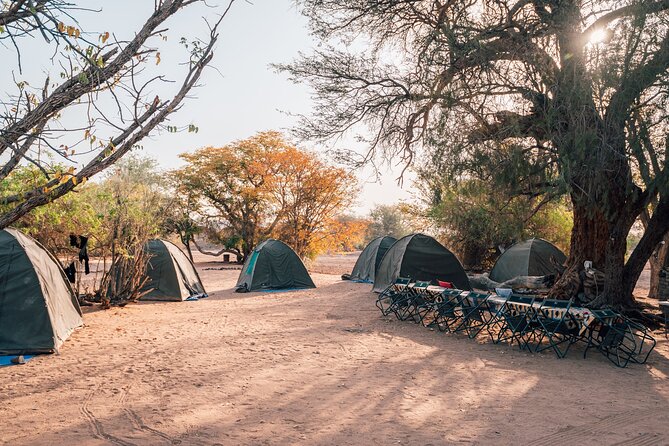
The package includes five nights of camping and three nights in accommodation on a twin-share basis. Camping equipment is supplied, but a sleeping bag is not included. That detail is easy to miss and important in Namibia, where nights can feel cool, especially near the coast.
You should expect to help with the rhythm of camp life, even if your guide handles the main cooking and logistics. Tents are described as easy to set up, with comfortable mattresses. Seven lunches, seven dinners, and eight breakfasts are included, along with tap water.
The open-fire cooking receives some of the strongest praise attached to this trip. Meals prepared by guides such as Smithley and Kennedy are more than fuel between drives. They create a social end to long days and make the camping nights feel warm and communal.
Drinks beyond tap water are extra. So are snacks, alcohol, mineral water, travel insurance, and optional Swakopmund activities. Bring a way to carry water during walks and keep some spending money for the market, restaurant dinner, snacks, and activities.
Who should book this Namibia safari?
I would recommend this trip if you want the major Namibian sights but do not want to organize a complicated self-drive route. It suits people who enjoy wildlife, photography, wide-open scenery, cultural visits, and simple camp life.
It also works well for camping beginners, provided you are comfortable with early starts and shared facilities. The combination of camping and lodging softens the rough edges without removing the outdoor feel.
You should think twice if you need generous free time, dislike long drives, or want guaranteed luxury. The route covers a huge area in nine days. Physical fitness should be moderate, and the Deadvlei, dune, and canyon stops involve walking in exposed desert conditions.
The maximum group size is 10, but the actual group can be smaller. That can make a big difference to the feel of the vehicle and camp routine, though you should not book on the assumption that you will have a tiny private group.
Should you book the 9-day route?
Book it if your priority is seeing Namibia’s major natural highlights in one well-supported trip. Etosha, the Himba village, Cape Cross, Swakopmund, and Sossusvlei each offer something distinct, and the camping plus lodge format gives you a fair balance of price and comfort.
Skip it if your ideal holiday is slow, private, or fully luxurious. The schedule is tight, the drives are long, and the cancellation terms are strict: the experience is non-refundable and cannot be changed after booking.
For the right person, this is a strong first look at Namibia, especially if you value capable guides, fresh camp cooking, and a route that keeps changing before the scenery has time to become familiar.
FAQ
Where does the tour start?
The tour starts at Chameleon Safaris, Ferry Street, Windhoek, with a 7:00 am departure.
Where does the tour end?
The tour ends back at the meeting point in Windhoek.
Is pickup available?
Yes. Pickup and drop-off are offered within Windhoek city limits, and return airport transfers are included.
How long is the safari?
The tour lasts approximately nine days.
How many people can join the tour?
The maximum group size is 10 people.
Is camping equipment included?
Yes. Camping equipment is included, but you must bring your own sleeping bag.
How many nights are spent camping?
The package includes five camping nights and three nights in accommodation, with twin sharing.
Are meals included?
Yes. The package includes seven lunches, seven dinners, and eight breakfasts.
Are drinks included?
Tap water is included. Mineral water, soft drinks, alcohol, and snacks are not included.
Are Swakopmund activities included?
No. Optional activities such as skydiving, quad biking, sandboarding, and bicycle tours are available at your own expense.
Can I book a flight from Windhoek on the final day?
No flight is recommended on the final day. The tour returns to Windhoek in the early afternoon, but road delays are possible.
Can I cancel or amend the booking?
No. The experience is non-refundable and cannot be changed for any reason.
More Safaris in Windhoek
- 6-Day Dunes and Wildlife Accommodated Safari from Windhoek
★ 5.0 · 123 reviews - 12 Day Classic Namibia Camping Safari
★ 5.0 · 77 reviews - 9 Day Canyons, Dunes & Wildlife Camping and Lodge Safari
★ 4.5 · 23 reviews - From Windhoek: Okapuka Safari Lodge Day Trip
★ 4.4 · 20 reviews
Just added around Windhoek
- From Windhoek: 3-Day Sossusvlei Shared Shuttle Tour★ 3.8 · 3 reviews
- Windhoek: Katutura Township Tour with Local Guide★ 3.5 · 3 reviews
- Knight Vibes: Bars, Shebeen, Clubs Crawl Windhoek★ 5.0 · 3 reviews
- 3 day Sossusvlei Camping★ 5.0 · 3 reviews
- 10 DAYS BEAUTY OF NAMIBIA | Guided Lodge★ 5.0 · 3 reviews
- Windhoek: City & Township tour. Vehicle, guide, kapana★ 4.2 · 4 reviews
- Predator Encounter: Half-Day Carnivore Feeding Windhoek★ 4.0 · 5 reviews
- Airport Transfers★ 5.0 · 5 reviews
Etosha Wildlife Safaris, compared.
Etosha National Park: Full or Half-Day Game Drive
Read our review →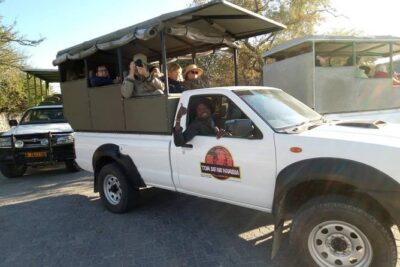
ETOSHA PARK SAFARI with local guides in 9-seater 4x4s
Read our review →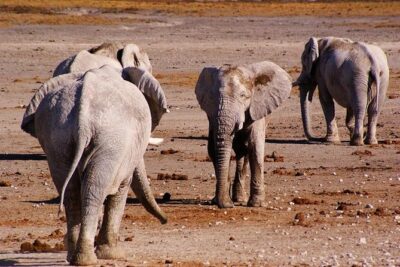
6 Day Sand, Sea & Etosha Budget Camping Safari
Read our review →
Safari in Etosha national park with professional tour guides born in Etosha.
Read our review →
4-Day Etosha And Swakopmund Accommodated Adventure from Windhoek
Read our review →
Browse the lists this tour appears in