
Reviewed · ETOSHA
Safari in Etosha national park with professional tour guides born in Etosha.
Etosha is not a quick animal-spotting stop. Its great white salt pan, dry desert roads, and busy watering holes reward patience, and this safari gives you a full day to search with a locally born guide who knows the park well. You ride in an open-sided vehicle, with good views in every direction and small blankets for chilly mornings.
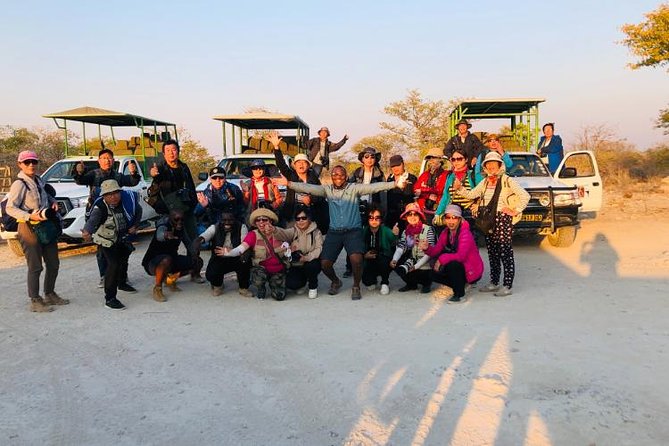
I like the personal side of this trip. Guides such as Isack, Isaak, and Oscar have been praised for spotting hard-to-see animals, explaining the plants and wildlife, and stopping for smaller sights such as birds, nests, or animals beside the road. I also like the small group limit of nine, which makes it easier to ask questions and claim a good viewing position.
The main caution is simple: Etosha is wild, not a zoo. One full-day outing produced only two elephants, zebras, springbok, and a squirrel for one participant, so you should book for the search itself, not a guaranteed list of animals.
Key points to know before booking
- Etosha Pan is the visual centerpiece: Allow about 10 minutes at the great white salt pan, a striking contrast to the surrounding dry country.
- The guides add real value: Isack, Isaak, and Oscar have been praised for wildlife knowledge, friendly service, and sharp eyes.
- A full day gives you more chances: Watering holes and animal sightings depend on timing, patience, and luck.
- The open-sided vehicle helps: You get broad views for spotting animals and birds along the road.
- The price is $127.76 per person: Water is included, but the N$150 park entrance fee is extra.
- Groups are capped at nine: This is small enough to feel personal without paying for a private safari.
Why Etosha Pan sets the tone
Etosha Pan is the first clear reminder that this is not a standard green safari destination. The pan is a vast white salt basin, and even a short stop gives you a strong sense of the park’s scale and dry character.
The scheduled visit lasts about 10 minutes, so do not expect a long walk or an extended geology lesson. Its value is visual. You get a chance to pause, take photographs, and see the unusual setting that gives Etosha its identity before returning to the wildlife search.
The pan itself is not where you should expect the best animal action. The more useful parts of the day are the roads and watering holes, where animals have stronger reasons to gather. Still, skipping the pan would mean missing one of Etosha’s most memorable sights.
This short stop also helps set reasonable expectations. Etosha is built around open space, pale earth, scrub, and isolated water sources. You may spend stretches of time scanning quietly before anything moves into view. That quiet is part of the experience, even when your camera remains empty.
More Etosha safaris:
- Etosha National Park: Full or Half-Day Game Drive
★ 4.6 · 175 reviews - ETOSHA PARK SAFARI with local guides in 9-seater 4x4s
★ 5.0 · 87 reviews - 3 Day Etosha Budget Camping Safari
★ 5.0 · 37 reviews
What the open-sided vehicle gives you
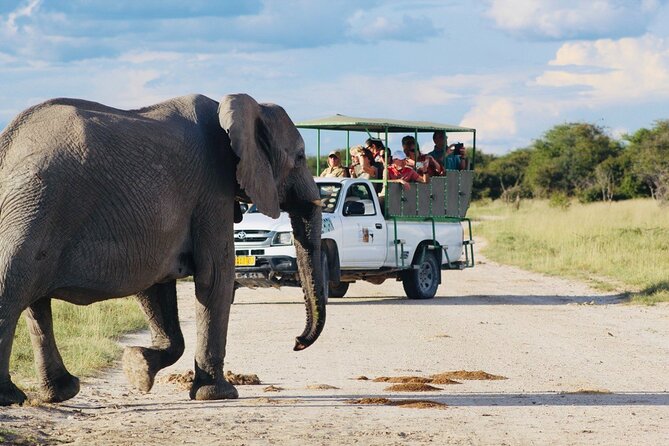
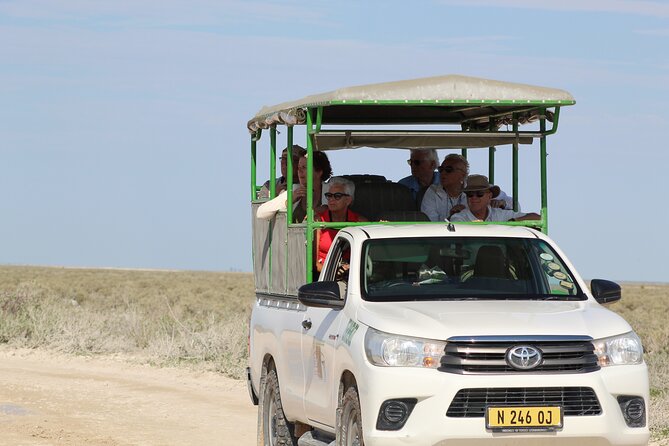
The vehicle is fully insured, regularly serviced, and designed for broad visibility. That matters in a park where animals can appear beside the road, far across the plain, or near a water source behind another vehicle.
An open-sided design gives you a better chance to spot birds, antelope, and other smaller animals. You are not looking through a narrow side window, so you can turn quickly when another person points toward movement.
The tradeoff is exposure to the elements. Early desert mornings can feel cold, which is why small blankets are provided. Bring practical clothing and use the blanket if needed, since the first hours of a long safari may be much cooler than the afternoon.
The group limit is nine people. That is not the same as a private drive, but it is a manageable number for a shared vehicle. You should have more room to ask questions than you would in a large coach, and the guide can respond to individual sightings instead of following a rigid script.
The real goal: watering holes and the Big Four
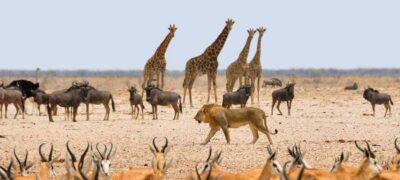
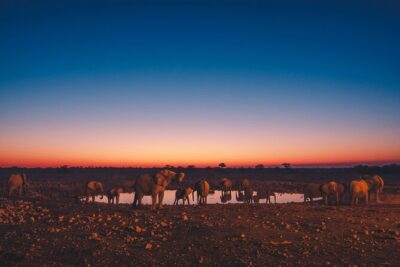
The safari focuses on wildlife hotspots, especially watering holes. In a dry park, water draws animals together, giving you one of the better chances to see several species in a limited area.
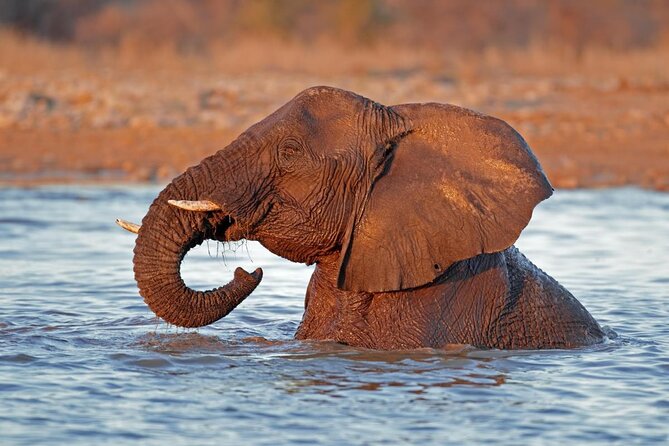
The stated targets are lions, rhinos, leopards, and elephants. These are difficult animals to predict, and the phrase Big Four should be treated as a hopeful goal rather than a promise. You might see one, several, or none during your chosen route and timing.
The most useful part of having a local guide is knowing where to pause and what to scan. Isack was praised for finding lions and other animals that are harder to spot, while also stopping for roadside animals and nests when asked. That kind of attention makes the drive feel less like a race between famous sightings.
Oscar guided one particularly productive outing that included cheetahs, elephants, giraffes, zebras, springbok, kudu, and many birds. That is an impressive range, but it is best viewed as a good day in a changeable park, not as a standard result you can count on.
Another outing was much quieter, with two elephants, some zebras, springbok, and a squirrel during a full day. This contrast is important. The guide can improve your odds, but no guide controls animal movement.
Why the guide may matter more than the vehicle
A good safari guide does more than drive from one water source to the next. The guide helps you understand what you are looking at, notices small movements, answers questions, and decides when a sighting deserves extra time.
Isack has received especially strong praise for being friendly, funny, attentive, and well informed about animals and the environment. He also contacted a participant before the outing and arrived early at the gate, details that suggest careful coordination as well as field skill.
Isaak and Isack appear under slightly different spellings in the available information. If a particular guide matters to you, confirm the name when arranging the trip. Oscar is another named guide associated with a wide-ranging day of sightings.
The local connection is a central reason to choose this operator. Booking with guides born in the Etosha area helps keep more of the safari income within the community, while giving you access to people who have spent years around the park. That does not guarantee better sightings, but it can lead to a more grounded explanation of the place.
I also value the guide’s willingness to stop for questions. A nest, squirrel, or bird may not have the drama of a lion, yet these smaller discoveries often teach you more about how the park works. If you want only a rapid checklist of famous animals, you may find the slower moments frustrating. If you like asking questions, they become part of the reward.
A few more Namibia trips worth a look
- 6-Day Dunes and Wildlife Accommodated Safari from Windhoek
★ 5.0 · 123 reviews - 12 Day Classic Namibia Camping Safari
★ 5.0 · 77 reviews - 3 Day Sossusvlei Budget Camping Safari
★ 5.0 · 62 reviews - 6 Day Sand, Sea & Etosha Budget Camping Safari
★ 5.0 · 36 reviews
Full-day or half-day: choosing the right length
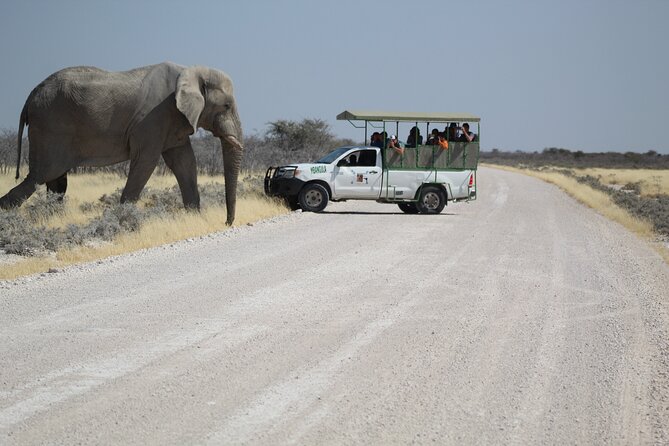
The experience is offered as a full-day or half-day safari, with the advertised duration listed at about 10 hours for the longer outing. A full day makes the most sense if Etosha is a major reason for your Namibia trip and you want several chances to search different areas.
Ten hours is a long time in an open vehicle. You should be ready for repeated stretches of driving, quiet observation, and changing temperatures. The reward is more time near watering holes and more opportunity for the guide to respond to current sightings.
A half-day is a better fit if you have limited time, a long transfer ahead, or only want an introduction to Etosha. One half-day group starting at King Nahale Gate had enough time to stop at Namutoni Restaurant for a meal, so you may not need to pack lunch for that version. Do not assume the same timing for every departure, but ask about the plan if food arrangements matter.
The half-day format also reduces the risk of spending a full day in the vehicle when wildlife activity is slow. The full-day version offers more chances, but it cannot remove the unpredictability of nature.
Food, water, and simple practical details
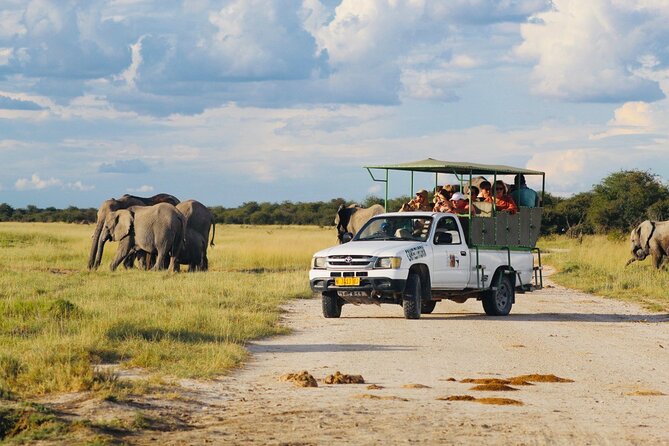
Still and sparkling water are included. No meals are listed as part of the standard package, so you should confirm food plans before setting out, particularly for the full-day option.
The Namutoni Restaurant stop described for one half-day departure is useful, but it should not be treated as a universal promise for every route. Ask your guide where and when you will eat, especially if you have dietary needs.
You will pay the park entrance fee separately. The stated charge is N$150 per person, so add that to the advertised price before comparing this safari with other options.
Confirmation is provided at booking, and the experience accepts a mobile ticket. It is also listed as being near public transportation, which may help if you are not arranging every part of your Namibia trip by private vehicle.
Most people can participate. No special physical ability is highlighted, but you should be comfortable spending many hours in a safari vehicle and handling cold early conditions.
Is $127.76 a fair price?
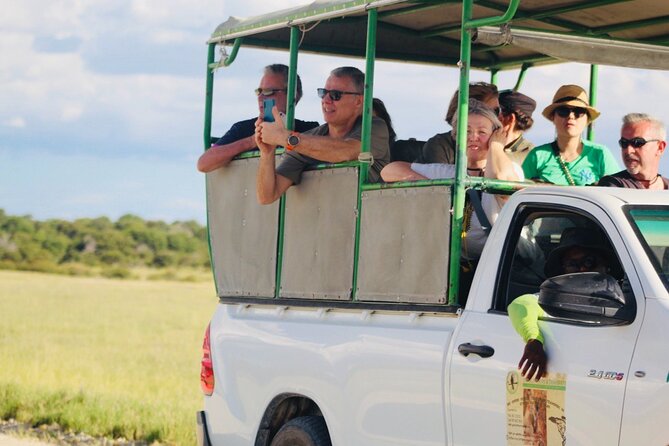
At $127.76 per person, this is not the cheapest possible way to enter Etosha, but the value depends on what you want to avoid arranging yourself. You are paying for a guided wildlife search, a serviced and insured vehicle, local knowledge, and up to a full day in one of Africa’s major national parks.
The group limit of nine helps the price feel more reasonable. A large vehicle can make every sighting feel distant and crowded, while a smaller group gives you a better chance to ask questions and follow the guide’s explanations.
The separate N$150 entrance charge slightly changes the total cost. Include it in your budget, along with any food expenses not covered by the tour.
I would compare this price with the cost of hiring transport, arranging park access, and finding someone who can identify animals and choose useful stops. If you already have a private vehicle and a confident Etosha guide, the added value may be less clear. If you want a simple, locally run option with a guide and vehicle in place, the price is easier to justify.
The best and hardest parts of the safari
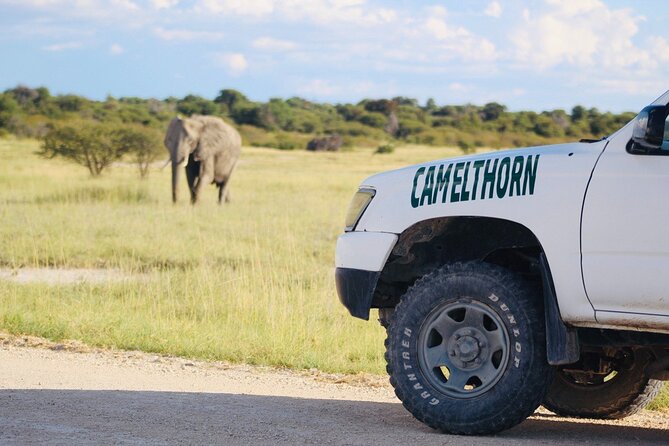
The best moments are likely to come from a sudden sighting. A lion may appear near a watering hole, or a guide may notice movement that you had completely missed. The open vehicle and the guide’s attention give you a fair chance to enjoy those moments without handling the driving yourself.
The hard part is waiting. Even a full day can produce a modest animal list, and a half-day may pass with only distant or common sightings. Anyone promising the Big Four on a particular date would be overselling the park.
You should also expect the experience to vary with weather and animal behavior. Poor weather can lead to cancellation, in which case you are offered another date or a full refund. For a full refund after changing your own plans, cancel at least 24 hours before the start time. Changes or cancellations made later are not accepted for a refund.
Who will enjoy this Etosha safari most?
I would choose this outing if you want a guide-led introduction to Etosha, prefer not to drive yourself, and enjoy learning about animals as you go. It is also a good match if supporting locally born guides matters to you.
Families and first-time safari participants may appreciate the guide’s willingness to answer questions and stop for more than just headline animals. The small group size is useful for anyone who dislikes crowded vehicles.
Wildlife photographers should think carefully about expectations. The open-sided vehicle and broad visibility help, but the group is shared and sightings cannot be scheduled. If a lion appears on the opposite side of the vehicle, you may need to work with other people rather than choosing every position yourself.
Dedicated safari enthusiasts may want a longer or more specialized arrangement if they need maximum time, private control, or repeated searches for one particular species. This experience is a practical shared safari, not a guaranteed trophy-sighting operation.
Should you book this tour?
Book it if you want a well-organized day in Etosha with a local guide, an open-sided vehicle, and a real chance to see major wildlife around the watering holes. The strongest reasons are the guides’ personal attention, the small group size, and the chance to learn about both large animals and small roadside details.
Skip it if you need guaranteed sightings, dislike long quiet stretches, or already have a private vehicle and expert guide. Etosha decides what appears, and one full day may bring only a few animals.
For the best decision, treat the Big Four as a bonus. Choose this safari for the setting, the search, and the local perspective, then consider a lion or elephant sighting a very welcome extra.
FAQ
How long does the safari last?
The advertised duration is approximately 10 hours. A half-day option is also available, so confirm the length of your selected departure when booking.
What animals might I see?
The safari searches for lions, rhinos, leopards, and elephants. Sightings may also include cheetahs, giraffes, zebras, springbok, kudu, squirrels, and birds, but no animal sighting is guaranteed.
Is the Etosha National Park entrance fee included?
No. The park entrance fee is excluded and is stated as N$150 per person.
Is food included?
Only still and sparkling water are included. A half-day departure from King Nahale Gate may have time to stop at Namutoni Restaurant, but food is not listed as part of the standard inclusion.
How many people can join the safari?
The experience has a maximum group size of nine people.
What should I expect from the vehicle?
You will ride in an open-sided vehicle with good all-round visibility. The vehicles are fully insured and regularly serviced, and small blankets are available for cold desert mornings.
Can I cancel for a full refund?
Yes. You can cancel at least 24 hours before the experience start time for a full refund. Cancellations or changes made less than 24 hours before the start time are not refunded, and poor-weather cancellations offer either another date or a full refund.
More National Parks in Namibia
- Etosha National Park: Full or Half-Day Game Drive
★ 4.6 · 22 reviews - Etosha National Park: Himba Village Cultural Tour
★ 4.5 · 6 reviews - 3 Day Camping tour at Etosha National Park
★ 5.0 · 5 reviews
Just added around Namibia
- Full Day Tour Shipwreck Sandwich Harbour Adventure★ 5.0 · 3 reviews
- Sandwhich Harbour Dune 4×4 Full Day★ 4.0 · 3 reviews
- From Windhoek: 3-Day Sossusvlei Shared Shuttle Tour★ 3.8 · 3 reviews
- Mola Mola Marine Dolphin Cruise & Beach Braai on Pelican Point★ 5.0 · 3 reviews
- 5 days Sossusvlei, Swakopmund and Spitzkoppe Camping★ 4.5 · 3 reviews
- 4 day Sossusvlei and Swakopmund Lodging★ 3.0 · 3 reviews
- Unforgettable Half Day Adventure, Explore Sandwich Harbour★ 5.0 · 3 reviews
- Spitzkoppe – Day Tour to the Spitzkoppe Mountain from Swakopmund★ 5.0 · 3 reviews
Etosha Wildlife Safaris, compared.
Etosha National Park: Full or Half-Day Game Drive
Read our review →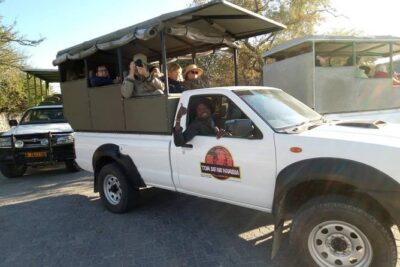
ETOSHA PARK SAFARI with local guides in 9-seater 4x4s
Read our review →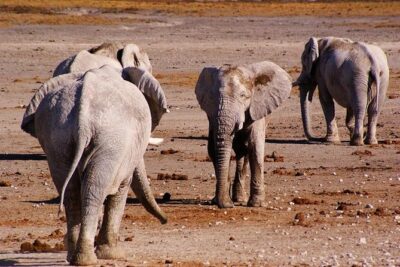
6 Day Sand, Sea & Etosha Budget Camping Safari
Read our review →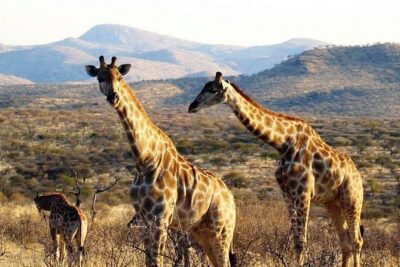
9 Day Etosha, Skeleton Coast and Sossusvlei Camping and Lodge Safari
Read our review →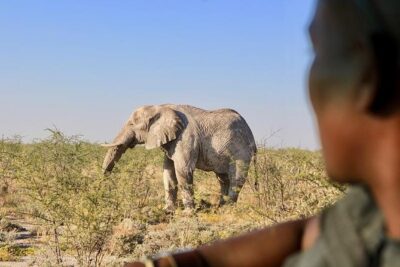
4-Day Etosha And Swakopmund Accommodated Adventure from Windhoek
Read our review →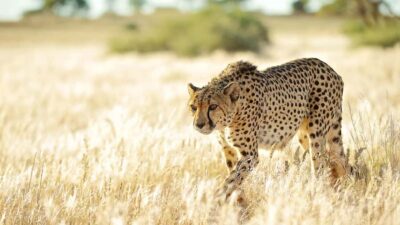
Browse the lists this tour appears in