
Reviewed · ETOSHA
Etosha National Park: Himba Village Cultural Tour
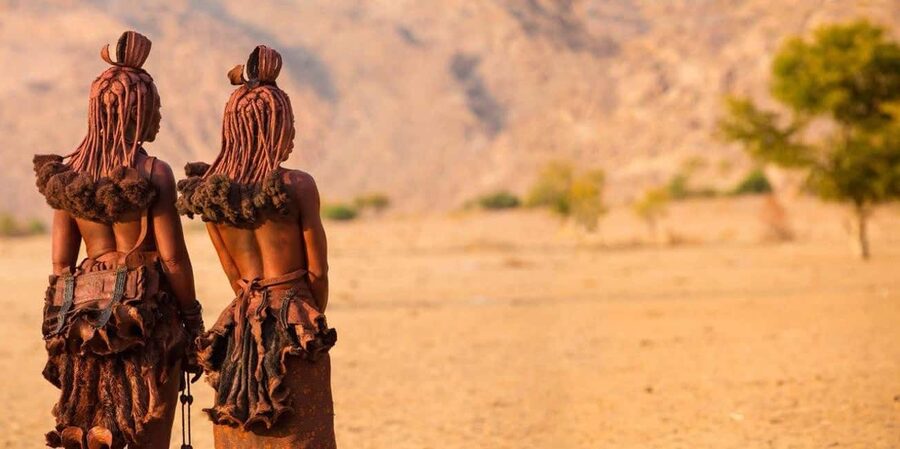
The most memorable part of this outing is the change of pace. Instead of spending every hour looking for wildlife, you leave Etosha’s Anderson Gate and visit a Himba community where cattle, family, craftwork, and spiritual practice shape everyday life. The red ochre used on Himba skin and hair is especially striking, but the real value lies in hearing what these customs mean from a local guide.
I like the small group limit of six, since it gives you a better chance to ask questions and hear the guide clearly. I also like that your visit can support the village through purchases of handmade jewelry, pottery, weaving, and other crafts. The main caution is practical: the stated timing and entrance-fee information need checking before you pay, as one booking account described a shorter transfer and an extra 300 NAD village fee.
Key points at a glance
- About 40 kilometers from Anderson Gate: This is a southern Etosha activity, not a tour from the park’s eastern or western entrances.
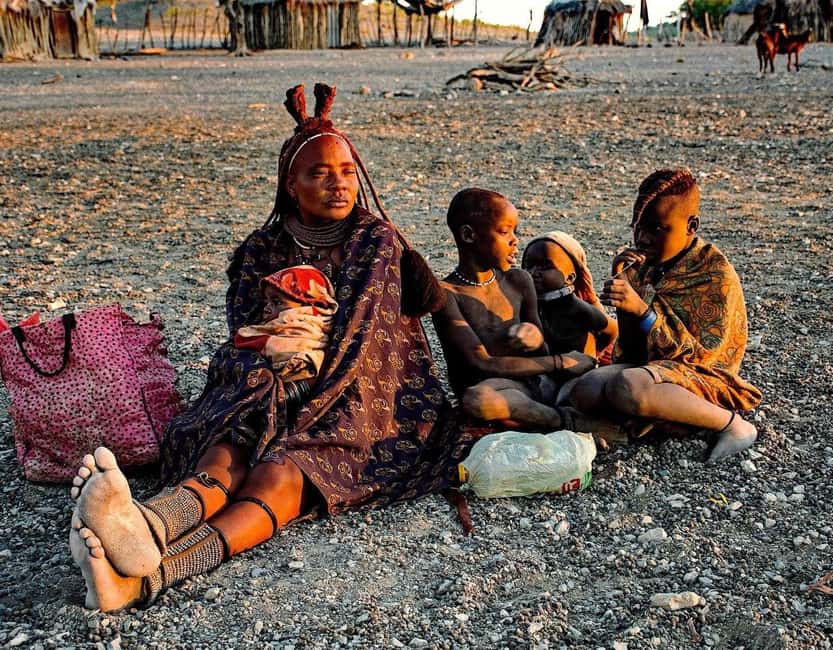
- A close look at Himba daily life: Expect mud huts, open courtyards, cattle kraals, family customs, and explanations of traditional work.
- Small groups of up to six: The format should feel more personal than a large coach outing.
- Seasonal music and dance: Traditional performances may be included, but they are not guaranteed every time.
- English-speaking local guide: Your guide explains rituals, marriage customs, beliefs, beauty practices, and village life.
- Bring your own basics: Water, food, sun protection, comfortable shoes, and a camera are all your responsibility.
Leaving Etosha through Anderson Gate
Your meeting point is Anderson Gate, the southern entrance to Etosha National Park, or a lodge located within 30 kilometers of the gate and outside the park. This detail matters more than it may seem. The tour is designed around the southern side of Etosha, so it is not a convenient add-on if you are based near another entrance.
From Anderson Gate, you travel by jeep or SUV toward the Himba village. The published schedule gives a total duration of 150 minutes, with transport listed as 1.5 hours and the village visit described elsewhere as about two hours. Those figures do not fit neatly together, so I would confirm the exact pickup time and total road time before booking.
One booking account described the transfer as only about 30 minutes to the village and back. That may reflect a particular route or a misunderstanding of the timing, but it is enough reason to ask for a clear schedule. You do not want a short cultural visit to collide with a lodge checkout, a game drive, or a long drive to your next Etosha camp.
The vehicle transfer is included, as is the local guide. Meals and drinks are not included. Pack water and food rather than expecting a shop or café at the village. Namibia’s sun can be fierce, and the tour includes walking outdoors, so a hat, sunscreen, and sturdy but comfortable shoes are sensible choices.
More Etosha safaris:
- Etosha National Park: Full or Half-Day Game Drive
★ 4.6 · 175 reviews - ETOSHA PARK SAFARI with local guides in 9-seater 4x4s
★ 5.0 · 87 reviews - 3 Day Etosha Budget Camping Safari
★ 5.0 · 37 reviews
Seeing a Himba village beyond the photo
The village visit takes you through traditional mud huts, open courtyards, and cattle kraals. These are not decorative backdrops. They help show how Himba life is organized around family, livestock, work, and shared space.
Your guide explains the role of cattle in the community and discusses animal husbandry, agriculture, and craftwork. You also hear about the Himba social structure and their relationship with the land. The setting gives those explanations a physical form: you are not simply sitting in a room looking at photographs or listening to a lecture.
The experience is most useful when you treat the village as a living community, not a stage set. Ask questions politely, listen closely, and avoid treating people as museum pieces. The instructions specifically ask you to respect Himba culture, and that is good advice for both manners and photography.
The tour description promises a chance to meet villagers through a local guide. It does not name individual guides, so you should not expect to select a particular person. The guide speaks English and is there to explain customs and answer questions. An attentive guide can make a large difference here, especially when customs are unfamiliar and the visit is fairly short.
Red ochre, butter, and Himba beauty customs
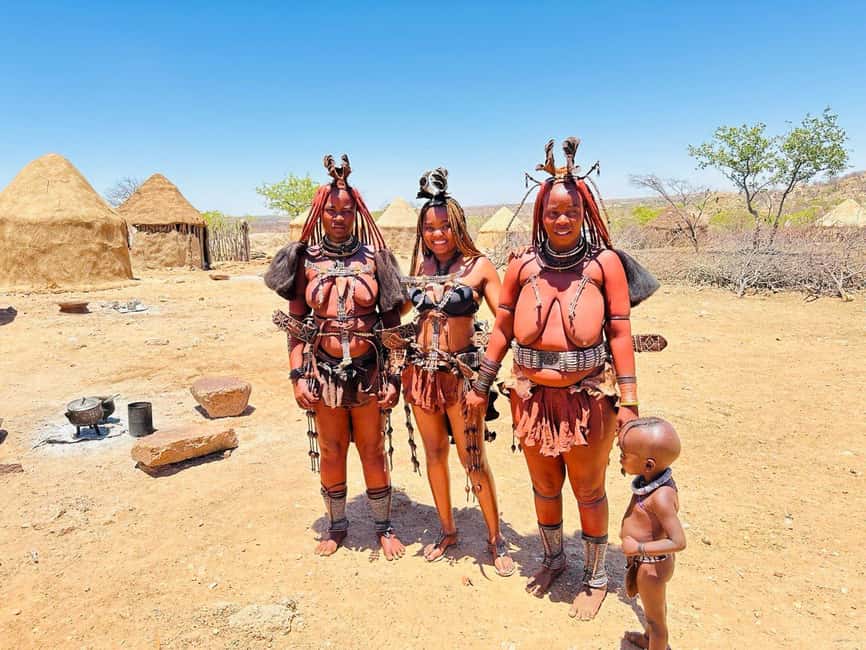
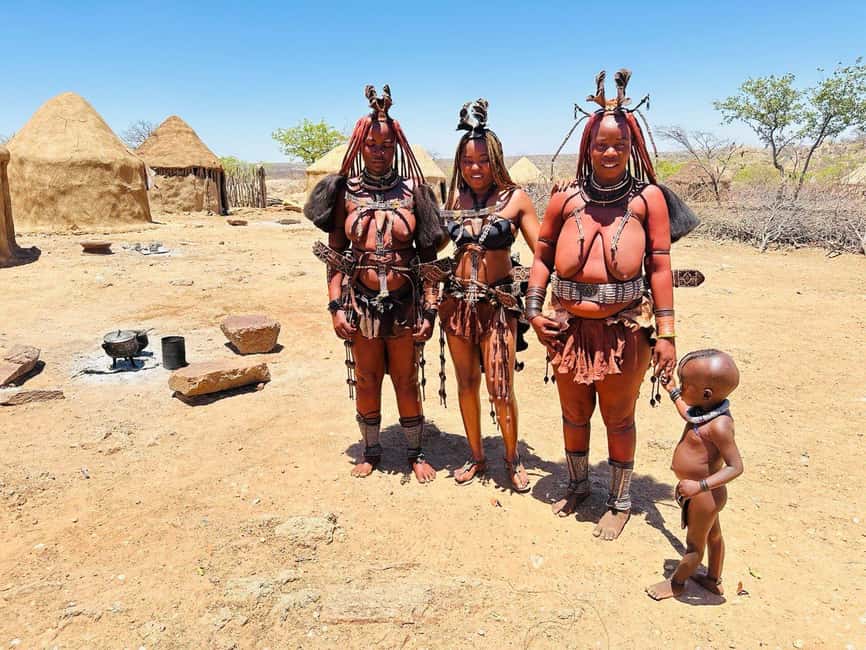
One of the most recognizable features of Himba appearance is the red ochre and butter mixture used on the skin and hair. During the visit, the guide explains this beauty ritual and its place in Himba culture.
This is a good example of why context matters. It is easy to see the red color, take a photograph, and move on. It is much more useful to learn how personal appearance connects with custom, identity, and daily life. The tour also covers spiritual practices and marriage customs, giving you a broader picture than a simple stop for photographs.
Photography is encouraged as part of the experience, but the fact that you may bring a camera does not mean every image should be taken without asking. Follow the guide’s instructions and use common courtesy. A respectful approach usually produces better encounters than rushing from one portrait to the next.
The surrounding Namibian scenery adds a strong visual setting, but the people and their customs should remain the focus. I would bring a camera, then spend part of the visit with it tucked away. You will remember more if you listen as carefully as you frame the shot.
Cattle kraals, family life, and traditional work
A walk through the village can include central meeting areas where you learn about the importance of family and communal bonds. The open layout helps explain how domestic life and social life overlap.
Cattle are central to this story. They are tied to work, family, and status, and the kraals are an important part of the village. The tour also introduces traditional skills passed through generations, including jewelry-making, pottery, and weaving.
There is an arts and crafts market during the visit. Purchasing a handmade item gives you a direct way to support the community, though you should buy because you value the object rather than feeling pressured to spend. Ask what an item is made from and how it is used. That small conversation can turn a quick purchase into a more meaningful exchange.
The craft stop also gives you a chance to see work rather than only finished souvenirs. Depending on the season and the day, you might see demonstrations of jewelry-making, pottery, or weaving. The wording is important: these activities are possible, not guaranteed parts of every visit.
A few more Namibia trips worth a look
- Safari in Etosha national park with professional tour guides born in Etosha.
★ 5.0 · 32 reviews - Etosha National Park: Full or Half-Day Game Drive
★ 4.6 · 22 reviews - 3 Day Camping tour at Etosha National Park
★ 5.0 · 5 reviews
Traditional dance and music, depending on the season
A traditional dance and music performance may be included. The schedule lists a dance show, but the broader description makes clear that performances can depend on the season. I would treat the dance as a welcome possibility, not the main reason to book.
If music and dance take place, they add movement and sound to the visit and offer another way to understand communal life. Still, the value of the tour should not rest on a performance. The village walk, conversation, and explanation of Himba customs are the more dependable parts.
This distinction matters because staged cultural performances can feel uncomfortable when they are presented without context. Here, the experience is described as a visit to a traditional village with local guidance and a chance to support the community. You can help keep it respectful by listening to the explanation and remembering that this is a real community first.
Is $64 a fair price?
At $64 per person, the tour is not a cheap transport hop, especially if you are already paying for Etosha park activities. The price includes transportation, a local English-speaking guide, and village entrance according to the supplied inclusions. It also gives you a small-group format, capped at six people.
That can be fair value if you want cultural context and do not want to arrange a separate vehicle from Anderson Gate. The price becomes less attractive if the visit is much shorter than expected or if additional entrance charges appear at the village.
There is a specific point to clarify. One booking account said the village entrance cost an additional 300 NAD per person and was not included. That conflicts with the stated inclusion of village entrance fees. I would ask the operator, Yavola Tours and Transfer, two direct questions before departure:
- Is the 300 NAD entrance fee included in the $64 price?
- What is the exact time spent at the village, and what is the full door-to-door duration?
This is not a minor detail. An unexpected fee can alter the value, and an unclear schedule can affect your wider Etosha plans. The tour offers free cancellation up to 24 hours before departure and a reserve-now, pay-later option, so confirming these points early is sensible.
A small group helps, but the visit is still brief
A maximum of six participants is one of the strongest practical features. You can hear the guide more easily, ask questions without holding up a large crowd, and move through the village in a less crowded way.
A small group does not automatically make a cultural visit private or unscripted. The route includes a guided tour, a craft market, and possibly dance and music. You should expect a planned visitor experience, with a set time and structure.
The total advertised duration is 150 minutes. That is enough for a focused introduction, but not enough to understand every part of Himba society. Think of it as a first meeting, not a complete study of the community.
One French-language booking account praised the guide for being attentive, available, and willing to answer questions. That is exactly what you need from this kind of outing. A guide who responds to your questions can help you move past quick facts and understand why a custom matters.
Who will enjoy this Himba cultural visit?
I would recommend the tour to you if you are spending time at Etosha’s southern entrance and want a break from wildlife viewing. It works particularly well for people interested in living traditions, photography, craftwork, and the practical details of family and community life.
It also suits you if you prefer a short, organized outing rather than arranging a longer independent visit. Transport and village entry are handled for you, and the group remains small.
I would be more cautious if your schedule is tight. The conflicting time details need clarification, and a 150-minute activity may still take more of your morning or afternoon once pickup and road conditions are considered. It is also not designed for people with mobility impairments or wheelchair users. Electric wheelchairs are specifically not suitable.
The tour may be less appealing if you want an entirely private encounter or if you are uncomfortable with any organized cultural performance. The chance of dance, a craft market, and photography makes this a structured visitor experience, even though it is presented as a direct community visit.
What to pack for the village walk
Keep your packing simple:
- Comfortable walking shoes
- Hat
- Sunscreen
- Water
- Food and drinks
- Camera
The village visit takes place outdoors, and water and sun protection are essential rather than optional extras. Since meals and drinks are not included, do not leave refreshments to chance.
Wear clothing that is comfortable and respectful. The supplied guidance specifically asks you to respect Himba people and their culture. That means listening to instructions, asking before taking close photographs, and treating the village as a home rather than a set built for visitors.
Fireworks and explosive substances are not allowed. Electric wheelchairs are also not suitable, and the activity is not recommended for wheelchair users or people with mobility impairments.
Booking questions worth asking first
Before booking, check that your pickup point is Anderson Gate or a lodge within 30 kilometers of the gate and outside Etosha National Park. The activity is only conducted from the southern entrance.
Confirm the exact start time, the expected transfer length, and how long you will spend in the village. The published numbers vary, and a direct answer will help you fit the tour around game drives and lodge plans.
Also confirm the entrance fee. The supplied details say it is included, while one account describes a 300 NAD extra charge. Get the answer before departure, ideally in writing.
The experience is conducted in English and uses a live guide. Groups are limited to six. You can cancel up to 24 hours in advance for a full refund, and the reserve-now, pay-later option allows you to hold a place without paying immediately.
Should you book the Etosha Himba village tour?
Book it if you want a small-group introduction to Himba life and you are staying near Anderson Gate. The chance to learn about cattle, family structure, rituals, beauty customs, and traditional crafts adds a useful human dimension to an Etosha visit. The local guide and direct support through craft purchases are strong reasons to go.
I would not book without first confirming the timing and the 300 NAD entrance question. Those details affect the tour’s value and may explain the mixed assessment of the price.
With those points settled, this is a worthwhile short cultural stop, especially for a first visit to Namibia. Go with patience, carry water, ask respectful questions, and judge the experience by the quality of the exchange rather than by how many photographs or performances you collect.
FAQ
Where does the Himba village tour start?
It starts at Anderson Gate, the southern entrance to Etosha National Park, or at a lodge located within 30 kilometers of Anderson Gate and outside the park.
Can I take this tour from another Etosha entrance?
No. The activity is conducted only from Etosha’s southern entrance, Anderson Gate.
How long does the experience last?
The stated duration is 150 minutes. The provided schedule also lists 1.5 hours of jeep or SUV transport and about two hours at the village, so you should confirm the exact timing with the operator.
What language is the tour conducted in?
The live tour guide speaks English.
What is included in the price?
Transportation, a local guide, and village entrance fees are listed as included. You can also support the village by purchasing handmade goods.
Are meals and drinks included?
No. You need to bring your own food and drinks, including water.
Is the tour suitable for wheelchair users?
No. The activity is not suitable for wheelchair users or people with mobility impairments. Electric wheelchairs are also not allowed.
What should I bring?
Bring comfortable shoes, a hat, camera, food, drinks, sunscreen, and water.
Can I cancel the booking?
Yes. You can cancel up to 24 hours in advance for a full refund. A reserve-now, pay-later option is also available.
More History Tours in Namibia
- Half-Day Windhoek City and Township Cultural Tour
★ 4.5 · 187 reviews - From Walvis Bay: Sandwich Harbour World Heritage Site
★ 4.8 · 134 reviews - Swakopmund Best Cultural Historical Township Tours Namibia
★ 5.0 · 8 reviews - City Tour of Historical Swakopmund
★ 5.0 · 8 reviews
Just added around Namibia
- Full Day Tour Shipwreck Sandwich Harbour Adventure★ 5.0 · 3 reviews
- Sandwhich Harbour Dune 4×4 Full Day★ 4.0 · 3 reviews
- From Windhoek: 3-Day Sossusvlei Shared Shuttle Tour★ 3.8 · 3 reviews
- Mola Mola Marine Dolphin Cruise & Beach Braai on Pelican Point★ 5.0 · 3 reviews
- 5 days Sossusvlei, Swakopmund and Spitzkoppe Camping★ 4.5 · 3 reviews
- 4 day Sossusvlei and Swakopmund Lodging★ 3.0 · 3 reviews
- Unforgettable Half Day Adventure, Explore Sandwich Harbour★ 5.0 · 3 reviews
- Spitzkoppe – Day Tour to the Spitzkoppe Mountain from Swakopmund★ 5.0 · 3 reviews
Etosha Wildlife Safaris, compared.

Etosha National Park: Full or Half-Day Game Drive
Read our review →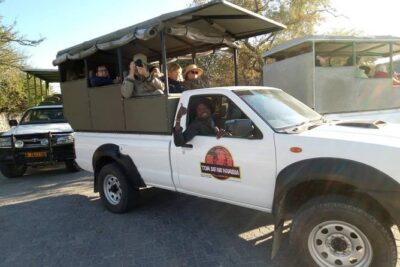
ETOSHA PARK SAFARI with local guides in 9-seater 4x4s
Read our review →
6 Day Sand, Sea & Etosha Budget Camping Safari
Read our review →
Safari in Etosha national park with professional tour guides born in Etosha.
Read our review →
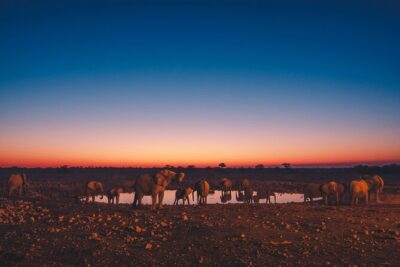
9 Day Etosha, Skeleton Coast and Sossusvlei Camping and Lodge Safari
Read our review →
4-Day Etosha And Swakopmund Accommodated Adventure from Windhoek
Read our review →Browse the lists this tour appears in