
Reviewed · SWAKOPMUND
Cultural Tour in Swakopmund
Swakopmund’s grand German-era center is only one piece of the town. This three-hour cultural tour takes you beyond the postcard streets to meet people connected with Herero, Damaranama, and other Namibian traditions, visit a kindergarten, and see daily life in DRC, an informal settlement. Nanette and Mercia guide the experience, with pickup available and groups capped at six.
I like the small group size, which gives the tour a more personal feel than a large bus outing. I also like the range of stops: a market walk, a Herero cultural visit, a school, a herbalist, and local food offer several different ways to understand Swakopmund. The main consideration is pace. Three hours is short for so many visits, and some stops may feel more observational than hands-on.
Key points to know before booking
- Small groups of up to six: You get a more personal outing and a better chance to ask questions.
- Guides Nanette and Mercia: Communication and pickup flexibility are important strengths, especially for cruise passengers.
- Several cultural perspectives: The tour introduces Herero, Damaranama, and other Namibian traditions rather than focusing on one community.
- Kindergarten visit included: You can interact with children, making this one of the more memorable parts of the morning or afternoon.
- Optional local food tasting: Ask about the food portion when you book if tasting regional dishes matters to you.
- Three hours for $105.48 per person: The price reflects a private-feeling, multi-stop outing, but the short duration means the schedule is compact.
Leaving Swakopmund’s center behind
The tour begins with a short drive through central Swakopmund and out toward township areas. That change of setting matters. The tidy center, with its colonial architecture and tourist businesses, does not show the full range of life in town. This experience is designed to widen the picture quickly.
You are not simply driven past neighborhoods while a guide recites facts. The tour includes visits where cultural traditions and daily life are explained directly. You will hear about different tribes, their customs, and their beliefs, then see some of those subjects connected to real people and places.
I would book this as a way to add human context to a Swakopmund stay. It is not a museum tour, and it is not built around grand monuments. The value comes from conversation, observation, and the chance to ask questions in a small setting.
The tour lasts about three hours, so expect a brisk sequence of stops. You will not spend a long time at every location. That is useful if you have limited time in Swakopmund, but it also means you should arrive ready to keep moving.
More history tours in Swakopmund:
- Swakopmund Best Cultural Historical Township Tours Namibia
★ 5.0 · 8 reviews - City Tour of Historical Swakopmund
★ 5.0 · 8 reviews - Explorer Historical Private Township Cultural Tours
★ 4.0 · 6 reviews
A walk through the open market
The market stop gives you a simple introduction to local commerce and street life. You take a short walk through the open market, where the setting is less formal than a cultural center or scheduled presentation.
This is a good place to pay attention to how the town presents local crafts and goods. You can ask your guide about what you see rather than trying to interpret everything on your own. The market also breaks up the driving and gives you a chance to walk before the tour continues.
Do not expect an extended shopping session. The market is one part of a wider cultural route, not the main event. If you want to buy something, bring enough time and ask whether there will be an opportunity to stop for purchases.
The market visit works best when you treat it as a window into local activity rather than a checklist of souvenirs. You may find the strongest benefit is the explanation around the stalls, not the shopping itself.
Meeting a Herero cultural host
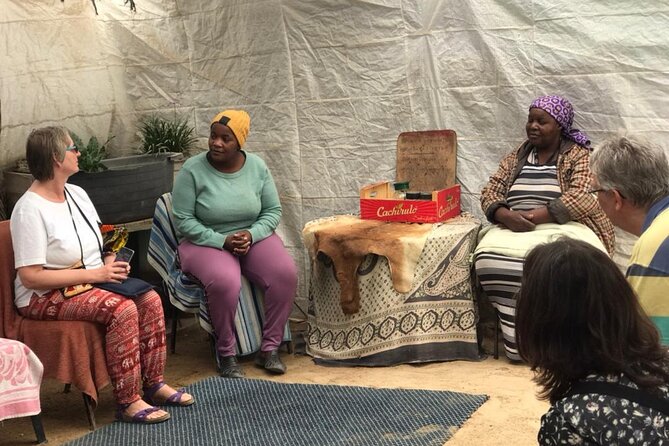
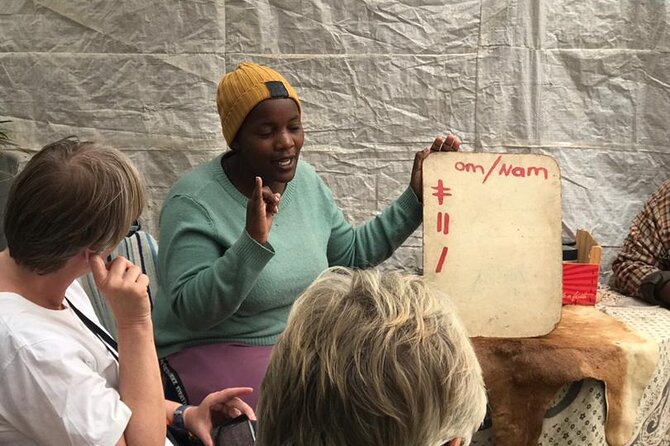
One of the most specific stops is a visit with a Herero lady who explains Herero culture and religion. A direct presentation like this can add detail that a general overview of Namibia often misses.
You will have a chance to connect traditions with a person who represents her own cultural background. That personal element is important. Instead of hearing only broad statements about Namibian tribes, you can ask focused questions about beliefs, customs, and the meaning behind cultural practices.
The stop is also a reminder that Namibia is not culturally uniform. Herero identity is one part of a larger national story, and this visit gives it a clear place in the tour. If you are interested in how culture is carried through families and communities, this may be one of the most useful conversations of the day.
Because the full details of the presentation can vary, I would keep an open mind and let the guide shape the discussion. Three hours does not allow for a long seminar. Think of this as a personal introduction rather than a complete study of Herero life.
Visiting a pre-primary school and kindergarten
The school visit is likely to be the emotional center of the tour. You visit a pre-primary school and kindergarten, where you can interact with the children. This changes the mood from explanation to direct human contact.
A child-focused visit can be rewarding, but it deserves care and respect. Follow the guidance of Nanette and Mercia, keep your behavior appropriate for a school setting, and remember that the children are not there simply to perform for visitors. The best interaction is likely to be brief, friendly, and guided by the staff and tour leaders.
For many people, this is the stop that makes the experience memorable. It offers a glimpse of early education and everyday community life that you will not get from a drive around town. You also see the tour’s social side, not just its cultural information.
Still, I would not book this solely for the school visit. Conditions can change, and the length of time there is not specified. Treat it as one part of a broader experience. If you are traveling with children, the visit may be especially meaningful, though the tour’s participation details say most people can take part rather than promising a child-specific format.
A few more Swakopmund trips worth a look
- Walvis Bay: Marine Big 5 Luxury Catamaran Tour
★ 4.8 · 1,012 reviews - Swakopmund: Desert Dunes Quad Biking with Optional Sandboard
★ 4.9 · 590 reviews - Walvis Bay and Sandwich Harbour Tour
★ 4.8 · 483 reviews - Scenic Sandwich Harbour Tour
★ 5.0 · 277 reviews
Seeing DRC, an informal settlement
The route continues to DRC, described as an informal settlement. This is a more sensitive stop than a market or cultural presentation. It may help you understand the range of housing and community conditions around Swakopmund, but it should be approached with humility.
A responsible visitor does not treat an informal settlement as a spectacle. Listen to the guide, follow local instructions, and ask before taking photographs. The point is to learn about the community, not to collect dramatic images.
The value of this stop lies in contrast. You have already seen the center of Swakopmund, and now you are shown another part of the town’s social reality. That contrast can make the city easier to understand, though it may also feel uncomfortable. I see that discomfort as a reason to pay attention, not a reason to dismiss the visit.
The tour description does not specify exactly how long you spend in DRC or which activities happen there. You should therefore expect an introduction rather than an extensive community program. Your guide’s explanation will shape how useful the stop becomes.
A traditional herbalist and everyday knowledge
The traditional herbalist adds another layer to the cultural picture. This visit introduces local healing knowledge and the role traditional practitioners can play in community life.
You will likely get a better sense of how people connect plants, health, and belief. The stop fits well after the Herero discussion because it moves the subject from identity and religion toward practical traditions. It also gives you a chance to ask questions that may not arise during a standard sightseeing tour.
I like this kind of stop because it shows culture as something used in daily life, not something kept behind glass. At the same time, you should not assume that a brief visit will explain the full medical or spiritual system. Consider it an introduction, and avoid treating traditional practices as a novelty.
The tour does not promise a treatment, consultation, or product purchase. You visit the herbalist as part of the cultural route. If you have health concerns, this is not a substitute for professional medical advice.
Meeting the Damaranama community
The final cultural visit is a pop-in at the Damaranama tribe. This gives you another point of comparison after the Herero presentation and the visit to the herbalist.
The benefit is variety. You are introduced to more than one community instead of receiving a single, simplified account of Namibian culture. If you listen closely, you may notice how customs, beliefs, and community experiences differ from one group to another.
The phrase pop-in also signals that this is a short stop. Do not expect a long performance or a full cultural workshop unless the guide explains otherwise. The tour’s strength is breadth, with several encounters packed into a limited period.
For you, the best approach is to ask respectful questions and avoid assuming that one person speaks for every member of a tribe. The experience can introduce you to a tradition, but it cannot represent every family, generation, or viewpoint.
Optional local food tasting
The tour can finish with a taste of local foods, but this part is optional. That makes the experience easier to fit around different appetites, dietary needs, and schedules.
If regional food is a major reason you are booking, confirm what is available before you go. The information does not identify the dishes, ingredients, or cost of the tasting. You should not assume that the food portion is included in the $105.48 price.
Even so, food is a natural way to end a cultural tour. A taste can turn an abstract discussion into something memorable and practical. Ask questions about what you are eating and how it fits into local life, rather than treating it as a quick sample with no context.
If you have allergies or dietary restrictions, raise them at booking. The provided details do not state that special diets can be accommodated, so you should get a clear answer before committing to the optional portion.
Why the small group changes the experience
The maximum group size is six. That is a meaningful advantage here because several stops depend on conversation. A small group makes it easier to hear the guide, ask questions, and avoid the feeling of being processed through a large crowd.
Pickup is offered, and the experience can work well for cruise passengers. A cruise passenger had pickup from the port and needed flexibility because of ship-related delays, and Nanette and Mercia adjusted their communication and timing. That does not guarantee that every delay can be accommodated, but it is a useful reason to explain your port schedule clearly when booking.
The tour is also confirmed at the time of booking. Most people can participate, and no special fitness requirement is stated. You should still be comfortable with short walks, getting in and out of transport, and moving between several stops during the three-hour period.
Is $105.48 a fair price?
At $105.48 per person, this is not the cheapest way to see Swakopmund. The question is what you are paying for. You are getting about three hours of transport, guiding, several cultural encounters, a market walk, and pickup, with a group limited to six people.
That price makes more sense if you value access and personal explanation. A large sightseeing drive might cost less, but it would not necessarily include a Herero cultural presentation, a school visit, a traditional herbalist, and a Damaranama stop in one compact outing.
The value is less convincing if you want a slow, specialized visit at one community. This tour covers a lot of ground, so each stop is likely to be fairly short. You are paying for range and coordination rather than long time at a single location.
The average booking point is 34 days ahead. That suggests planning early is sensible, especially if you are arranging the tour around a cruise call or a fixed Swakopmund schedule. With only six places available, last-minute space may be limited, though availability is not guaranteed either way.
Who should book this Swakopmund tour?
I would recommend it to you if you want to meet people, hear several cultural perspectives, and see parts of Swakopmund that a standard city walk may miss. It suits first-time visitors who want a broad introduction in a short window.
It is also a good fit for cruise passengers because pickup is available and the guides have shown flexibility around port complications. Tell the operator your ship timing clearly, and leave enough margin for changes.
Families and visitors interested in community life may appreciate the kindergarten stop, provided they are comfortable following local guidance. People curious about traditional religion, herbal practice, and tribal identity will also find the mix worthwhile.
I would think twice if you prefer private museum visits, long historical explanations, or a tightly controlled sightseeing route. The tour involves real communities and personal encounters, so it requires respect, flexibility, and a willingness to listen.
Cancellation is free if you cancel at least 24 hours before the start time. Changes or cancellations inside that window are not accepted for a refund. Poor weather or failure to reach the minimum number of participants can lead to a different date or a full refund.
Should you book it?
Book this tour if you want a compact, people-focused introduction to Swakopmund and you value meeting several communities more than ticking off monuments. The kindergarten visit, the Herero cultural discussion, and the small six-person format give it a clear purpose.
Skip it if you want a long, quiet visit at one site or if you are uncomfortable with the sensitive parts of community tourism. For the right visitor, $105.48 buys more than transport around town. It buys a chance to see how varied Swakopmund life is, with guides Nanette and Mercia helping you make sense of the stops.
FAQ
Where does the cultural tour take place?
The tour takes place in Swakopmund, Namibia. It includes a drive through the center of town and visits to several community and cultural locations.
How long does the experience last?
The tour lasts approximately three hours.
How much does the tour cost?
The listed price is $105.48 per person.
How many people can join the tour?
The maximum group size is six participants.
Is pickup available?
Yes. Pickup is offered, and the experience has also accommodated pickup from the port for cruise passengers.
Can I interact with children during the tour?
Yes. The tour includes a visit to a pre-primary school and kindergarten where you can interact with the children.
Is the local food tasting included?
The local food tasting is optional. The available information does not specify the dishes or whether an additional charge applies, so ask the provider before booking.
What is the cancellation policy?
You can cancel at least 24 hours before the start time for a full refund. Cancellations or changes made less than 24 hours in advance are not accepted for a refund. If poor weather or an insufficient number of participants cancels the experience, you can receive a different date or a full refund.
Just added around Swakopmund
- 5 days Sossusvlei, Swakopmund and Spitzkoppe Camping★ 4.5 · 3 reviews
- 4 day Sossusvlei and Swakopmund Lodging★ 3.0 · 3 reviews
- Unforgettable Half Day Adventure, Explore Sandwich Harbour★ 5.0 · 3 reviews
- Spitzkoppe – Day Tour to the Spitzkoppe Mountain from Swakopmund★ 5.0 · 3 reviews
- Full-Day Tour in Namib Desert from Swakopmund, Namibia★ 5.0 · 3 reviews
- Spitzkoppe : via Zeila Shipwreck★ 5.0 · 3 reviews
- Pelican Point Peninsula Tour★ 5.0 · 3 reviews
- Walvis Bay Shore Excursion: Flamingos, Dune 7, Swakopmund★ 5.0 · 3 reviews
Swakopmund Tours, compared.
Walvis Bay: Marine Big 5 Luxury Catamaran Tour
Read our review →
Swakopmund: Desert Dunes Quad Biking with Optional Sandboard
Read our review →


Sandwich Harbour Adventure: Seals and Sandwich harbour dune drive
Read our review →
Swakopmund: Little Five Desert Wildlife Quad Biking Tour
Read our review →
Browse the lists this tour appears in