
Reviewed · SWAKOPMUND
Living Desert Eco Dune Tour
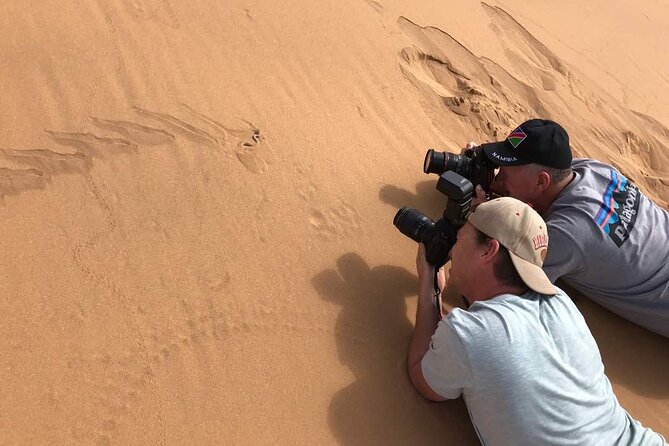
The Namib Desert looks empty until your guide points out the tracks, scales, wings, and tiny movements hidden in the sand. This half-day outing from Swakopmund focuses on the desert’s small survivors, including chameleons, lizards, snakes, beetles, and birds, rather than simply driving out for a few dune photos.
I like the close look at desert life and the way the guide explains how coastal fog keeps this dry world going. I also like the easy setup: hotel pickup and drop-off, bottled water, a snack, and a professional guide are all included. Arnold, one of the guides associated with the tour, is especially noted for his lively, interactive teaching.
The main consideration is the weather-dependent schedule. Desert wildlife is small and conditions can affect what you find, so this is best for you if you enjoy careful observation and natural history, not if you want a fast, action-heavy dune ride.
Key points to know before booking
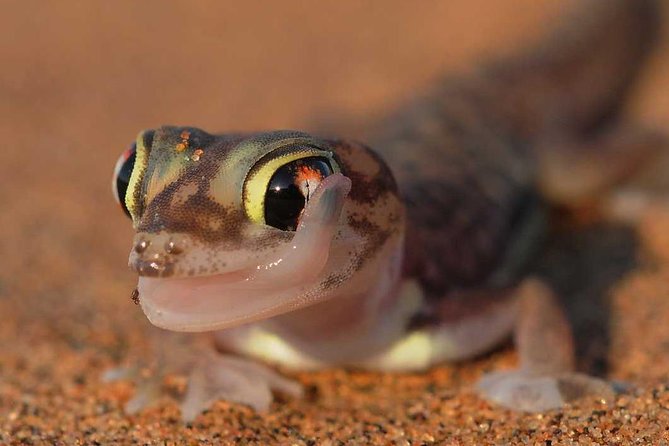
- Small creatures are the main event: Look for Namaqua chameleons, lizards, snakes, beetles, and other life that can be easy to miss without a trained eye.
- Coastal fog supports the desert: Your guide explains one of the Namib’s most surprising facts, how moisture from the coast helps sustain life far from regular rain.
- The four-hour format fits a short stay: You can see a major natural attraction between Walvis Bay and Swakopmund without giving up a full day.
- The Horse Graveyard adds a human story: The route includes a historic site that gives the outing more range than a simple wildlife walk.
- Birds are part of the search: You might spot Tractrac Chats, Red-capped Larks, and other desert birds.
- The practical details are covered: Pickup, return transport, water, and a snack make the $60.39 price easier to justify.
Why the Namib looks empty, but is not
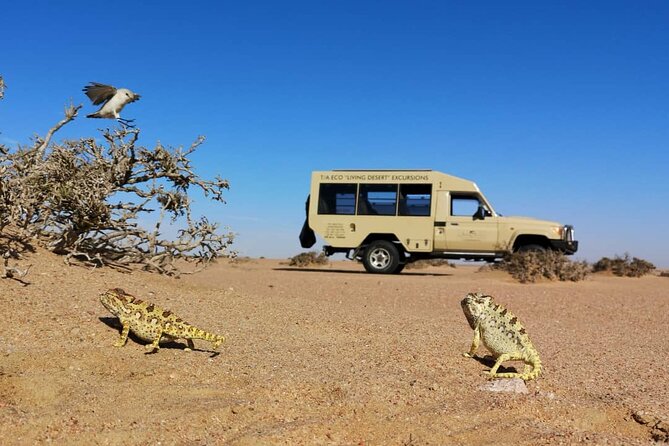
From the road, the Namib can seem like a vast sweep of sand and rock with almost nothing alive in it. That first impression is misleading. The animals here are specialists, often small, well camouflaged, and active in ways that are easy to overlook.
That is the central idea of this tour. You are not simply taken to a scenic viewpoint and left to admire the dunes. You walk across the sandy country with someone who can connect what you see to the desert’s weather, soil, plants, animals, and coastal position.
The tour runs through the dune area between Walvis Bay and Swakopmund. That location matters because the coastal Namib is shaped by both sand and fog. Rain is scarce, yet moisture moving inland from the Atlantic can help support insects, reptiles, birds, and other life.
I like this kind of outing because it changes the scale of the desert. Instead of judging it only by its size, you begin looking for a footprint, a ripple in the sand, or the shape of a creature blending into its surroundings.
More adventure sports in Swakopmund:
- Swakopmund: Desert Dunes Quad Biking with Optional Sandboard
★ 4.9 · 590 reviews - Swakopmund: Little Five Desert Wildlife Quad Biking Tour
★ 4.8 · 123 reviews - Quad Bike Tour (1 hour)
★ 4.5 · 24 reviews
A half-day route with more than one story
The experience lasts about four to five hours, with the desert portion listed at roughly four hours. That makes it a useful choice for a short visit to Swakopmund, especially if you want a major Namibian nature experience without committing an entire day.
The tour begins at the Desert Explorers Adventure Centre on Nathaniel Maxuilili Street in Swakopmund. Pickup is offered, and transportation is included, so you do not need to arrange your own way into the dune area. The activity returns to the meeting point at the end.
The route combines several subjects:
- Desert wildlife
- Coastal fog and water
- Birds of the Namib
- Human history at the Horse Graveyard
- The shifting form of the dunes
That mix gives the trip a good rhythm. You spend time searching for tiny animals, then switch to wider questions about climate and survival. The Horse Graveyard adds a darker historical note, while the bird sightings give you another reason to keep scanning the open ground and sky.
Do not expect every part of the outing to deliver a dramatic sight. Wildlife in a desert is not arranged for easy viewing, and the creatures are often small. The reward comes from learning how to notice what is already there.
Searching the sand for reptiles and beetles
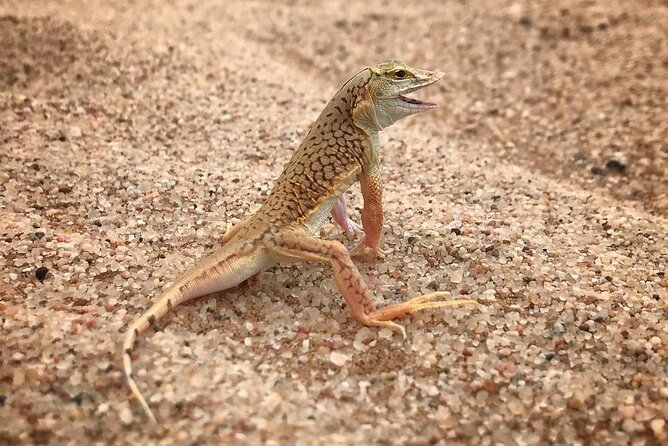
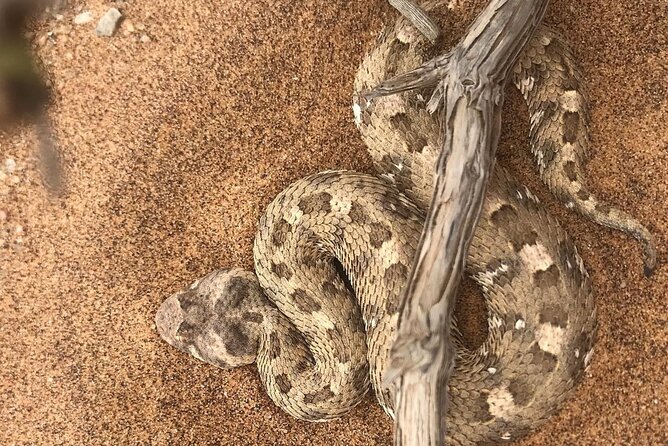
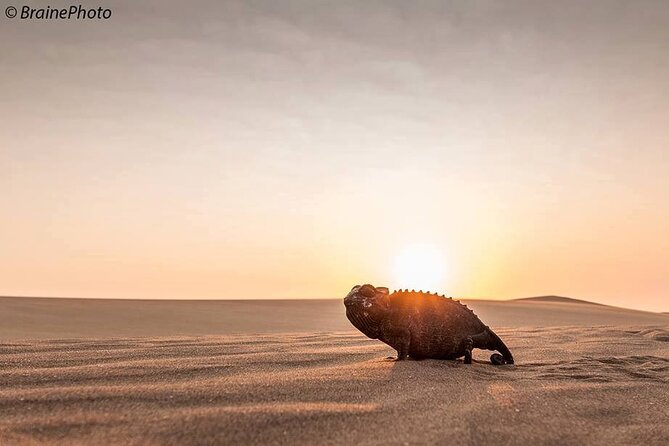
The most distinctive part of the tour is the search for creatures that many people would walk past. The Namib Sand-diving Lizard, Namaqua Chameleon, snakes, and beetles are among the animals you might encounter.
The chameleon is a good example of why a guide matters. Its colors and shape can blend into the dry surroundings, and a casual walk across the dunes may produce nothing more than footprints. Your guide helps you slow down and look in the right places.
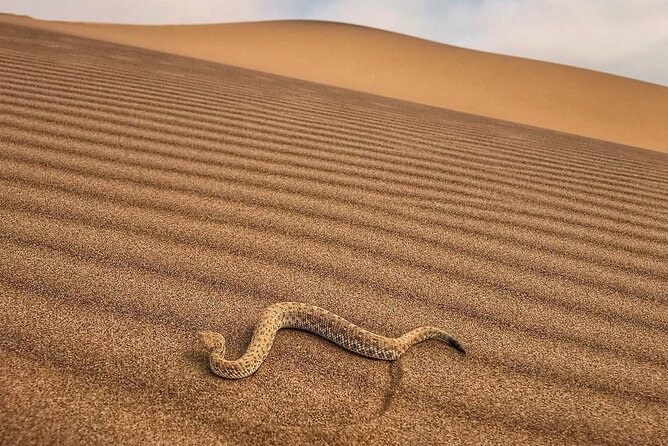
The same is true of lizards and snakes. The tour information does not promise a fixed list of sightings, and weather affects the activity. That uncertainty is worth keeping in mind before you book. You may find several small animals, or the search may be quieter than expected.
Still, the focus is well chosen. Desert wildlife is not always about large mammals or dramatic herds. Here, survival can mean living below the surface, moving at the right time, or using camouflage so well that you almost miss the animal.
A guide with a strong teaching style can make a big difference. Arnold is praised for using a fun and interactive way to explain Namibian ecology. That matters because the animals are not only things to photograph. You learn why they can live in such a dry place and how each one fits into the wider system.
Coastal fog, birds, and the Namibian food web
One of the best subjects covered on the outing is the role of coastal fog. The Namib receives very little rain, yet fog from the coast can provide vital moisture. Your guide explains how that moisture helps keep the desert alive.
This is the kind of detail that turns a scenic drive into a useful nature lesson. Once you understand the fog, the dunes no longer look like a simple barrier between the ocean and inland Namibia. You start to see them as part of a system shaped by air, sand, temperature, and water.
Birdwatchers have another reason to pay attention. The route may produce sightings of Tractrac Chats, Red-capped Larks, and other birds adapted to the region. The information does not promise a full birding itinerary, so serious birders should treat these as possible additions rather than the main purpose of the trip.
Even so, birds help broaden the experience. You are not only looking down for reptiles and insects. The desert has life at several levels, and your guide can help you connect what is moving above the sand with what is happening on the ground.
A few more Swakopmund trips worth a look
- Walvis Bay: Marine Big 5 Luxury Catamaran Tour
★ 4.8 · 1,012 reviews - Walvis Bay and Sandwich Harbour Tour
★ 4.8 · 483 reviews - Scenic Sandwich Harbour Tour
★ 5.0 · 277 reviews - Sandwich Harbour Adventure: Seals and Sandwich harbour dune drive
★ 5.0 · 165 reviews
The Horse Graveyard adds a human connection
The Horse Graveyard gives the route a historical stop as well as a natural one. It is a stark place, and it adds a reminder that the desert has been shaped by human activity as well as wind and fog.
The supplied details do not explain the full history of the site, so you should not book this tour expecting an extended historical lecture. Its value is as one part of a wider half-day route. After focusing on tiny desert animals, you encounter a place that changes the mood and raises questions about travel, work, and survival in this harsh setting.
I like the contrast. Without a stop such as this, the outing could feel like a single-subject wildlife search. The Horse Graveyard gives the guide a chance to place the desert in a human context, even if the main emphasis remains ecology.
What the guide adds to the experience
A guide is essential here. The desert can be visually striking, but its most interesting details are not always obvious. A professional guide can explain the animals, point out signs in the sand, and help you understand why fog matters.
The strongest praise centers on Arnold from The Naturalist Collection. He is described as passionate, engaging, and able to explain Namibian ecology in a fun, interactive way. That gives you a useful sense of the guiding style to expect: less formal lecture, more hands-on interpretation.
The operator is The Naturalist Collection, trading as Batis Birding Safaris CC. The stated group limit is 33 people. That is not a tiny private outing, and you should be aware of the possible group size when deciding what kind of experience you want.
A group of up to 33 can make transport and pricing practical, but it may also mean that you are not always standing next to the guide. If you want the best chance of hearing every explanation and seeing a small animal as it is found, stay attentive and keep reasonably close during the walking sections.
The 4.9 out of 5 rating from 113 ratings and the 97 percent recommendation rate suggest that the guiding and wildlife focus are working well for most people. Those numbers cannot guarantee your sightings, but they do point to a consistently strong experience.
What the $60.39 price really covers
At $60.39 per person, this is not just an admission ticket to the dunes. You are paying for a half-day outing with transport, a professional guide, bottled water, and a snack.
The value is strongest if you are staying in Swakopmund without a rental car, or if you prefer not to work out the route yourself. Pickup and return transportation remove a common travel nuisance, particularly when the activity takes place outside town.
The guide is the most important part of the cost. Without interpretation, you could see sand, birds, and perhaps a reptile. With the guide, you have a better chance of understanding what you are seeing and why it can survive there.
The snack and water are modest inclusions, but useful ones. Four hours in a dry environment is long enough for basic comfort to matter. You should still dress for outdoor conditions and be ready for changing weather, since the activity depends on it.
For a private tour, the price would tell a different story. This experience allows as many as 33 participants, so it is better value for you if you are comfortable with a shared outing. If you want a quiet, highly personal wildlife search, check the group arrangement before booking.
Who will enjoy this dune tour most
This is a good match for you if you like nature interpretation, reptiles, insects, birds, and unusual desert ecology. It also suits anyone who wants to see the Namib on a limited schedule and prefers a planned outing with transport included.
Families may find the search format engaging because it gives everyone a task: look for tracks, scan the sand, watch for movement, and listen for bird calls. The interactive approach associated with Arnold may help keep younger participants interested, although the activity still depends on patience.
It is also well suited to first-time visitors to Swakopmund. You do not need to know the dune region in advance, and the guide provides the context that can be missing when you visit a large natural area on your own.
You may want to choose another type of excursion if your main goal is speed, adventure sports, or large-animal viewing. This tour is about observation and explanation. The creatures can be tiny, the sightings cannot be guaranteed, and the pace is shaped by what the guide finds.
Most people can participate, and the activity is near public transportation. Confirmation is sent within 48 hours of booking, subject to availability. The tour requires a minimum number of participants, so a cancellation for that reason would lead to another date or experience, or a full refund.
The cancellation rule is strict: your payment is non-refundable and the booking cannot be changed for any reason. Because the outing is weather-dependent, I would avoid booking it too tightly against an important departure unless you are comfortable with that risk.
Simple ways to get more from the four hours
Go in with the right expectation. You are not guaranteed a parade of animals. You are being shown how to find life in a place that first appears bare.
Listen closely when the guide discusses fog. That single subject helps explain much of what follows, from insects to birds to reptiles. It is one of the most useful pieces of context on the tour.
Keep your eyes moving between the sand and the open distance. The small creatures are the main draw, but the route can also produce birds such as Tractrac Chats and Red-capped Larks.
Use the Horse Graveyard as a change of focus. It is not simply another photo stop. It adds a human layer to a route otherwise centered on ecology and natural survival.
Finally, allow time for the guide to work. An informed guide may stop over a patch of sand for a reason that is not obvious at first. The best moments may begin with a detail you would otherwise ignore.
Should you book the Living Desert Eco Dune Tour?
Book it if you want a practical, guide-led introduction to the Namib near Swakopmund. The combination of small wildlife, coastal fog, birds, the Horse Graveyard, transport, water, and a snack gives the four-hour outing real range.
I would especially choose it for a first visit, a short stay, or a day when you want nature without planning a complicated route. The strongest reason to go is the guide’s ability to make tiny desert creatures meaningful, with Arnold receiving particular praise for his clear and lively approach.
Think twice if you need guaranteed wildlife, a private group, or a fast-paced dune adventure. For everyone else, the $60.39 cost is fair for a half-day desert lesson that shows you the Namib is alive in ways you might otherwise miss.
FAQ
Where does the Living Desert Eco Dune Tour take place?
The tour travels from Swakopmund into the Namib Desert, exploring shifting dunes between Walvis Bay and Swakopmund.
How long does the tour last?
The experience lasts approximately four to five hours. The desert portion is listed as about four hours.
Is hotel pickup included?
Yes. Hotel pickup and drop-off are included, and the activity ends back at the meeting point in Swakopmund.
What animals might I see?
You might see Namaqua chameleons, lizards, snakes, beetles, Tractrac Chats, Red-capped Larks, and other desert birds. Wildlife sightings are not guaranteed.
What is included in the price?
The price includes bottled water, snacks, a professional guide, and transportation with hotel pickup and drop-off.
How large can the group be?
The activity has a maximum group size of 33 participants.
Can I cancel or change my booking?
The experience is non-refundable and cannot be changed for any reason. If the operator cancels because the minimum number of participants is not reached, you will be offered another date or experience, or a full refund.
Just added around Swakopmund
- 5 days Sossusvlei, Swakopmund and Spitzkoppe Camping★ 4.5 · 3 reviews
- 4 day Sossusvlei and Swakopmund Lodging★ 3.0 · 3 reviews
- Unforgettable Half Day Adventure, Explore Sandwich Harbour★ 5.0 · 3 reviews
- Spitzkoppe – Day Tour to the Spitzkoppe Mountain from Swakopmund★ 5.0 · 3 reviews
- Full-Day Tour in Namib Desert from Swakopmund, Namibia★ 5.0 · 3 reviews
- Spitzkoppe : via Zeila Shipwreck★ 5.0 · 3 reviews
- Pelican Point Peninsula Tour★ 5.0 · 3 reviews
- Walvis Bay Shore Excursion: Flamingos, Dune 7, Swakopmund★ 5.0 · 3 reviews
Swakopmund Adventure Sports, compared.
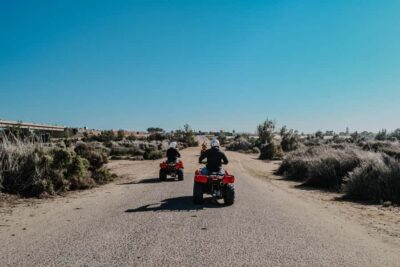
Swakopmund: Desert Dunes Quad Biking with Optional Sandboard
Read our review →Swakopmund: Little Five Desert Wildlife Quad Biking Tour
Read our review →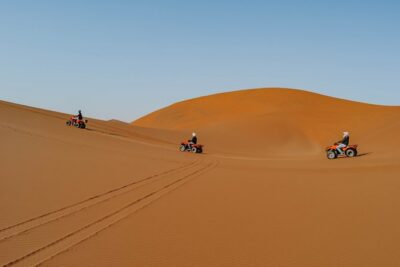
2hr COMBO – 1hr Lie-down Sandboarding and 1hr Quad Bike ride
Read our review →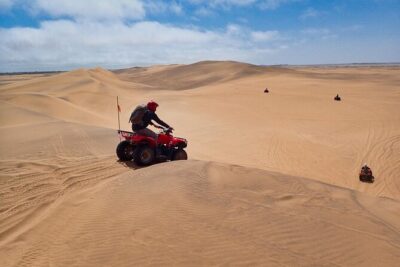
3-Hour Quad Biking and Sand-Boarding Combo from Swakopmund
Read our review →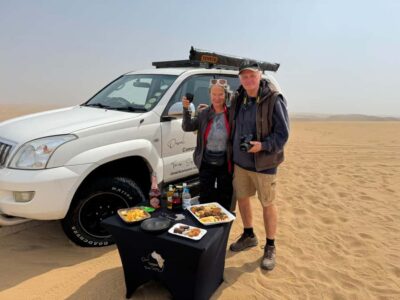
Walvisbay: Sandwich Harbour 4×4 & Sandboarding Tours
Read our review →
Swakopmund: “UP CLOSE” Living Desert E-FatBike Tour
Read our review →
Browse the lists this tour appears in