
Reviewed · WINDHOEK
11 Days Small Group Namibia Experience Fully Accommodated Tour
Namibia gives you a lot of Africa in a single loop: red Kalahari dunes, stark Atlantic coast, ancient rock art, and serious wildlife country. This 11-day small-group route links the country’s major sights without asking you to camp, making it a good fit if you want comfort at night and long road days by day.
I like the mix of scenery and wildlife, especially the jump from Dead Vlei’s black trees to flamingos at Walvis Bay. I also like the small maximum group size of seven, plus guides such as Markus, Frank, Me-gusto, and Sidney, who are praised for their care, patience, and local knowledge. The tradeoff is simple: Namibia is huge, so several days include long drives, and some departures have an early start or a full day in the vehicle.
Key points at a glance
- Dead Vlei and Dune 45: See Namibia’s most surreal clay pan and one of its most accessible famous dunes.
- Fully accommodated travel: Sleep in lodges and guest houses rather than tents, with breakfast included each morning.
- Small group size: The vehicle carries a maximum of seven travelers, allowing a more personal pace than a large coach tour.
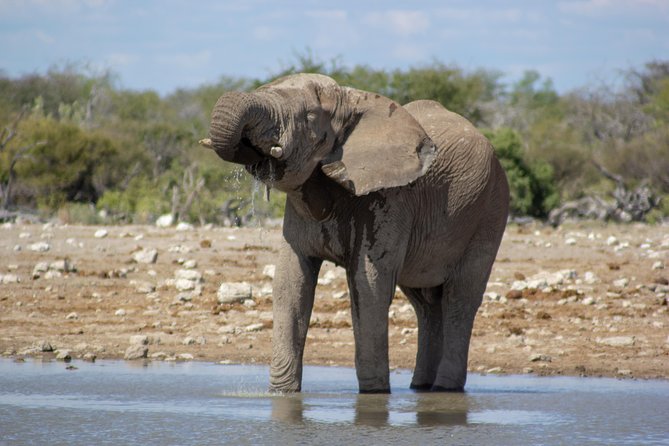
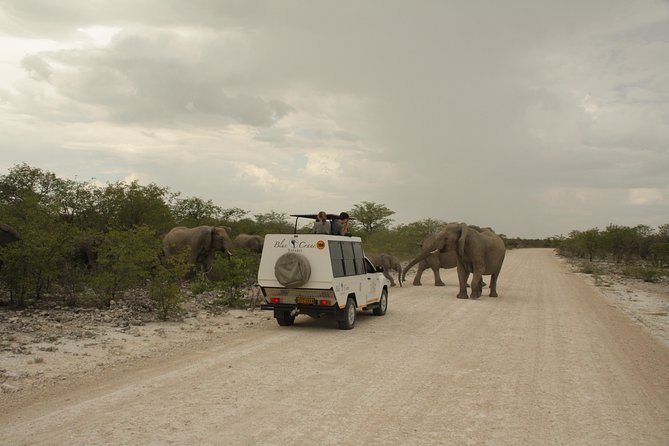
- Wildlife with variety: Look for seals at Cape Cross, desert rhino near Palmwag, and elephants, giraffes, lions, and other animals in Etosha.
- Culture and conservation: Visit an Otjikandero Himba village and the AfriCat Foundation at Okonjima.
- A broad Namibia circuit: The route covers the Kalahari, Sossusvlei, Swakopmund, Damaraland, Etosha, and central Namibia.
From Windhoek to the red Kalahari
Your pickup in Windhoek is scheduled between 8:00 and 8:45 a.m. on the first morning. The road heads south toward Mariental and the Kalahari, a fossil desert with enough rainfall to support golden grass, camelthorn trees, and small red dunes.
This is a pleasant first taste of Namibia because it is quieter than the famous dunes farther west. Your lodge is described as a thatched property with rondavel-style huts, views across the dry country, and a stone swimming pool. An occasional oryx near the pool would not be out of place.
Mariental itself is more useful as a regional center than as a sightseeing town. It lies near Hardap Dam, Namibia’s largest reservoir, and the surrounding irrigation area supports citrus, melons, lucerne, wine, maize, ostrich farms, and other agriculture. I would treat this stop as a gentle introduction to the country, not as the main event.
A few more Windhoek trips worth a look
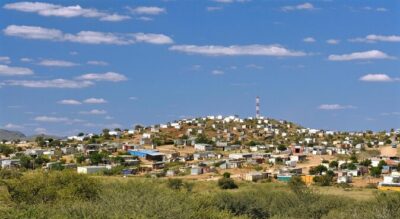
- Windhoek: City and Township Tour
★ 4.8 · 430 reviews - Half-Day Windhoek City and Township Cultural Tour
★ 4.5 · 187 reviews - Windhoek: Bushman Walk with the San
★ 4.9 · 145 reviews
Meeting local bushmen before the Namib Desert
After breakfast on Day 2, you take a walk with local bushmen in the Kalahari area. This adds a human element before the tour turns toward the giant dunes of the Namib.
The day also shows how quickly Namibia changes. You travel from the smaller dunes in the east toward the much larger dune country in the west, passing villages and open scenery along the way. Lunch is served during the journey, and arrival at the lodge is planned for early afternoon.
That timing matters. You should have some time to cool off, use the pool, and consider optional lodge activities rather than arriving only to sleep. Still, this is a full road day, and the itinerary does not specify the exact optional activities or their prices. Ask your guide and lodge about those choices before committing.
Sossusvlei, Dead Vlei, and the work of climbing sand
Day 3 is the visual centerpiece of the trip. You visit Dead Vlei, Dune 45, and Sesriem Canyon, with admission included for all three.
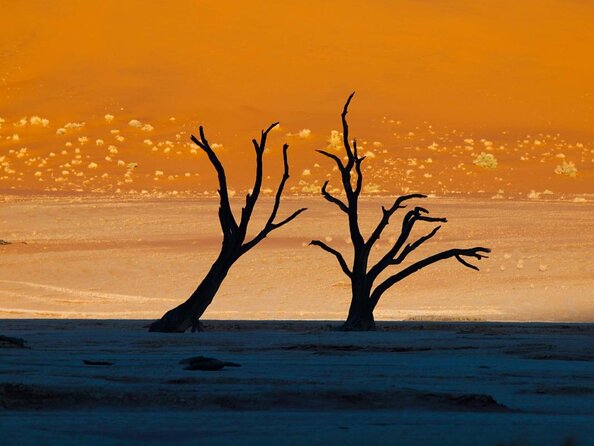
Dead Vlei is a dried clay pan surrounded by red-pink dunes. The dead camelthorn trees are roughly 900 years old, and the extreme dryness prevented them from decomposing. Their black trunks against the pale cracked ground and red dunes create one of Namibia’s most striking scenes.
You have about two hours here, enough for photographs and a serious look around, though the conditions can be demanding. The combination of heat, sand, and bright sun makes a hat, water, sunscreen, and sturdy shoes especially useful. The tour provides mineral water, but you should still carry a bottle within easy reach.
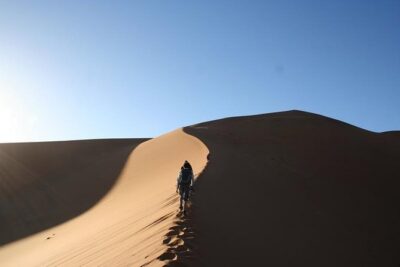
Dune 45 is about 80 meters high and sits close to the road. It is a more manageable climb than Big Daddy, making it a sensible choice if you want the dune experience without turning the morning into an endurance test. The hour allotted here should allow time to climb partway or reach the crest at your own pace.
Sesriem Canyon offers a change of scale. Instead of broad open sand, you walk through a narrow rocky gorge cut by water. The canyon is named for the six leather straps once tied together to lower buckets into its depths. Three hours are allotted for the canyon hike, a generous block compared with the shorter dune stops.
This day is physically more active than the rest of the route. You can participate at a moderate level, but the sand and heat still demand reasonable fitness. The itinerary’s use of the word hike should be taken seriously, even though the exact walking distances are not provided.
Crossing the desert to the cold Atlantic
Day 4 takes you from the interior to Swakopmund by way of the Tropic of Capricorn, Gaub Pass, and Kuiseb Pass. Namibia’s geography changes again as dry riverbeds, rocky passes, dunes, and the Atlantic coast replace the Kalahari.
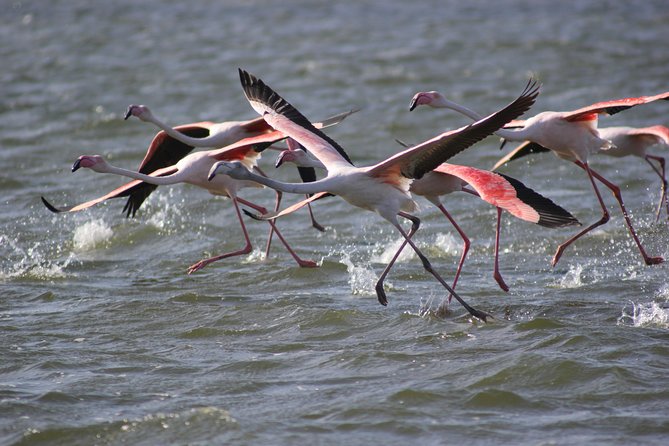
A stop at the Tropic of Capricorn sign lasts about 30 minutes. It is a quick roadside photo opportunity, but it gives the journey a clear sense of place. The more interesting stop is Walvis Bay lagoon, an important wetland where you might see flamingos, pelicans, Damara terns, and avocets.
You also visit the salt works before continuing along the coastal road. On one side are dunes, and on the other is the cold Atlantic. The contrast is dramatic, and the sea air can feel surprisingly chilly after the desert heat.
Dinner is planned at a local restaurant in Swakopmund. This is one of the meals included in the package, while drinks are not. Keep some Namibian currency or a card available for extras.
Same country, a completely different kind of day:
- 6-Day Dunes and Wildlife Accommodated Safari from Windhoek
★ 5.0 · 123 reviews - Windhoek City Tour
★ 5.0 · 113 reviews - 10-Day Namibia Highlights Guided Tour from Windhoek
★ 5.0 · 78 reviews - 12 Day Classic Namibia Camping Safari
★ 5.0 · 77 reviews
Two nights in Swakopmund, with time to choose
Day 5 is a free day in Swakopmund. That pause is important because the first four days contain plenty of driving and scheduled sightseeing.
Swakopmund has German colonial architecture, palm-lined streets, shops, restaurants, a museum, and an aquarium. Its identity is unusual: part old colonial seaside town, part Namibian desert base, and part adventure center. You can keep the day easy or book an optional activity through the guide.
The choices listed include a boat trip with oysters and champagne, scenic and microlight flights, fishing, desert tours, quad biking, sandboarding, and skydiving. These activities cost extra, depend on availability, and are taken at your own risk. Do not assume your favorite option will be operating on the day, so ask early.
Dinner is at your own expense. That gives you freedom to choose a restaurant, but it also means the advertised price does not cover every meal. If you prefer a quiet day, Swakopmund is one of the easiest places on the route to slow down, walk, shop, and rest.
Cape Cross seals and the road into Damaraland
Day 6 follows the coast north toward Damaraland and includes Cape Cross Seal Colony. The colony can contain approximately 80,000 to 100,000 Cape fur seals, which are technically sea lions.
A walkway keeps you about 200 meters from the animals. You should expect noise and a strong smell, especially when thousands of seals gather in one place. That is part of the point. This is not a polished zoo encounter. It is a chance to watch a large wild colony in its own setting.
The route continues through Uis, an old mining town known for semi-precious stones such as amethyst and tourmaline. Rough stones may be available at bargain prices, but buy carefully and keep receipts if you are spending much. The day also passes the Brandberg, Namibia’s highest mountain, before reaching Twyfelfontein.
This is another long day, listed at about 12 hours. The reward is the change from coast to dry mountain country, but you should be ready for substantial time on the road.
Twyfelfontein rock art and desert rhino near Palmwag
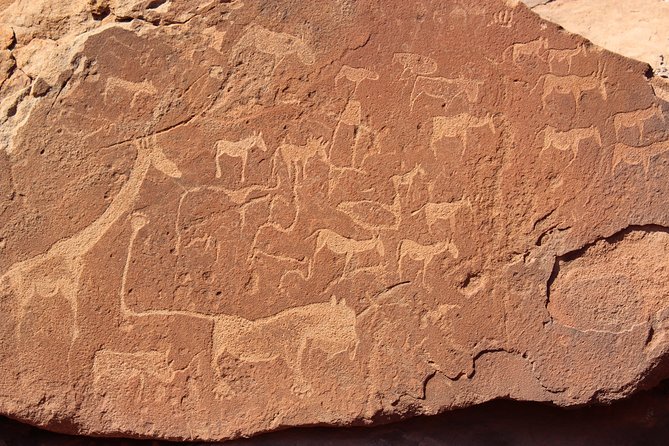
Twyfelfontein is one of the most important rock-art areas in Africa and a UNESCO World Heritage Site. The area contains roughly 2,500 Stone Age engravings across 17 sites, along with additional rock paintings.
The art is not presented as a museum display. You see it among sandstone hills and the Huab Valley, where ancient hunters once gathered near a spring. A guide is especially useful here because the engravings can blend into the rock, and the meaning of animal figures and symbols is not always obvious at first glance.
The itinerary visits the site on Day 7, then heads toward Palmwag through Bersig. In the afternoon, local trackers from the Torra Conservancy lead a desert rhino outing. This is a valuable contrast with Etosha. You are not simply driving between waterholes. You are looking for an animal adapted to dry, open country with trackers who understand the area.
Palmwag lies in a concession known for table mountains, dry riverbeds, palms, and wildlife. The area is associated with southwestern black rhinos, mountain zebra, kudu, springbok, giraffe, elephants, and large predators. Sightings are never guaranteed, and the desert setting means animal encounters can require patience.
Himba culture and the first Etosha game drive
Day 8 moves toward Etosha through Kamanjab. The stop at Otjikandero Himba Orphanage Village offers an introduction to Himba traditions and daily life. The village is cared for by volunteer mothers, and tour income supports medical needs, food, and basic supplies.
This kind of visit deserves a respectful attitude. Listen first, ask before photographing, and remember that you are entering a living community, not a staged performance. The stated purpose is to provide insight into traditional life, but the orphanage element also means the visit has a welfare and funding dimension.
You continue to a lodge outside Etosha’s south gate. If time allows, you take an afternoon game drive inside the park and return before sunset. That conditional wording matters. The drive depends on how quickly the day’s road travel and village visit go.
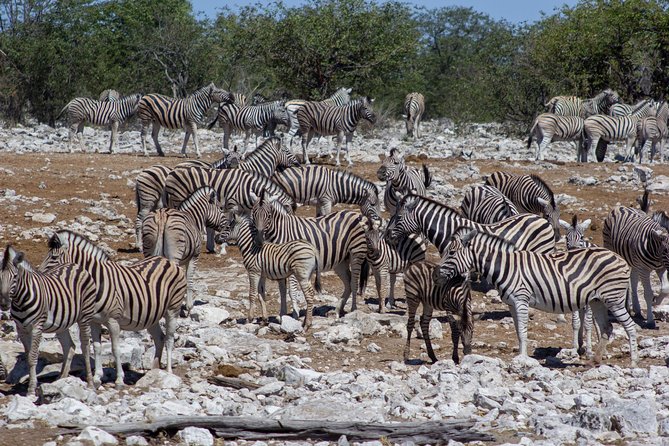
Etosha supports more than 100 mammal species, 340 bird species, and 110 reptile species. It is best known for waterhole viewing, where animals gather in open country and can be easier to observe than in thicker bush.
A full day among Etosha’s waterholes
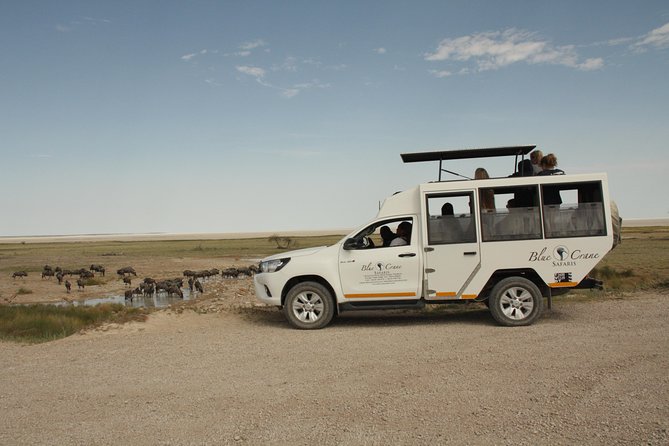
Day 9 gives you the strongest wildlife focus of the tour. You spend about eight hours visiting waterholes and viewing the Etosha Pan, a huge flat depression covering roughly 5,000 square kilometers.
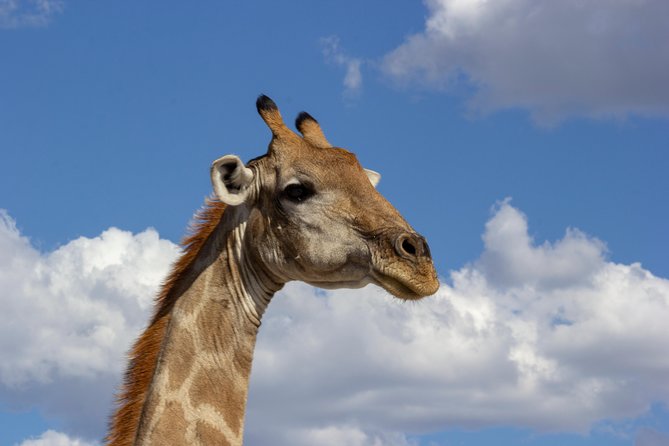
The pan can look almost empty, but that emptiness is exactly what makes the animals visible. Springbok, zebra, impala, giraffe, gemsbok, and birds are among the species you might see, with elephants and larger predators possible as well. In wetter periods, the pan can hold shallow water and attract flamingos and pelicans.
Lunch may be taken at Halali before you return to the lodge. Expect the day to involve repeated stops, patient scanning, and plenty of time seated in the vehicle. If your main goal is big-cat viewing, remember that sightings are never promised. If you value open views and a wide range of animals, Etosha is a strong part of the route.
Okonjima and the AfriCat conservation work
Day 10 starts with a morning game drive before leaving Etosha. The route then turns south toward Okonjima, closer to Windhoek.
After lunch, you take part in an AfriCat activity at Okonjima Game Reserve. AfriCat works with large carnivores including brown hyena, leopard, and cheetah, and environmental education is part of its purpose. This makes the stop different from a standard game drive because it connects wildlife viewing with conservation work.
The schedule gives four hours for the Okonjima game reserve visit and two hours for the AfriCat activity. Exact sightings and the format of the activity are not specified, so ask your guide what is planned for your departure.
Returning through Okahandja
The final day returns you to Windhoek through Okahandja. You stop at Namibia’s biggest craft market, where stalls operate cooperatively and local makers sell African souvenirs.
This is a practical last stop for gifts, though bargaining and quality can vary. Take your time, compare similar items, and protect enough room in your luggage. If your flight leaves that day, the guide will transfer you to the airport or drop you at accommodation you arranged yourself.
What the $4,500 price really covers
At $4,500 per person, this is not a budget road trip. The value comes from the route, included accommodation, guided transport, park and attraction fees, mineral water, and breakfast each morning. Dinner is included, though not every day, and you pay for beverages, tips, personal insurance, and personal purchases.
Fully accommodated travel also saves you from buying camping equipment or setting up after long drives. For many people, that comfort is worth paying for in Namibia, where the distances are large and the days can be hot.
The price is easier to justify if you want the major highlights in one organized circuit and prefer not to plan lodges, park entry, or transfers yourself. It is less attractive if you want slow travel, several free days, or complete control over where you stop.
The maximum group size of seven is another value point. You get the social feel of a group departure without a large coach, and guides can usually handle questions and small preferences more easily. Still, confirm the final accommodation list before booking, since the exact lodges and guest houses are not named in the information provided.
Comfort, driving, and guide quality
The tour provides pickup, accommodation, meals as listed, parking fees, passenger liability insurance, and water in the vehicle. Most people can participate, and the tour is near public transportation at its starting point.
Long driving days are part of the bargain. Cape Cross to Damaraland and several desert transfers can take most of a day, so bring a light layer, reading material, sunglasses, and any medication you need close by. The Atlantic coast can be cool, while the dune country can be intensely hot.
Guide quality matters greatly on a route like this. Bluecrane guides named in guest accounts include Markus, Frank, Me-gusto, and Sidney. Specific praise centers on careful organization, patience with families, attention to room views, and strong knowledge of animals, culture, and roads.
There is also a serious safety point to consider. One account describes a vehicle rollover during a 2024 tour, while the company says its safety procedures helped reduce the impact and that the incident was addressed. A single report cannot establish the company’s overall safety record, but I would still ask about vehicle maintenance, driver rest practices, seat belts, and emergency procedures before paying.
Who should book this Namibia tour?
I would recommend this route to first-time Namibia visitors who want the country’s signature sights without camping. It suits couples, families, and solo participants who enjoy shared travel and can handle long road days.
It is also a good choice if you want more than wildlife. The route includes desert scenery, coastal wetlands, colonial-era architecture, rock art, a Himba cultural visit, craft shopping, and carnivore conservation.
I would hesitate if you dislike fixed schedules, need luxury lodging at every stop, or want to spend several days in one park. The itinerary moves steadily, and optional activities in Swakopmund cost extra.
Cancellation terms are fairly strict near departure: a full refund requires cancellation at least six full days ahead, a 50 percent refund applies two to six days ahead, and cancellations less than two days ahead are not refunded. Confirmation is subject to availability and is expected within 48 hours of booking.
FAQ
Where does the tour start?
The tour starts in Windhoek, with hotel pickup offered between 8:00 and 8:45 a.m. on Day 1.
How many people can join the group?
The maximum group size is seven travelers.
Is accommodation included?
Yes. The itinerary uses lodges and guest houses, and all listed accommodation is included in the tour price.
Are meals included?
Breakfast is included for 10 mornings, and dinner is included as listed. Dinner in Swakopmund on Day 5 is at your own expense. Beverages are not included.
Are park and attraction admission fees included?
Yes. Listed admission is included for Dead Vlei, Dune 45, Sesriem Canyon, the Tropic of Capricorn sign, Cape Cross Seal Colony, Twyfelfontein, the Otjikandero Himba village, Okonjima, and AfriCat activities where stated.
What optional activities are available in Swakopmund?
Possible activities include boat trips, scenic flights, microlight flights, fishing, desert tours, quad biking, sandboarding, and skydiving. They cost extra, depend on availability, and are taken at your own risk.
Can I cancel for a full refund?
You can receive a full refund if you cancel at least six full days before the local start time. A 50 percent refund applies two to six days before departure, and cancellations less than two days ahead are nonrefundable.
Should you book it?
Book this tour if you want a well-rounded first look at Namibia, prefer lodges to tents, and value having a guide handle the long distances and logistics. The strongest parts are the range of scenery, the small group limit, the full Etosha day, and the mix of culture and conservation.
Think twice if you want an unhurried trip or dislike long drives. Namibia rewards patience, and this itinerary asks for plenty of it. For the right pace and budget, though, it gives you a practical route through the country’s most memorable desert, coast, wildlife, and cultural stops.
Just added around Windhoek
- From Windhoek: 3-Day Sossusvlei Shared Shuttle Tour★ 3.8 · 3 reviews
- Windhoek: Katutura Township Tour with Local Guide★ 3.5 · 3 reviews
- Knight Vibes: Bars, Shebeen, Clubs Crawl Windhoek★ 5.0 · 3 reviews
- 3 day Sossusvlei Camping★ 5.0 · 3 reviews
- 10 DAYS BEAUTY OF NAMIBIA | Guided Lodge★ 5.0 · 3 reviews
- Windhoek: City & Township tour. Vehicle, guide, kapana★ 4.2 · 4 reviews
- Predator Encounter: Half-Day Carnivore Feeding Windhoek★ 4.0 · 5 reviews
- Airport Transfers★ 5.0 · 5 reviews
Windhoek Tours, compared.

Half-Day Windhoek City and Township Cultural Tour
Read our review →
6-Day Dunes and Wildlife Accommodated Safari from Windhoek
Read our review →10-Day Namibia Highlights Guided Tour from Windhoek
Read our review →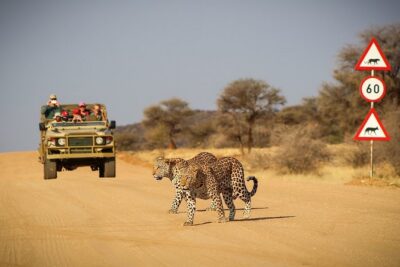
Namibia Self-Driving Audio Guide (in English & German)
Read our review →
Traditional Cooking Class – Mahangu pap for beginners
Read our review →Browse the lists this tour appears in