
Reviewed · WINDHOEK
Private Guided Walking Tour with the San in Windhoek
The most unusual part of this Windhoek outing is the chance to learn bush skills directly from San hosts, rather than only seeing cultural displays in a museum. On a gentle walk near Brakwater, you’ll watch traditional fire making, learn how to read animal tracks, hear the San click language, and see how plants serve practical and medicinal needs.
I like the way the tour joins hands-on demonstrations with honest conversation about San life today. I also like the relaxed pace: the walk is suitable for most ages and fitness levels, and the small private format lets your group ask questions without a crowd pressing in.
The main consideration is that this is a short introduction, not a full-day workshop. You’ll see fire making, jewelry skills, dancing, and tracking, but craft and survival activities are presented as demonstrations rather than a long series of hands-on lessons.
Key points to know before you go
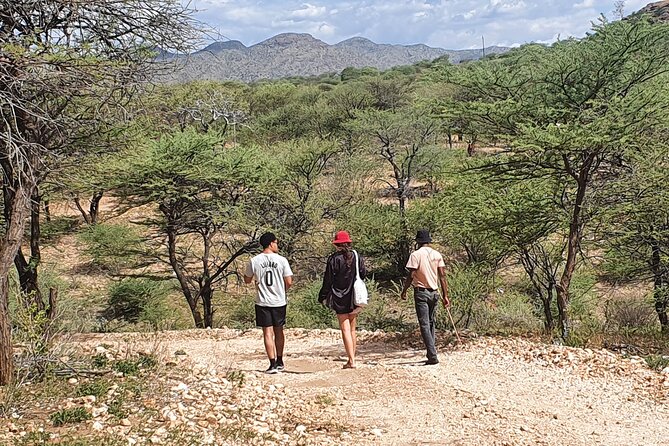
- Two hours in the bush: The main walk takes place at the Human Dreams Namibia farm near Brakwater, about half an hour from central Windhoek.
- San-led cultural teaching: Learn plant uses, animal tracking, click language, fire making, dancing, and ostrich-shell jewelry.
- France as English-speaking guide: France has been named as the guide for this experience, with interpretation helping explain the San demonstrations.
- Private group format: Only your party takes part, making it easier to ask direct questions.
- Good value at $38.33 per person: The price covers the guide, walk, photos and videos, an information sheet, and children under six free.
- Small extras cost extra: Ostrich-shell jewelry and San drawings cost about 100 to 200 NAD, while water and cold drinks cost 20 NAD.
A close look at San culture near Windhoek
This experience takes place at a farm in Brakwater, outside Windhoek, where the nonprofit Human Dreams Namibia operates an animal-assisted therapy center. The setting gives the walk a natural backdrop without requiring a long trip into the country.
You begin with a short introduction to the nonprofit work at the farm. Then the San hosts lead you into the surrounding bush for about two hours. The total activity lasts roughly three hours, allowing time for the transfer from Windhoek, the introduction, and the walk itself.
I like this arrangement because you get cultural teaching in a real outdoor setting, but without the physical demands of a remote wilderness excursion. You do not need to prepare for a strenuous hike. The walk is designed for all ages and fitness levels, although comfortable shoes, sun protection, and water still make good sense.
The San people have long relied on close observation of plants, animals, weather, and terrain. The value of this outing is not just learning isolated facts. You begin to see how many small details in the bush can carry practical meaning: a plant can serve more than one purpose, and a track can tell a story about an animal’s movement.
More Windhoek city tours:
- Windhoek: City and Township Tour
★ 4.8 · 430 reviews - Half-Day Windhoek City and Township Cultural Tour
★ 4.5 · 187 reviews - Windhoek: Bushman Walk with the San
★ 4.9 · 145 reviews
Plant knowledge that connects daily life with the bush
One of the strongest parts of the walk is the explanation of bush plants. Your San hosts show you plants and explain how they are used for medicinal and practical purposes.
This section works best if you stay curious and ask questions. Rather than treating the bush as scenery, you are shown how people can read and use what grows around them. The lesson also gives you a clearer sense of the skill required to live with fewer modern supplies.
The experience provides an information sheet about ancient San knowledge, which is useful after the walk. You may remember the demonstrations better than a list of plant names, but the sheet gives you something to look over later.
Keep your expectations sensible. This is not a medical course or a botanical field class. The emphasis is on an accessible introduction, with the San hosts explaining their own traditional practices through short demonstrations and conversation.
Animal tracks, clicks, and close observation
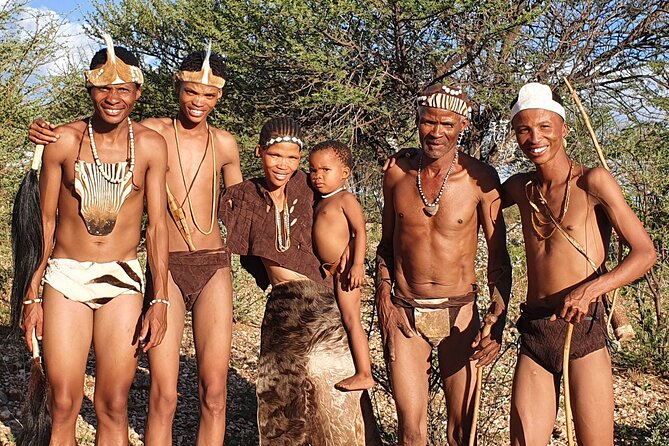
The San hosts also show you how to read animal tracks. This is an engaging change of pace because it turns an ordinary patch of ground into a clue. You learn to look down, notice shapes and marks, and consider what they may reveal about animal movement.
The tour also includes an introduction to the San click language. For many visitors, this is one of the most memorable parts of the experience because it gives you a direct connection to the sound and structure of the language.
An English-speaking guide helps interpret the explanations and handle questions. France is identified as a guide for this activity, and one account specifically praises the way the interpreter explained what was being said. That support matters because cultural demonstrations lose much of their value if you cannot follow the meaning behind them.
You should allow time for questions. The private format means your group can stop to ask for another explanation or connect a demonstration to something you have seen elsewhere in Namibia.
Fire making, dance, and traditional craft
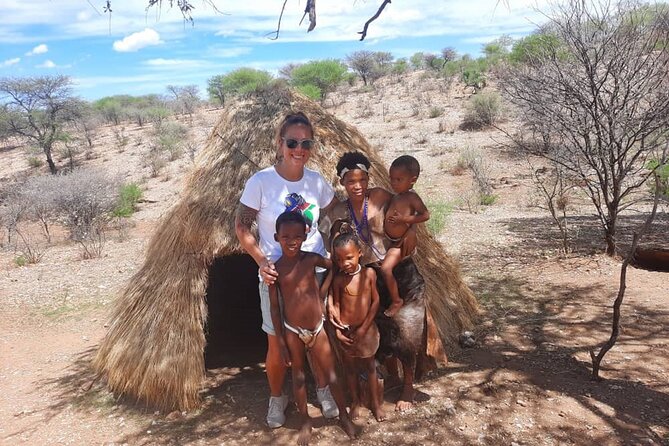
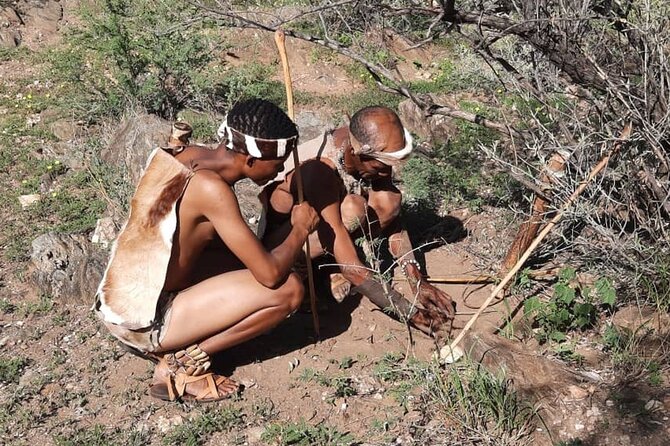
The fire-making demonstration is a clear highlight. You watch the San create fire in a traditional way, giving you a practical example of the patience and technique once needed for everyday survival.
You also see traditional dancing. This adds a social and expressive side to the walk, balancing the practical lessons about plants and tracking. It is worth watching closely rather than treating it as a quick performance, since the tour aims to show living skills and culture, not just provide entertainment.
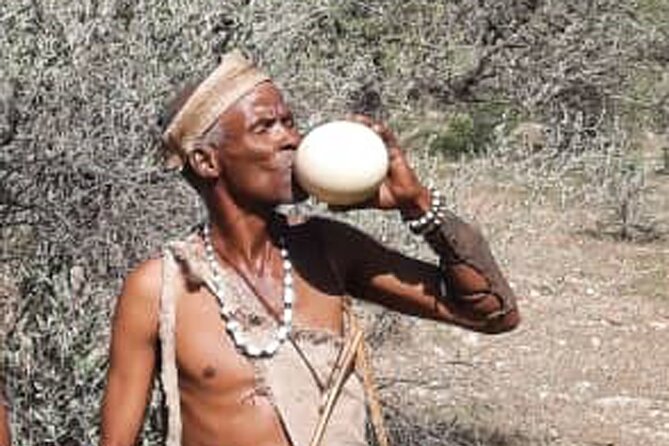
Another demonstration covers jewelry made from ostrich egg shell. You learn how this material becomes a small decorative object, and you can purchase finished craft items afterward. Ostrich-shell jewelry and San drawings generally cost 100 to 200 NAD.
These purchases are optional and are not included in the tour price. Buying directly can give you a useful souvenir while also sending money toward the San people involved in the activity. Still, buy only what you genuinely want. The purpose of the outing is the exchange and teaching, not pressure to shop.
One participant expressed interest in a longer day with craft work, fire making, trap building, and traditional foods. That points to the limit of this current format: the two-hour walk offers several demonstrations, but it does not provide a full workshop in every skill.
More walking tours in Windhoek:
- Windhoek: Katutura Township and City Walking Tour
★ 4.7 · 15 reviews - Windhoek : Cheetah walk Experience
★ 4.6 · 8 reviews
Talking about San life in Namibia today
The tour does more than present an image of the past. It also addresses the current situation of San people in Namibia.
That conversation is important. Traditional hunter-gatherer skills can be fascinating, but it would be misleading to suggest that the San live outside modern society or that ancient practices tell the whole story. You have an opportunity to ask how these skills fit with present-day life and why some knowledge is at risk of being forgotten.
The activity is connected to an effort to keep San culture alive and help younger generations learn traditional skills. Income from the walks gives impoverished San people a way to support themselves. You can decide for yourself how much weight to give this part of the experience, but the structure does offer a direct way to support cultural teaching rather than simply observe it.
Approach the walk with respect. Ask about the meaning of a practice, listen to the answer, and avoid treating people as museum pieces. The best exchange is one where you learn about both traditional skills and the realities of life in Namibia now.
What the three-hour schedule feels like
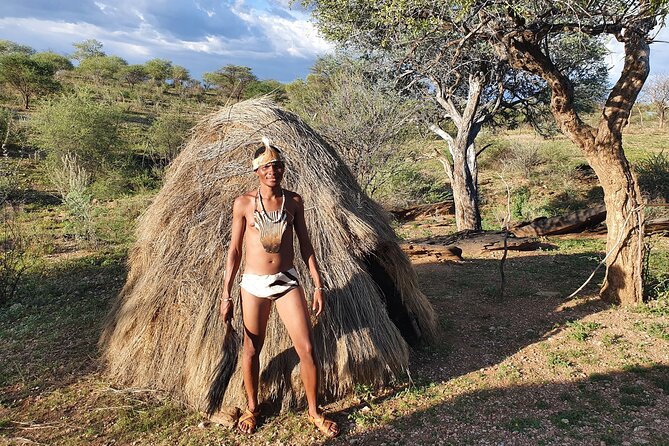
The main walk lasts two hours, while the full experience takes about three hours. The farm is described as roughly half an hour from Windhoek, so the location is practical for a morning or afternoon plan.
The advertised meeting point is Human Dreams Namibia at J332+2M3 in Windhoek, and the activity returns there at the end. Pickup is offered, but because the meeting-point details are also provided, confirm the pickup arrangement when booking if you do not plan to make your own way to the farm.
The walk is meant to be easy. Most people should be able to participate, and the private setup makes it less awkward if your group needs a slower pace or extra explanation. The information provided does not promise special mobility services, so contact the operator in advance if you have specific access needs.
Bring water, even though drinks and bottled water are available for 20 NAD. Namibia’s sun can make a mild walk feel hotter than expected. A hat and closed shoes are sensible choices, though the experience is not presented as a demanding hike.
Is $38.33 per person good value?
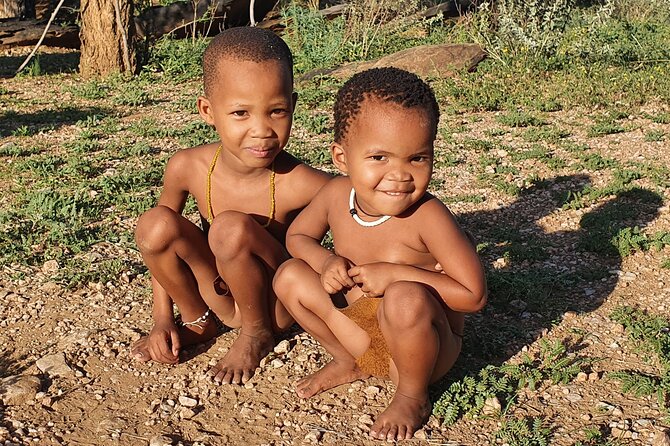
At $38.33 per person, this is a fair price for a private cultural activity lasting about three hours. The cost includes an English-speaking guide, the two-hour bush walk, a short introduction to the nonprofit work, permission to take photos and videos, and an information sheet.
The private format is the key value point. You are not sharing the experience with a large bus group, and you have a better chance to ask questions about plant uses, tracks, language, and present-day San life.
Children below six receive a free ticket, which helps families keep the cost down. Group discounts are also offered, though the exact savings are not specified. Craft purchases and drinks are separate, so include those only if you want them.
I would call this a better value for someone seeking cultural contact than for someone looking for a long wilderness walk. The route is short and easy, but the lessons cover several different subjects. If you want a full-day course in traditional food, trap building, jewelry, and fire making, this outing may feel brief.
The activity is often reserved well ahead of time, with bookings averaging about 35 days in advance. That does not mean you must book exactly that early, but it is a useful warning for a fixed Windhoek schedule. Free cancellation is available up to 24 hours before the start time. Within 24 hours, changes and refunds are not accepted.
Who will get the most from this walk?
I would recommend this outing to families, couples, small private groups, and anyone with limited time in Windhoek. It suits you if you want a clear introduction to San traditions without committing to a difficult hike or a long drive.
It is also a good fit if you like learning through demonstration. Seeing fire made, tracks read, and jewelry shaped can make the information easier to remember than a standard lecture.
The walk may be less satisfying if you want complete privacy from interpretation, since an English-speaking guide helps explain the San hosts’ words. That is not a weakness, but it is part of the format. The guide helps you understand the exchange, while the San hosts provide the traditional knowledge and demonstrations.
You should also choose this activity with the right attitude. It is not a staged wildlife encounter, and you should not expect to see wild animals during the walk. The focus is on people, skills, plants, language, and cultural continuity.
Practical ways to prepare
Wear light, comfortable clothes and shoes suitable for an easy walk in natural surroundings. Bring water or budget 20 NAD for a bottle at the farm.
You are allowed to take pictures and videos of the San hosts. Still, ask before close-up shots or filming a particular demonstration. Basic courtesy will make the exchange more comfortable for everyone.
Keep some Namibian dollars available if you want ostrich-shell jewelry or San drawings. Prices are generally 100 to 200 NAD, which makes these items relatively modest souvenirs, but the exact cost depends on what you choose.
If you are booking for a family, remember that children under six are free. If you are arranging hotel pickup, confirm the details because the published start and end point is the Human Dreams Namibia farm.
Should you book the San Bushmen Cultural Walk?
Book it if you want a short, private, easy-going introduction to San culture close to Windhoek. The best reasons are the direct San-led teaching, the variety of demonstrations, and the chance to discuss both ancient skills and current life in Namibia.
Skip it if you want a full-day practical course or a strenuous bush adventure. For most people, though, the price and three-hour schedule make this a sensible addition to a Windhoek stay, especially when you value human contact and cultural context as much as sightseeing.
FAQ
Where does the San walking tour take place?
The activity takes place at Human Dreams Namibia in Brakwater, near Windhoek. The meeting point is listed as J332+2M3, Windhoek, Namibia.
How long does the experience last?
The complete activity lasts about three hours. The Bushman Walk itself lasts two hours.
How far is the farm from central Windhoek?
The farm is described as roughly half an hour from the city center.
Is pickup available?
Pickup is offered. The listed meeting point is Human Dreams Namibia, so confirm the pickup details when booking.
Is the walking tour difficult?
The walk is designed to be easy and suitable for all ages and fitness levels. Most people can participate.
What will I learn during the walk?
You will learn about bush plants and their medicinal and practical uses, receive an introduction to the San click language, study animal tracks, watch traditional fire making, see dancing, and learn about ostrich-shell jewelry.
Can I take photos and videos?
Yes. Taking pictures and videos of the San hosts is included.
Is this a private tour?
Yes. Only your group participates in the activity.
What is included in the price?
The price includes an English-speaking guide, a short introduction to the nonprofit work, the two-hour Bushman Walk, photos and videos, and an information sheet. Children below six receive a free ticket. Jewelry, drawings, drinks, and bottled water cost extra.
Just added around Windhoek
- From Windhoek: 3-Day Sossusvlei Shared Shuttle Tour★ 3.8 · 3 reviews
- Windhoek: Katutura Township Tour with Local Guide★ 3.5 · 3 reviews
- Knight Vibes: Bars, Shebeen, Clubs Crawl Windhoek★ 5.0 · 3 reviews
- 3 day Sossusvlei Camping★ 5.0 · 3 reviews
- 10 DAYS BEAUTY OF NAMIBIA | Guided Lodge★ 5.0 · 3 reviews
- Windhoek: City & Township tour. Vehicle, guide, kapana★ 4.2 · 4 reviews
- Predator Encounter: Half-Day Carnivore Feeding Windhoek★ 4.0 · 5 reviews
- Airport Transfers★ 5.0 · 5 reviews
Windhoek City Tours, compared.


Half-Day Windhoek City and Township Cultural Tour
Read our review →
6-Day Dunes and Wildlife Accommodated Safari from Windhoek
Read our review →10-Day Namibia Highlights Guided Tour from Windhoek
Read our review →
Private Transfers between Windhoek and Hosea Kutako Int. Airport
Read our review →
4-Day Swakopmund And Sossusvlei Accommodated Adventure from Windhoek
Read our review →
Browse the lists this tour appears in