
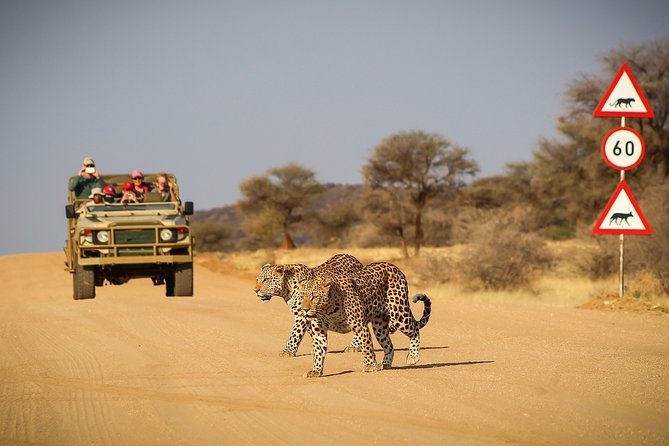
Reviewed · NAMIBIA
12 Day Classic Namibia Camping Safari
Namibia packs astonishing variety into one long loop: rhino country, Etosha’s waterholes, Himba culture, shipwrecks, giant dunes, a vanished diamond town, wild horses, and Fish River Canyon. The 10-night camping schedule keeps the price in check while putting you close to the night sky and the raw scenery.
I like the smart route and the mix of active days with a break in Swakopmund. I also like the small group limit of 10 people, plus the fact that guides such as Tulimo and Gregory prepare the meals as well as lead the trip. The main catch is simple: this is a long, early-starting road trip, and you must bring your own sleeping bag.
Key points at a glance
- Etosha after dark: Visit the floodlit Okaukuejo waterhole, where rhino, elephant, giraffe, lion, and hyena may appear.
- A real desert contrast: See bleached Dead Vlei, towering dunes, and cracked clay in the Sossusvlei area.
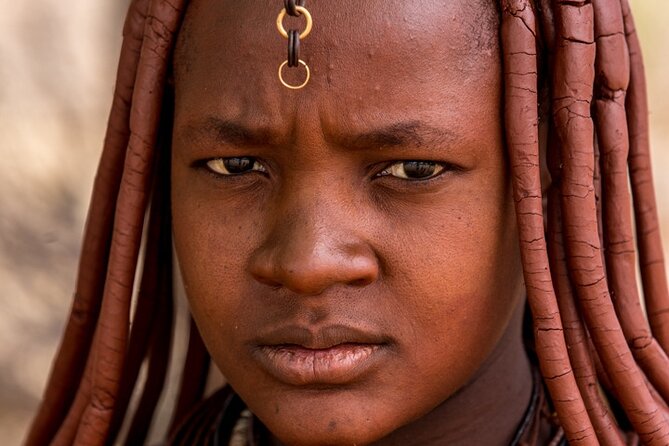
- Culture with context: Spend two hours at Otjikandero Himba Orphan Village with a guided introduction to Himba customs.
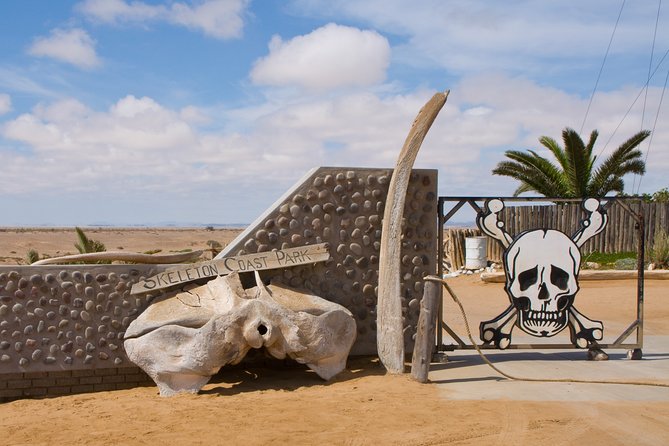
- Skeleton Coast drama: Visit Cape Cross, the Zeila shipwreck, and a shore shaped by fog, currents, and wrecks.
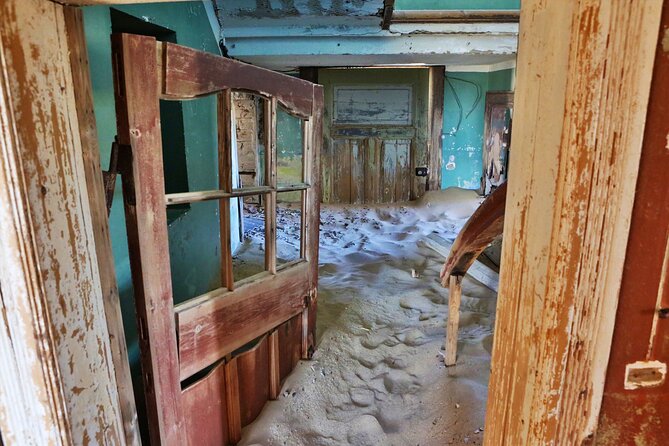
- A vanished diamond town: Walk through Kolmanskop, where sand fills abandoned rooms and former luxury buildings.
- Value for a full circuit: The $3,071.21 price includes transport, most meals, camping equipment, and one night of accommodation, but not drinks or a sleeping bag.
Why this 12-day route works
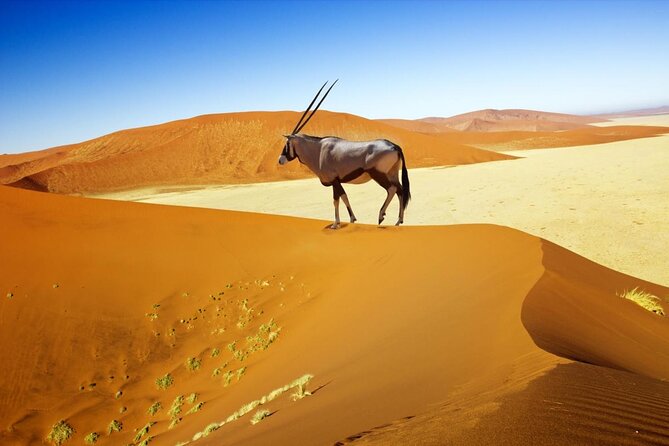
This trip is designed as a grand tour rather than a slow stay in one region. You cover a lot of Namibia, so the reward is variety. The cost is the mileage: several days involve long drives, early breakfasts, and packing up camp before sunrise.
I like the order. The trip begins with wildlife, moves west to the Atlantic, pauses in Swakopmund, then heads south through the Namib Desert. The final stretch brings Kolmanskop, Luderitz, Fish River Canyon, and the Quiver Tree Forest before the return to Windhoek.
You meet at Chameleon Safaris headquarters in Windhoek at 7:00 a.m. for a short briefing. Pickup is offered, and the group is capped at 10 people. That size matters here. A safari truck can feel crowded when you are carrying camping gear, but a small group gives you a better chance of getting a window and makes camp chores and meal times easier to manage.
More camping safaris across Windhoek:
- 3 Day Sossusvlei Budget Camping Safari
★ 5.0 · 62 reviews - 6 Day Sand, Sea & Etosha Budget Camping Safari
★ 5.0 · 36 reviews - 7 Day Southern Namibia and Sossusvlei Camping Safari
★ 5.0 · 26 reviews
Day 1: Woodcarvers, rhinos, and Mount Etjo
The first stop at Okahandja Mbangura Woodcarvers Craft Market is brief, but useful. Artisans from across Namibia sell carved pieces here, and you have about an hour to browse and practice polite bargaining. Buying directly supports local makers, though you should not feel pressured to purchase anything.
The real start comes at Mount Etjo Game Reserve. The reserve supports conservation work, including efforts to protect Namibia’s black and white rhinos. You arrive around lunchtime, set up camp, eat, and then head out on an afternoon game drive.
That first drive sets the tone for the trip. You are not simply checking wildlife off a list. You are seeing a reserve tied to hands-on conservation work and searching for rhino in its natural setting. The day ends with a Namibian sunset, a fitting introduction to outdoor life on the road.
Days 2 and 3: Etosha waterholes after sunrise and sunset
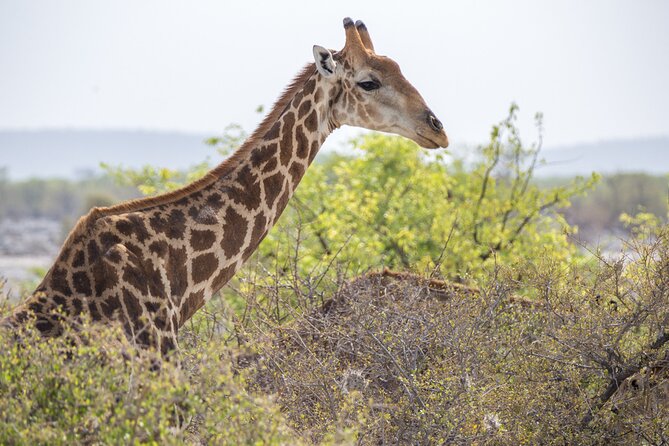
After breakfast, the group stops in Otjiwarongo for fresh supplies before entering Etosha National Park. Etosha is one of southern Africa’s best-known wildlife areas, and its waterholes give you a practical way to search for animals in a dry setting.
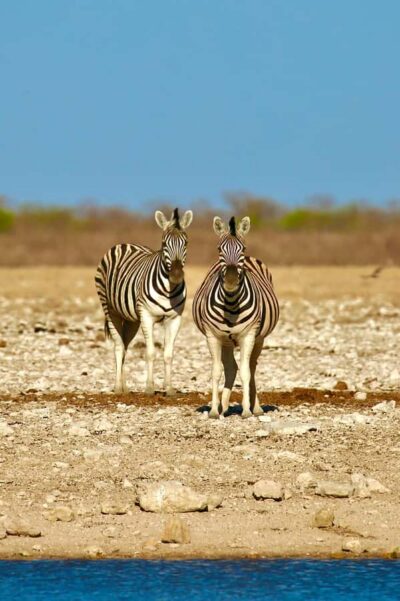
On the first afternoon, you drive toward Okaukuejo, set up camp, eat lunch, and continue to waterholes in search of predators, plains animals, birds, and possibly reptiles. The schedule gives you both moving game drives and time at camp.
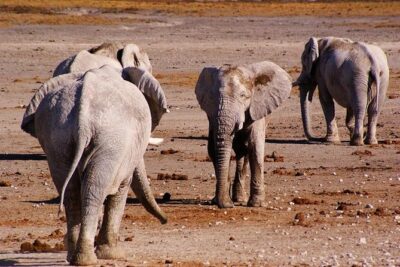
The floodlit waterhole at Okaukuejo is one of the strongest parts of the trip. After dinner, you can sit quietly and watch for rhino, elephant, giraffe, lion, or hyena. It is a different kind of wildlife viewing than a daylight drive. You are stationary, the light is controlled, and the animals decide when to appear.
Day 3 begins before sunrise. You drive between waterholes, stop for breakfast at a fenced picnic area, and cross the Etosha Pan. This huge saline desert covers about 4,500 square kilometres and gives the park its unusual white, open appearance. You can get out at the pan, which breaks up the hours in the vehicle.
The route continues to Halali, the central camp, where you can use the pool, visit the waterhole, and eat lunch. An afternoon drive returns you to Okaukuejo by sunset. This is a full wildlife day, and the long hours in the vehicle may tire you out. Still, Etosha receives the time it deserves, with sunrise, midday, afternoon, and after-dark viewing all built in.
Day 4: A direct introduction to Himba culture
You leave Etosha after a final sunrise drive and head to Kamanjab. The stop at Otjikandero Himba Orphan Village lasts about two hours and includes a guided walk through the settlement.
The value here is the chance to learn about Himba customs and daily life directly through a structured cultural visit. You also have the opportunity to share something of your own culture. That makes the encounter more personal than simply photographing a traditional-style village from a vehicle.
Keep an open mind and follow the guide’s lead. Cultural visits can feel uncomfortable if treated like a performance, so listen carefully and remember that you are entering a community setting, not a museum.
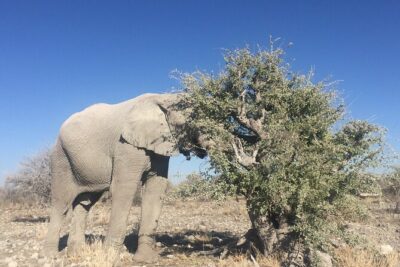
After Kamanjab, you continue to Palmwag and set up camp. The afternoon is slower, with the possibility of watching for desert elephants. Dinner again comes from the guide over an open fire. This combination of culture, driving, and a quiet camp afternoon keeps Day 4 from feeling as intense as the Etosha section.
A few more Windhoek trips worth a look
- 6-Day Dunes and Wildlife Accommodated Safari from Windhoek
★ 5.0 · 123 reviews - 9 Day Canyons, Dunes & Wildlife Camping and Lodge Safari
★ 4.5 · 23 reviews - 9 Day Etosha, Skeleton Coast and Sossusvlei Camping and Lodge Safari
★ 5.0 · 21 reviews - From Windhoek: Okapuka Safari Lodge Day Trip
★ 4.4 · 20 reviews
Days 5 and 6: Skeleton Coast fog, seals, and a wrecked ship
The drive west to the Skeleton Coast National Park is long, lasting much of the day. The coast is known for shipwrecks, fog, rough seas, and unpredictable currents. Its appeal is not tropical beauty. It is the stark meeting of desert and Atlantic, a place that feels severe and remote.
You camp at Cape Cross and have time to walk along the beach. The itinerary mentions the possibility of a swim in the Atlantic for the brave, but the coastal conditions are part of the experience, so this is hardly a guaranteed beach day.
The next morning brings the Cape Cross Seal Reserve. Up to 200,000 or more Cape fur seals may be present during the November and December breeding season. That number gives you a sense of the scale, but it also gives you a practical warning: this is a powerful sight and smell. Bring patience, and do not expect a quiet wildlife stop.
You then pass the Zeila shipwreck, a relatively recent casualty from 2007. The contrast is striking. Cape Cross shows nature at enormous scale, while the wreck shows how quickly the coast can defeat human plans.
By early afternoon, you reach Swakopmund. This is your rare break from camping, with time to explore the town on foot or book an optional activity. The choices listed include skydiving, quad biking, and sandboarding. These activities cost extra, and dinner is also at your own expense, but the pause is valuable after several nights of camp cooking and long drives.
Day 7: Swakopmund gives you control of the pace
You do not leave Swakopmund until 11:30 a.m. That late departure is one of the most thoughtful details in the schedule. You can sleep longer, enjoy breakfast, or spend the morning on an optional activity.
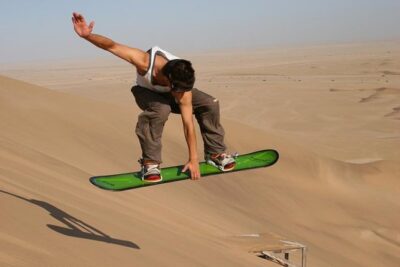
A sandboarding trip may send you down a dune head first at speeds of up to 60 kilometres per hour. Quad biking offers a motorized way to explore the dune field. If you would rather save money and energy, a slow morning in town is perfectly reasonable.
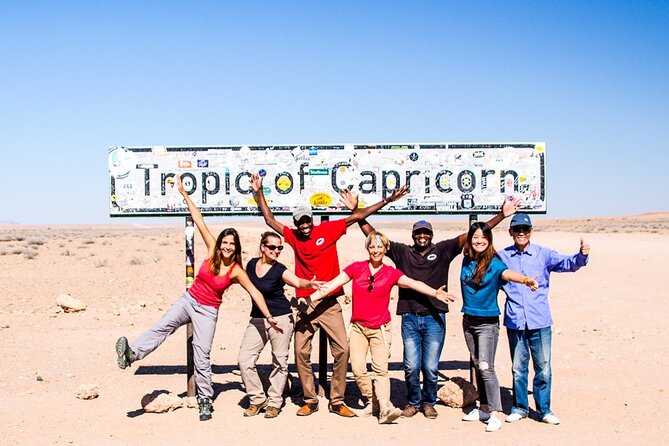
After leaving Swakopmund, the route crosses the Kuiseb Pass and the Tropic of Capricorn. A short stop at Solitaire allows time for a snack and a stretch before you continue to Sesriem.
You arrive late afternoon, set up camp, and can use the pool or bar. The early night matters because Day 8 begins before dawn. This is a good example of how the tour balances optional fun with the demands of the next morning.
Day 8: Dune 45, Sossusvlei, Dead Vlei, and Sesriem Canyon
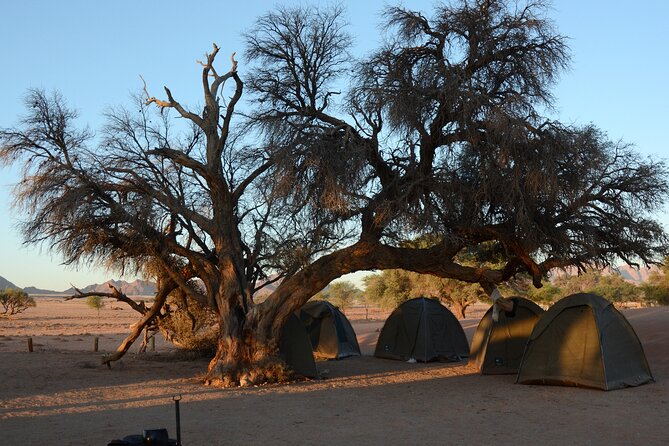
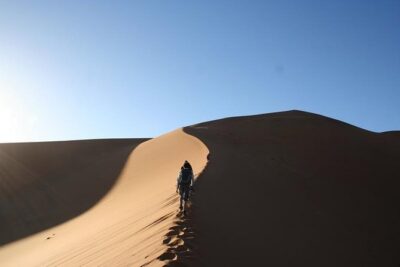
The pre-dawn departure is worth the lost sleep. At first light, you drive along an ancient river bed toward Dune 45, one of Namibia’s famous red dunes. You can climb toward the top for sunrise, then return for breakfast.
The climb is the physical high point of the morning. It is not a casual photo stop if you go high up the dune, so pace yourself and carry what you need for the walk. The reward is the changing light across the sand and the view down the long ridge.
The route continues to Sossusvlei and then Dead Vlei. Dead Vlei’s bleached clay floor, cracked surface, and skeletal camel thorn trees create one of the most memorable scenes in Namibia. Huge dunes form the backdrop, and the color changes as the sun moves.
After returning to Sesriem around lunchtime, you have several hours for lunch, a swim, or a siesta during the heat. Later, you visit Sesriem Canyon. The canyon adds a close-up view of the desert’s geology after the wide-open scale of the dunes.
This is one of the best days for photography, but do not let the camera run the whole show. The silence, heat, walking, and changing light are the point. You will enjoy the stop more if you leave room to simply look.
Days 9 and 10: Desert roads, Kolmanskop, and Luderitz
After breakfast, you head south through the Namib Rand area toward Klein Aus. The terrain becomes broad and spare, with the Aus Mountains providing a new backdrop. At Klein Aus, you can set up camp and use the afternoon for one of the short hiking trails.
The sunset here is another reason the camping format works. You are not rushing from one indoor attraction to the next. You eat a guide-prepared dinner beside camp and experience the evening as part of the trip.
Day 10 begins with Kolmanskop, about 15 kilometres outside Luderitz. The town grew quickly during the 1910 diamond boom and once had amenities that seem wildly out of place in the desert, including the southern hemisphere’s first X-ray machine, a bowling alley, and luxury housing.
After the diamond boom ended, residents left. Sand moved into the abandoned buildings, and Kolmanskop became a ghost town. Give yourself time to look inside the rooms and notice how the desert is reclaiming the town. The three-hour visit is long enough to do more than take a quick photograph.
Luderitz brings a different mood, with colorful colonial-style buildings on the rocky Atlantic shore. At Diaz Point, you stop at the site of the original Diaz Cross, then return toward Aus while watching for the wild horses of the Namib Desert.
The horses are not guaranteed, and the schedule allows only about 30 minutes for the search. If you see them, it is a lucky moment. Their survival in such harsh conditions makes even a distant sighting meaningful.
You return to Klein Aus in the afternoon for another sunset and open-fire dinner. This is a long day, but Kolmanskop, Luderitz, Diaz Point, and the horses give it a strong sense of place.
Days 11 and 12: Fish River Canyon and the Quiver Tree Forest
Day 11 begins early with the drive east to Fish River Canyon. At Hell’s Bend viewpoint, you look over the second-largest canyon in the world. The canyon formed through water erosion and movements in the Earth’s crust, and the scale is best understood from the rim rather than through a rushed stop.
You continue after lunch to the Quiver Tree Forest near Keetmanshoop. About 250 quiver trees grow here, with the oldest estimated at 200 to 300 years old. The kokerboom, as it is called in Afrikaans, is Namibia’s national tree, and the forest has been a national monument since 1995.
The final night is spent camping under the stars. Night photography requires a permit, which is not included, so check that detail before planning a serious photography session. Even without special equipment, the setting offers a calm final evening after the long southern loop.
On Day 12, you see the quiver trees at sunrise, then begin the long drive back to Windhoek through Mariental and Rehoboth. Lunch is picnic style and is not included, so keep money and supplies ready. You arrive in Windhoek late afternoon and are dropped at your accommodation.
Do not schedule a flight for this day. The return drive is long, and delays are always possible on a road trip of this scale.
Camping, meals, and what the price really covers
At $3,071.21 per person, this is not the cheapest way to see Namibia. It is still a strong value if you want one organized circuit that covers the north, west, desert, and far south without arranging your own vehicle, campsites, meals, and park visits.
The package includes 10 nights of camping and one night of accommodation, camping equipment excluding a sleeping bag, 11 breakfasts, 11 lunches, and 10 dinners. Drinks are not included, including mineral water, soft drinks, and alcohol. Budget for your own beverages, Swakopmund dinner, optional activities, and the picnic lunch on the final day.
The camping is part of the experience, not a minor detail. You will set up tents, sleep outdoors, and follow the group’s morning schedule. The guide prepares meals over an open fire, which keeps the food practical and social, but it also means you should not expect restaurant choice most nights.
A moderate fitness level is required. You do not need to be an athlete, but climbing Dune 45, walking at desert sites, packing camp, and spending long hours in a vehicle all add up. Bring a sleeping bag, comfortable walking shoes, sun protection, and enough personal water for the day.
Who should book this Namibia safari?
I would choose this trip if you want Namibia’s major sights in one efficient route and you are comfortable with basic camping. It suits a person who values wildlife, scenery, cultural contact, and outdoor nights more than polished hotel comfort.
It is especially good for first-time visitors who do not want to plan the long distances themselves. The small group, included meals, and guide-led transport remove much of the practical work.
I would hesitate if you dislike early starts, long drives, shared camp routines, or uncertain wildlife sightings. You should also compare the total cost after adding drinks, a sleeping bag, Swakopmund activities, dinner, and any permits for night photography.
The experience is non-refundable and cannot be changed after booking, so check your dates carefully before paying. It is usually booked about 52 days ahead, which gives you a useful planning guide, especially if you need time to arrange flights and extra nights in Windhoek.
Should you book it?
Book this safari if your priority is seeing a huge amount of Namibia in 12 days while keeping the trip organized and relatively practical. The strongest sections are Etosha’s waterholes, the Sossusvlei and Dead Vlei morning, Kolmanskop, and the final star-filled night near the quiver trees.
Choose another style of trip if you want luxury lodging, a slow pace, or complete control over each day. For the budget-minded person with moderate fitness and a taste for open-fire meals, dusty roads, and big empty spaces, this is a well-planned introduction to Namibia.
FAQ
Where does the safari start?
The tour starts at Chameleon Safaris on Ferry Street in Windhoek, Namibia. The start time is 7:00 a.m., and pickup is offered.
Where does the safari finish?
The activity ends back in Windhoek, with drop-off at your accommodation.
How long does the tour last?
The tour lasts approximately 12 days.
How many people can join the group?
The tour has a maximum of 10 participants.
Is camping equipment included?
Camping equipment is included, but a sleeping bag is not included and must be supplied by you.
How many nights are spent camping?
The package includes 10 nights of camping and one night of accommodation.
Are meals included?
Breakfast for 11 days, lunch for 11 days, and dinner for 10 days are included. Drinks are not included, and the picnic-style lunch during the return to Windhoek is also not included.
Can I book a flight from Windhoek on Day 12?
No flight is recommended on Day 12 because the return drive to Windhoek is long and arrival is scheduled for late afternoon.
Just added around Windhoek
- From Windhoek: 3-Day Sossusvlei Shared Shuttle Tour★ 3.8 · 3 reviews
- Windhoek: Katutura Township Tour with Local Guide★ 3.5 · 3 reviews
- Knight Vibes: Bars, Shebeen, Clubs Crawl Windhoek★ 5.0 · 3 reviews
- 3 day Sossusvlei Camping★ 5.0 · 3 reviews
- 10 DAYS BEAUTY OF NAMIBIA | Guided Lodge★ 5.0 · 3 reviews
- Windhoek: City & Township tour. Vehicle, guide, kapana★ 4.2 · 4 reviews
- Predator Encounter: Half-Day Carnivore Feeding Windhoek★ 4.0 · 5 reviews
- Airport Transfers★ 5.0 · 5 reviews
Namibia Camping Safaris, compared.
6 Day Sand, Sea & Etosha Budget Camping Safari
Read our review →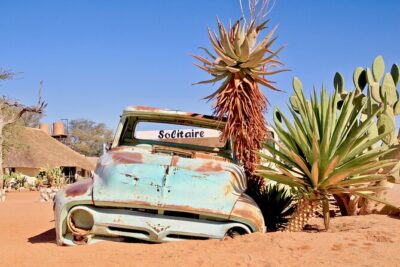
7 Day Southern Namibia and Sossusvlei Camping Safari
Read our review →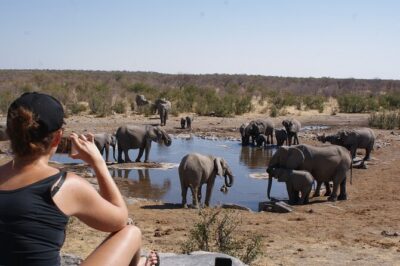
7 Day Northern Namibia and Skeleton Coast Camping Safari
Read our review →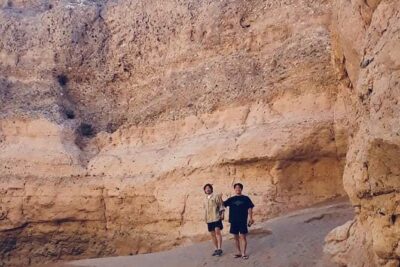
4-Day Sossusvlei and Swakopmund Camping Safari
Read our review →Browse the lists this tour appears in